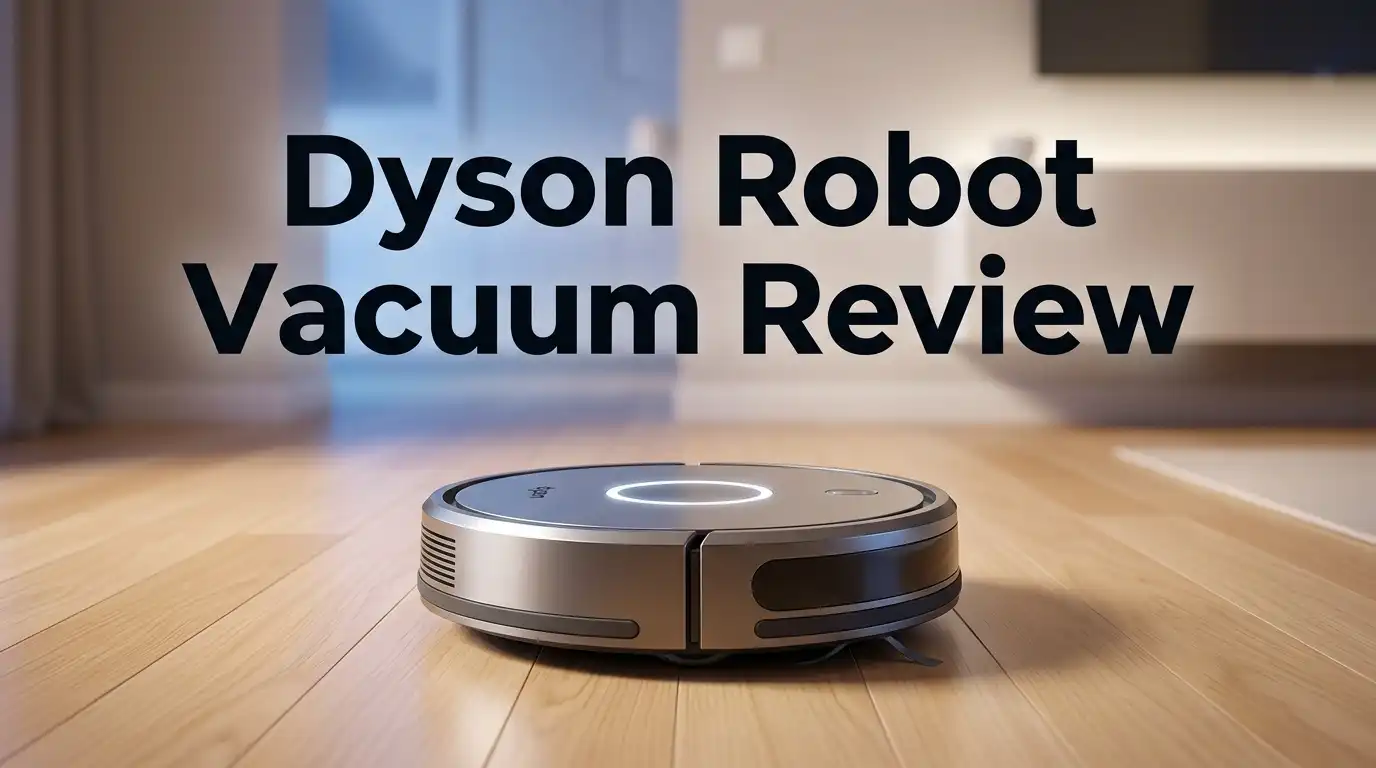
Dyson Robot Vacuum Review 2026: Worth Buying?
Dyson finally built a robot vacuum that people can recommend without wincing. That sentence took the company almost a decade to earn.
The Dyson Spot+Scrub Ai arrived as the brand’s first all in one robot. It vacuums, it mops, it empties itself into a bagless bin, and it hunts down dried stains with a camera and a green light.
Dyson also kept the older 360 Vis Nav on shelves at a much lower price, which creates a genuinely interesting choice for buyers.
In a Nutshell:
- The Spot+Scrub Ai is the first genuinely good Dyson robot. It scored 3.59 overall in independent testing against a 2.58 category average. Obstacle avoidance and the bagless dock are the two features that lead the whole market right now.
- The bagless cyclonic dock is the standout feature. No bags to buy, ever. Testers left it running for two weeks in a two cat home and the 3 litre bin separated the hair cleanly and stayed completely dry. That solves a problem the entire robot vacuum industry has ignored.
- Vacuuming is only average for the money. It pulled 76 percent of embedded sand from medium pile carpet against a 78 percent average, and 81 percent of flattened pet hair against an 82 percent average. The older Vis Nav actually beat it on both.
- It is slow and it is tall. Navigation efficiency measured 0.57 square metres per minute against a 0.71 average. At 4.3 inches tall it will not fit under plenty of sofas and beds.
- The 360 Vis Nav is a bargain now, with a catch. It cleans carpet brilliantly but the battery covers roughly 413 square feet per charge and it has no dock automation at all.
- Dyson launched the Nurovi range in September 2026. Three new models, up to 30,000 Pa, UV stain detection. Prices on the Spot+Scrub Ai have already dropped as a result.
Dyson Spot+Scrub Ai Robot Vacuum
No products found.
This is the machine that matters. Dyson listed it at $1,199.95, though street prices have fallen well below that since the Nurovi announcement.
Three things happen here for the first time in Dyson robot history. A mop. A dock that empties the robot. Obstacle avoidance that actually works. Any one of those would be news. All three arriving at once, and arriving competent, was the surprise.
The specs read well on paper. 18,000 Pa of suction, 200 minutes of rated runtime, a 500 ml onboard bin, a 3 litre bagless dock bin, and dual line time of flight LiDAR tucked inside the body rather than sticking up on a turret. The AI camera recognises around 200 household objects and substances.
Dyson also made a decision that deserves credit. All image processing happens on the robot itself. Nothing gets shipped to a cloud server. If you have ever felt uneasy about a camera on wheels roaming your home, that single design choice may matter more to you than any cleaning score.
The mop is a full width microfibre roller rather than spinning discs. Fresh water sprays onto the roller continuously and a scraper wipes it clean on every rotation. Dirty water goes into a separate tank. Both tanks open, which sounds trivial until you own a sealed system that clogs.
The mop lifts about 10 mm to clear carpets and extends sideways to reach walls. Dyson claims the robot returns to a stubborn stain up to 15 times until the camera confirms it has gone.
Unboxing and First Impressions
The box is heavy and awkward. Expect around 40 pounds of shipping weight between the robot and the dock, so plan on carrying it with two hands or sliding it into place.
Inside, Dyson uses moulded cardboard rather than polystyrene. Everything sits in labelled compartments. You get the robot, the dock, a power cable, a cleaning tool, a spare filter in some regions, and a quick start card that is genuinely short.
First impression: this thing is big. Pull the robot out and the height is the first thing you notice. It stands 4.3 inches tall against a 3.8 inch market average. Next to a slim competitor it looks like a different category of object.
The build quality is unmistakably Dyson. Dense plastics, tight panel gaps, and that slightly clinical grey and copper finish the brand has used for years. Nothing creaks. The bin release feels mechanical rather than flimsy.
The dock is the showpiece. Dyson made the dust bin visible through a clear window, so you watch the debris pile up. It sounds like a gimmick. In practice it is oddly satisfying and it tells you when to empty without opening an app.
Peeling the protective film off takes a minute. Filling the clean water tank takes another. Total time from cardboard to first clean was under 15 minutes, which is fast for a machine with this much hardware.
One small annoyance. The dock needs clearance on both sides and in front, so the tidy corner you planned may not work.
Setup and the MyDyson App
Setup runs through the MyDyson app. Download it, create an account, and the app walks the robot through a WiFi handshake and a first mapping run.
The mapping run is slow but accurate. The embedded LiDAR builds a clean floor plan and the robot identifies rooms automatically. On a two floor home it saves separate maps and switches between them.
You get the essentials. Real time mapping, room labels, no go zones, virtual walls, custom suction and water levels per room, scheduling, and a cleaning history log. Multi level maps work properly, which was not always true of earlier Dyson software.
Here is the honest part. The app is the weakest link in the whole package. Competitors from Roborock, Dreame and eufy offer furniture recognition, carpet detection overrides, matrix style cleaning routines, video patrol, and deep customisation. Dyson gives you the basics done cleanly and nothing more.
Voice control exists through third party assistants rather than a polished Dyson layer. It works. It does not impress.
Dyson did add something useful in 2026 outside the app. Dyson Concierge offers personalised onboarding for robot owners, and selected stores now handle diagnostics and repairs in person. There is also a loan machine promise when a repair cannot be completed quickly.
For a first party support system in this category, that is unusually good. Most robot brands hand you a chat window and hope.
Top 3 Alternative for Dyson Spot+Scrub Ai

Last update on 2026-09-25 / Affiliate links / Images from Amazon Product Advertising API
Roborock Saros 10R


Last update on 2026-09-25 / Affiliate links / Images from Amazon Product Advertising API
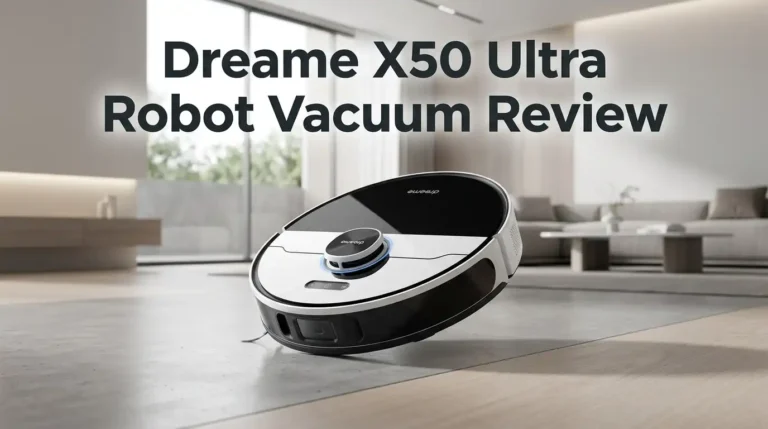
Dreame X50 Ultra Complete

Last update on 2026-09-25 / Affiliate links / Images from Amazon Product Advertising API
eufy Robot Vacuum Omni S1 Pro
Vacuuming Performance on Carpet and Hard Floors
Dyson built its reputation on suction, so this section carries weight.
The brush system changed for the Spot+Scrub Ai. Gone is the heavy solid roller from the Vis Nav. In its place sits a bristle brush roll with two fixed side brushes, and the robot boosts suction automatically when it detects carpet.
The results are solid rather than spectacular. In the embedded sand carpet test, the Spot+Scrub Ai removed 76 percent of debris against a 78 percent category average. The older Vis Nav managed 80 percent with its bigger roller.
Pet hair told a similar story. Testers pressed 2.5 inch hair flat into carpet and the Spot+Scrub Ai lifted 81 percent against an 82 percent average. The Vis Nav scored a perfect 100 percent on that same test.
That drop is not unique to Dyson. Adding mop hardware consistently costs robots a few points of vacuum performance, most likely because the extra assembly limits brush contact with the floor.
Crevice pickup is where it shines. It scored 3.5 against a 2.0 average, which means tile grout, floorboard gaps and patio style grooves get properly cleaned. If your home has textured or grooved hard floors, this matters more than the carpet numbers.
On bare floors the machine performs well across everyday messes. Fine dust, crumbs, cereal, litter, pet food. It handles all of it.
The takeaway is simple. The Spot+Scrub Ai vacuums about as well as a typical good robot, not as well as its price suggests.
Mopping and Stain Detection Results
The roller mop is the better half of this machine’s cleaning story.
Roller designs suit wet spills. They wipe rather than smear, and they leave less used water sitting on the floor than spinning pads or flat cloths usually do.
In the dried coffee stain test the Spot+Scrub Ai scored 101 against a 94 average. That is a clear win. It left 1.3 grams of water behind against a 1.1 gram average, a mild negative.
Combined, the mopping score landed at 20.1 against a 20.3 average. Balanced rather than extreme, which is arguably what most homes want.
The dock does the maintenance work. It refills the clean tank, drains the dirty tank, washes the roller at 140 degrees Fahrenheit and dries it with heated air at 113 degrees Fahrenheit. That drying step is what stops the mop smelling after a week.
The stain detection deserves its own mention. The AI camera works alongside a green spectrum LED to spot messes that a normal sensor would miss. Drop soy sauce on tile and the robot recognises it, marks it, and runs repeated passes over that exact spot.
It genuinely works, and it feels like the future. Whether it justifies the price depends on how often your floors take a hit.
One limit worth knowing. The mop cannot remove dried, sticky, layered messes like spilled syrup that has cured for days. No robot can. Reset your expectations accordingly.
The Bagless Dock That Changes the Game
If you buy this robot for one reason, make it this one.
Nearly every premium robot vacuum on the market empties into a disposable bag that costs money forever. A busy home burns through several a year. Over five years that adds up quietly.
Dyson invented cyclonic bagless separation and finally brought it to a robot dock. The dock pulls debris from the robot and spins it into a 3 litre clear bin that you tip into the trash and reuse.
The real world result was better than expected. Testers went nearly two weeks without emptying in a home with two cats. The bin separated the accumulated hair completely, with no clogging and no jam.
It also stayed bone dry. Earlier bagless attempts from other brands trapped moisture, which turned debris into damp clumps that blocked airflow. Dyson appears to have engineered its way past that entirely.
Hair clogging inside robot vacuums has been the category’s quiet failure for years. Dyson made real progress here, and the rest of the industry should be taking notes.
The visible bin adds a practical benefit too. You see exactly how full it is without opening an app or lifting a lid.
There is a tradeoff. Emptying a bagless bin puts you closer to the dust than pulling out a sealed bag does. Severe allergy sufferers may genuinely prefer a bagged dock, and that is a fair reason to look elsewhere.
Obstacle Avoidance and Navigation
This is the second area where Dyson outperformed expectations.
Obstacle avoidance uses a single AI camera plus the green spectrum LED, with roughly 200 recognised objects in the database. Socks, cables, shoes, pet waste, phone chargers, toys.
In combined standard and torture testing the robot avoided 20 of 24 objects against a 15 of 24 average. For a first generation system that number is remarkable. Mature systems from established brands often score lower.
Practically, this means fewer rescue missions. You are less likely to come home to a robot that swallowed a charging cable or dragged a sock across three rooms.
Navigation is the weak side of the same coin. Dyson switched from VSLAM on the Vis Nav to embedded dual line time of flight LiDAR on the Spot+Scrub Ai. Accuracy improved. Speed did not.
Efficiency measured 0.57 square metres per minute against a 0.71 average, and the older Vis Nav hit 0.80. In plain terms, this robot takes noticeably longer to clean the same floor than most rivals.
Threshold climbing tops out at 20 mm. That clears most door strips and low rug edges. It does not clear the thicker transitions that competitors now handle at 40 mm or more.
Then there is the height. At 4.3 inches the robot struggled to get under furniture during testing and felt clumsy in tight layouts. Measure your sofa clearance before you order. Slim rivals sit around 3.1 inches for exactly this reason.
Battery Life and Coverage
Battery life was the single biggest failure of the previous Dyson robot, so improvement here was non negotiable.
The Vis Nav managed an estimated 413 square feet per charge. For a machine costing several hundred dollars, that was close to unusable in a normal home.
The Spot+Scrub Ai measured 1.38 minutes per one percent of battery against a 1.56 average, which works out to roughly 846 square feet per charge. That is more than double its predecessor.
It is still below the 1,170 square foot category average. Dyson has not caught up. It has, however, crossed the line from dealbreaker to acceptable.
The rated runtime is 200 minutes in the most economical setting. Run it in a high suction mode with mopping active and you will see far less. Real world figures land closer to 60 to 90 minutes of useful work per charge on mixed settings.
Recharge and resume works properly. The robot returns to the dock, tops up, and finishes the job. For homes over 1,000 square feet you will rely on that feature regularly.
Charging from empty takes a few hours, so a large home may effectively need a half day to complete a full clean.
The practical verdict is this. For apartments and homes up to roughly 1,200 square feet, battery life will not bother you. For sprawling single floor houses, a competitor with better efficiency finishes sooner.
Dyson 360 Vis Nav Robot Vacuum

Last update on 2026-09-25 / Affiliate links / Images from Amazon Product Advertising API
This is the 2024 model, and in 2026 it has become an interesting value proposition. Third party listings have appeared well under $300, a fraction of its original launch price.
What it does brilliantly is vacuum carpet. That solid roller and enormous suction produced a 100 percent score on flattened pet hair and 80 percent on embedded sand. Both beat the newer, pricier Spot+Scrub Ai.
Crevice performance was also excellent at 4.5. It is close to a full size cordless vacuum on wheels. Owners who mainly want deep carpet cleaning often prefer it.
Now the honest problems, and there are several.
The battery is poor. Roughly 413 square feet per charge means it will not finish a medium home in one run. That alone frustrated a lot of early buyers.
There is no mop and no dock automation. You empty it by hand every time. No self emptying, no washing, no drying.
Navigation uses VSLAM without AI obstacle recognition. It will find your cables. Independent reviewers also criticised its coverage pattern on multi surface homes, describing the path as haphazard rather than systematic.
It is also tall and wide, so furniture clearance is a problem again.
Buy the Vis Nav only if it is heavily discounted, your floors are mostly carpet, your space is small, and you do not mind emptying a bin yourself. Under any other condition, the newer model or a rival makes more sense.
What the Dyson Robot Vacuums Do Not Do Well
Authentic reviews name the failures, so here they are without cushioning.
Hair tangling is disappointing. In the seven inch hair test, 31 percent wrapped around the main brush against a 26 percent average. At this price, a tangle free brush design should be standard. Roborock and Dreame both do better.
The robots are slow. Below average navigation efficiency means longer cycles, more noise time, and more battery drain per room.
Height limits access. 4.3 inches keeps it out from under low beds, sofas and media units. Dust collects exactly where you cannot see it.
Threshold climbing is only adequate at 20 mm. Thick rugs and raised door strips will stop it.
The app lacks depth. Mapping and zones work. Advanced routines, furniture aware cleaning and granular scheduling do not exist at the level rivals offer.
Carpet deep cleaning regressed on the newer model compared to the older one, which is an awkward look for a brand built on suction.
Coverage per charge trails the field by a meaningful margin.
Value is the biggest issue. At full list price the Spot+Scrub Ai did not make independent top 20 rankings, because machines costing less scored higher overall. Discounted, the equation changes completely.
Some owners on forums have also reported inconsistent docking and occasional software quirks in early units. Firmware updates have addressed part of that, but it is worth knowing before you commit.
Pros and Cons of Dyson Robot Vacuums in 2026
Here is the balanced summary.
Pros
- Bagless cyclonic dock with no ongoing bag costs. It separated two weeks of pet hair cleanly and stayed dry throughout, which no rival bagless system has matched.
- Obstacle avoidance among the best available. 20 of 24 objects avoided against a 15 average, with all image processing done locally for privacy.
- Roller mop that removes dried stains well. A 101 score on coffee stains beat the 94 average, and the dock washes at 140F then dries with heated air.
- Excellent crevice and edge cleaning. A 3.5 crevice score against a 2.0 average, plus a mop that extends sideways to reach walls.
- Genuinely premium build quality with accessible water tanks that you can open and service yourself.
- Strong support in 2026 including Dyson Concierge onboarding, in store repairs, and loan machines during eligible repairs.
Cons
- Average vacuuming for the price. 76 percent carpet pickup and 81 percent pet hair both sit slightly below category averages.
- Slow navigation at 0.57 square metres per minute versus 0.71 average, meaning longer cleaning cycles.
- Too tall at 4.3 inches, which blocks access under a lot of common furniture.
- Poor hair tangling resistance with 31 percent wrap against a 26 percent average.
- Basic app without the deep customisation competitors provide.
- Below average coverage at 846 square feet per charge against a 1,170 average.
Noise, Maintenance and Running Costs
Noise sits in normal territory for a premium robot. Standard mode is easy to talk over. Boost and carpet mode get loud, closer to a full size vacuum than a quiet appliance.
The dock is the noisy part. Auto emptying runs a powerful cyclone for several seconds and it is genuinely startling the first time. Schedule cleans for when you are out or awake.
Maintenance is lighter than most robots but not zero. Empty the 3 litre dock bin every one to three weeks depending on your household. No bags to buy.
Refill the clean water tank and empty the dirty tank every few mopping runs. Both tanks lift out easily, which is a real advantage over sealed designs.
Clear the brush roll of wrapped hair regularly. Given the 31 percent tangle result, long hair households should plan on this every week or two. Dyson includes a tool.
Wash the filter under cold water periodically and let it dry fully before reinstalling. Wipe the camera lens and LED so obstacle avoidance keeps working.
Running costs are where Dyson wins long term. No bags. The microfibre roller lasts months. Filters last a long time. Compare that to bagged rivals where consumables become a subscription you did not sign up for.
Electricity use is trivial. The dock draws power mostly during the wash and dry cycle, and heated drying is the biggest share of that.
Budget a modest amount yearly for a replacement roller and filter, and that is roughly it.
The New Dyson Nurovi Lineup for Late 2026
Dyson announced 10 new products for fall 2026, and three of them are robots under the Nurovi name.
The flagship is the R3 Nurovi Spot+Scrub UV, scheduled for United States availability on 15 September 2026. It adds ultraviolet light to the AI vision system for stain detection, recognises close to 200 substances, and keeps cleaning until the camera confirms the mess has gone.
Dyson rates it at 30,000 Pa, which is 65 percent more than the Spot+Scrub Ai. A 12 point hydration system feeds the full width roller with water heated to 158F, and the roller extends around 1.6 inches to reach edges. The bagless cyclonic dock carries over.
The R2 Nurovi Wash+Dry launched as a Costco exclusive on 3 September 2026. Its oddity is mop pads shaped like Reuleaux triangles, curved triangles that hold constant width as they spin. Dyson claims a squarer cleaning path that reaches further into corners. The dock heats water to 167F.
The R2 also debuts a Twin capture system, where bristles push large debris into the robot while the motor concentrates on fine dust. An acoustic piezo sensor reads dust levels and floor type to adjust behaviour automatically.
The R1 Nurovi Dry drops mopping entirely and focuses on vacuuming at 21,000 Pa, with redesigned angled side brushes that extend for edges.
Why this matters to you right now: the Spot+Scrub Ai has already dropped in price. Independent test results for the Nurovi range were not available at the time of writing, so verify current reviews before buying a brand new model.
Who Should Buy and Who Should Skip
Buy the Dyson Spot+Scrub Ai if the bagless dock genuinely appeals to you. If the thought of buying bags forever irritates you, this is the only premium robot that solves it properly.
Buy it if you have pets and a cluttered floor. Class leading obstacle avoidance plus a dock that handles two weeks of hair is a strong combination for that exact household.
Buy it if you want local processing rather than a camera streaming to a server, and if you value having a real service network behind the purchase.
Buy the 360 Vis Nav only at a deep discount, in a small mostly carpeted home, where you accept manual emptying and no mopping.
Skip Dyson entirely if your priority is raw cleaning value. Machines costing less score higher overall in independent testing, and rivals beat Dyson on navigation speed, tangle resistance, coverage and app depth.
Skip it if your furniture sits low. A 4.3 inch robot cannot clean space it cannot enter, and slimmer options exist at 3.1 inches.
Skip it if you have severe allergies and prefer a fully sealed bagged dock.
Skip it if you have thick thresholds above 20 mm between rooms.
The fairest verdict is this. The Spot+Scrub Ai is the first Dyson robot worth recommending, and it leads the market in two specific areas that matter in daily life. It is not the best overall robot vacuum you can buy in 2026, and at full price it is not the best value either. Bought on discount, by the right household, it is a satisfying machine.
Frequently Asked Questions
Is the Dyson Spot+Scrub Ai worth the money?
At full list price, no, unless the bagless dock or the obstacle avoidance specifically solves your problem. Independent testing placed it above average overall but outside the top 20 robot vacuums, because cheaper machines scored higher. Discounted, it becomes competitive quickly.
Does the Dyson robot vacuum need bags?
No. The dock uses cyclonic bagless separation into a reusable 3 litre bin. You tip it into the trash and put it back. That saves real money over several years compared to bagged rivals.
How much floor can it clean on one charge?
Roughly 846 square feet based on measured efficiency, against a category average near 1,170 square feet. Recharge and resume lets it finish larger homes across multiple charges.
Can it climb over rugs and door thresholds?
It handles thresholds up to 20 mm. Thicker transitions and high pile rugs will stop it. Some competitors now clear 40 mm or more.
Is the mop good enough to replace mopping by hand?
For everyday dust, footprints and fresh spills, yes. It scored above average on dried coffee stains and the dock washes and dries the roller automatically. Heavily cured or sticky messes still need a human.
Does it handle long hair without tangling?
Not especially well. Testing showed 31 percent of seven inch hair wrapped around the brush against a 26 percent average. Plan on clearing the roller regularly if anyone in your home has long hair.
Will it fit under my sofa?
Measure first. The robot stands 4.3 inches tall against a 3.8 inch average, so low furniture will block it.
Should I wait for the Nurovi models instead?
The R3 Nurovi Spot+Scrub UV promises 30,000 Pa and UV stain detection, and became available in the United States from mid September 2026. Independent test results were not published when this review was written, so check current reviews and pricing before you decide.

Hi, I’m Grace Bell, the founder of CleanFloorVault.com, where I personally test and review vacuum cleaners to help you find the perfect tool for a spotless home.