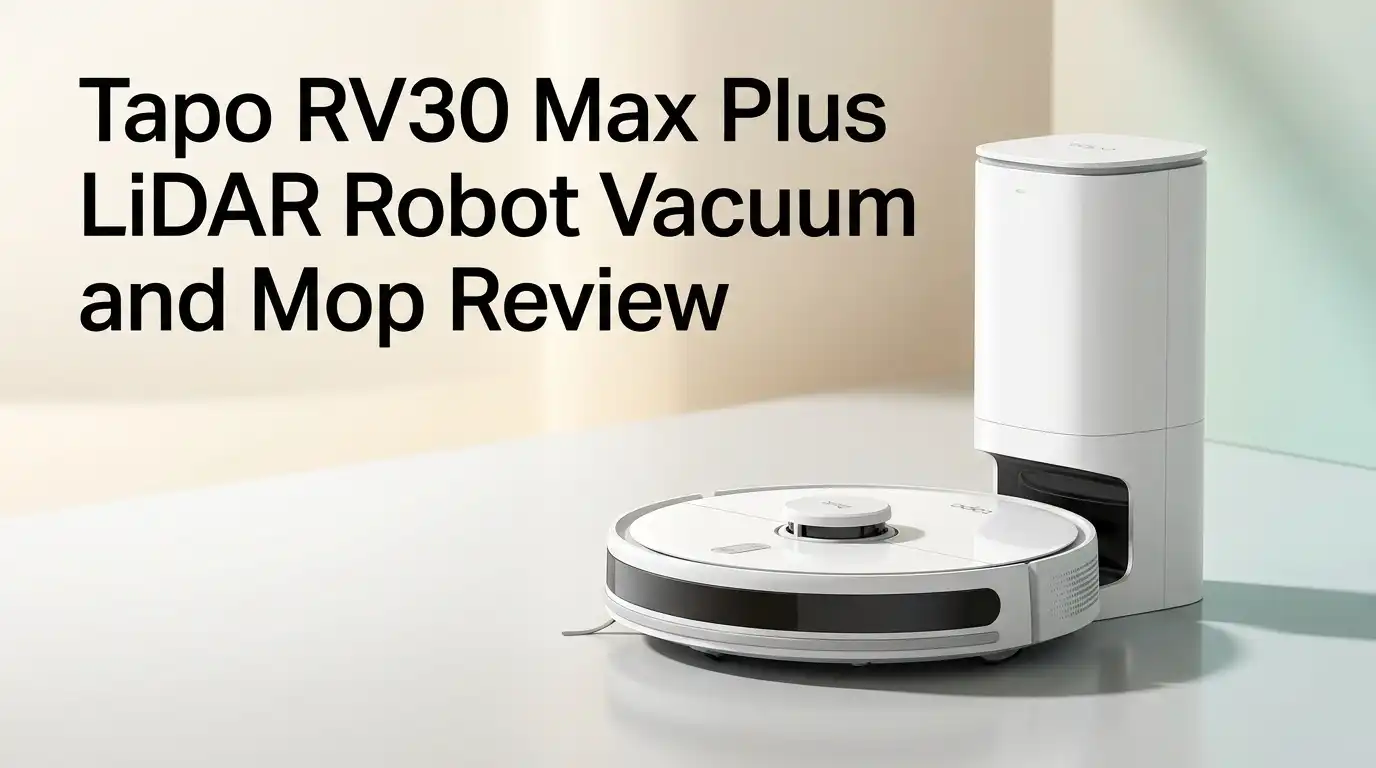
Tapo RV30 Max Plus LiDAR Robot Vacuum and Mop Review
Do you want clean floors without paying flagship prices? The Tapo RV30 Max Plus says it can do that. It has LiDAR navigation, 5300Pa suction, a mop, and a self emptying dock, all for a fair price.
But does it work in a real home? We looked at its features, its daily performance, and its weak spots. This review covers the good, the bad, and who should buy it. Keep reading before you spend your money.
Key Takeaways
- Strong value for the price: The RV30 Max Plus gives you LiDAR mapping, a mop, and an auto empty dock for much less than premium brands. Most buyers get core smart features without extra cost. It fits a tight budget well.
- Good on carpets and big debris: The 5300Pa suction picks up crumbs, cereal, and rice in one pass. Carpet cleaning is its best skill. Fine dust and sand are harder for it, so expect some leftovers.
- Mopping is basic: The mop works for light spills and daily dust. It does not lift the mop pad or scrub hard. Treat the mop as a light wipe, not a deep floor wash.
- Pet hair is a weak spot: Long hair wraps around the main brush. You may need scissors to clear it. Homes with heavy shedding pets should look at other models.
- Hands free for weeks: The dock holds a 3L dust bag. Tapo says it lasts up to two months. You rarely touch dirt with this vacuum.
- Best for small homes: This robot suits apartments and small houses with simple layouts. Cluttered floors with cords and socks will cause trouble, so tidy up first.
Tapo RV30 Max Plus: Quick Overview

Last update on 2026-11-19 / Affiliate links / Images from Amazon Product Advertising API
The Tapo RV30 Max Plus is a robot vacuum and mop combo from TP-Link’s smart home brand. It sits in the budget to midrange class. Its list price is around $330, and sales often drop it lower.
The robot uses LiDAR and IMU dual navigation to map your home. It offers 5300Pa of suction and five suction levels. It also has a 300ml water tank for mopping.
The real selling point is the dock. The robot empties its own dustbin after each run. You only change the bag every few weeks. It also works with Alexa and Google Home. For a first robot vacuum, it gives you a lot for the money.
Unboxing Experience
The box arrives well packed. Foam blocks hold the robot and dock in place. Nothing moves around inside, so damage in shipping is unlikely.
Inside the box, you find the robot vacuum, the auto empty dock, a pre installed dust bag, a mopping module with a pad, a side brush, a power cord, and a quick start guide. Setup takes only a few minutes. You attach the side brush, plug in the dock, and place the robot on it.
The first impression is positive. The robot feels solid in the hand. The dock is slim and tall, so it fits next to a wall or sofa. We liked that the dust bag comes already installed. You can start cleaning the same day without extra parts.
Design and Build
The RV30 Max Plus has a classic round shape. It measures 13 inches wide and 3.9 inches tall. The LiDAR turret sits on top, which adds height. It may not fit under very low sofas.
The dock measures about 9 by 6.5 by 13 inches. That is small for a self emptying base. It fits well in tight apartments and hallways.
The robot has three simple buttons on top. You can start, pause, or send it home without the app. A top sensor helps the robot detect low spaces and reverse out. It climbs thresholds up to 0.87 inches (22mm), so most door strips and thin rugs are not a problem. The plastic finish looks clean, but it shows fingerprints over time.
Top 3 Alternative for Tapo RV30 Max Plus
Roborock Q7 M5+

Last update on 2026-11-19 / Affiliate links / Images from Amazon Product Advertising API
eufy L60 Robot Vacuum with Self Empty Station

Last update on 2026-11-21 / Affiliate links / Images from Amazon Product Advertising API
DREAME D10 Plus Gen 2


Last update on 2026-11-21 / Affiliate links / Images from Amazon Product Advertising API
Key Specifications at a Glance
Here is a simple look at the main specs. These numbers help you compare it with other robots.
- Suction: 5300Pa with 5 suction levels
- Navigation: LiDAR plus IMU dual system
- Battery: 2600mAh, up to 3 hours runtime on low power
- Charging time: About 4 hours
- Dustbin: 300ml (10oz) on the robot
- Dock bag: 3L sealed bag, up to 2 months
- Water tank: 300ml with 3 water levels
- Climbing height: 0.87 inches
- Maps: Up to 4 floor maps
- WiFi: 2.4GHz only
The specs look strong for this price range. Keep in mind that real world runtime drops on higher suction modes. The 2.4GHz WiFi limit also matters if your router only runs 5GHz.
Setup and the Tapo App
Setup is simple. You download the Tapo app, create an account, and add the robot. The app walks you through each step. Most people finish setup in about 10 minutes.
The first mapping run takes around 15 minutes for a small home. After that, you can split rooms, name them, and add furniture to the map. You can also set virtual walls and no go zones for pet bowls or kids’ play areas.
The app gives you plenty of control. You can set schedules, change suction per room, and save custom presets. However, some menus hide behind small icons. New users may need a little time to find every option. Once you learn it, the app feels smooth and useful. Alexa and Google voice control work well for quick starts.
LiDAR Navigation and Mapping
LiDAR is the heart of this robot. The spinning laser scans the room in 360 degrees. It builds an accurate map fast, even in low light or full darkness.
The robot cleans in neat, straight lines. It does not bump around at random like cheap vacuums. Map locking stops the robot from redrawing your layout by mistake. It also stores up to four maps, which helps in homes with more than one floor.
But navigation is not perfect. The robot has no camera for object recognition. It often misses thin cords, socks, and small toys. Sometimes it pushes small items across the floor. It can also get slowed down around chair legs. Pick up clutter before each run for the best results.
Suction Power and Hard Floor Cleaning
The 5300Pa suction is strong for a robot in this class. Tapo uses its DeepVac system with a better air inlet and brush design. The brand claims over 97% dust pickup.
On hard floors, the robot does a great job with bigger debris. Cereal, rice, and crumbs vanish in a single pass. This makes it a great helper after meals.
Fine particles are a different story. Sand and coffee grounds can stay behind, especially near edges and corners. Sometimes the robot ends a run too early and leaves small piles. You may need a second pass on max suction for gritty floors. For daily upkeep, it is good. For deep cleaning, it falls short.
Carpet Cleaning Performance
Carpet cleaning is where this robot shines. It handles low and medium pile carpets with ease. Big debris comes up on the first pass.
The app lets you add carpets and rugs to the map. You can set them by size or by room. The Suction Boost feature raises power on carpet to pull deeper dirt. This helps a lot in high traffic areas.
During mopping mode, the robot avoids mapped carpets to keep them dry. This is a smart touch for a budget model. Edges and corners on carpet can still look uneven. Fine sand also needs extra passes. Thick shag rugs may slow it down. Overall, carpet owners will be happy with the results for everyday cleaning.
Mopping Performance
The RV30 Max Plus uses a simple drag mop. You attach the mop module with a 300ml water tank. The app offers three water flow levels.
The mop works well on light dust, footprints, and small dried spots. It leaves floors fresh without puddles. That is a nice result for a quick daily wipe.
But the mop has clear limits. It does not lift the pad on carpet. It does not spin or scrub with pressure. Heavy stains and sticky kitchen spills often stay behind, especially near walls. Some users say the floor still shows dirt after a towel wipe. Think of the mop as a bonus, not a main feature. If mopping matters most to you, a model with spinning mops is a better choice.
Pet Hair Handling
This is the weakest area of the RV30 Max Plus. The robot does pick up surface fur along edges and borders. However, long hair wraps tightly around the main brush.
The brush has no strong anti tangle design. Over time, hair builds up and lowers suction. Cleaning the roller can take about ten minutes. Many owners keep scissors close by for this job.
Short hair from small pets is easier to manage. Long human hair and heavy shedding dogs cause the most trouble. If you own a husky, golden retriever, or long haired cat, plan for weekly brush cleaning. Pet owners with heavy shedding should consider an alternative with a rubber or anti tangle brush.
Self Emptying Dock
The auto empty dock is a big win at this price. After each cleaning run, the robot returns home. The dock then sucks the dirt from the robot’s bin into a sealed bag.
The 3L bag holds dirt for up to two months, based on Tapo’s numbers. Real life use depends on home size, pets, and how often you clean. Most users change the bag every 4 to 8 weeks.
The sealed bag keeps dust inside, which helps people with allergies. The emptying process is loud, around 76dB, but it only lasts a few seconds. You can also use Do Not Disturb mode at night. Replacement bags are a regular cost, so stock up early. Third party accessory packs are easy to find and affordable.
Battery Life and Noise
The 2600mAh battery gives up to 3 hours of runtime on the lowest setting. Higher suction drains it much faster. Most small to medium homes finish in one charge.
If the battery runs low, the robot goes back to charge. Then it resumes cleaning from where it stopped. This feature helps in larger homes. A full charge takes about 4 hours.
Noise is fair for a robot vacuum. It runs at around 55dB on standard suction. That is quiet enough to watch TV in another room. However, some users notice a high pitched whine during cleaning. The voice prompts sound clear and friendly. Overall, the noise level is easy to live with for daily runs.
What It Does Not Do Well
Every product has flaws, and this robot is no different. Here is an honest look at its main weak spots.
First, obstacle avoidance is weak. It has no camera, so it misses cords, socks, and pet messes. Second, pet hair tangles around the main brush often. Third, the mop is basic. It does not lift, spin, or scrub stubborn stains.
Fine debris is also a challenge. Sand and coffee grounds can stay near edges. The onboard dustbin is small at 300ml, though the dock helps with that. The app hides some settings behind icons. Finally, it only connects to 2.4GHz WiFi. If you know these limits before buying, you will not feel let down.
Pros and Cons
Pros
- Great value for a LiDAR robot with a self emptying dock and mop.
- Strong carpet cleaning with Suction Boost for rugs and high traffic zones.
- Fast and accurate LiDAR mapping with up to four saved floor maps.
- Compact dock that fits small apartments and tight corners.
- Up to 2 months hands free thanks to the 3L sealed dust bag.
- Fair noise level for daily runs, plus Do Not Disturb mode.
- Alexa and Google support for easy voice control.
Cons
- Weak obstacle avoidance with cords, socks, and small items.
- Hair tangles around the main brush and needs manual removal.
- Basic mopping with no mop lift or scrubbing action.
- Misses fine debris like sand near edges and corners.
- Works with 2.4GHz WiFi only, so 5GHz routers will not connect.
- Some app menus feel hidden and take time to learn.
Who Should Buy the Tapo RV30 Max Plus?
This robot suits a clear group of buyers. It works best for people in apartments or small homes with simple layouts. It also fits first time robot vacuum buyers who want smart features on a budget.
It is great for daily upkeep between deep cleans. If your home has carpets and rugs, you will enjoy its suction. If you hate emptying bins, the dock is a big plus.
Skip it if you have heavy shedding pets. Skip it if your floors are full of cords and toys. Also skip it if you want strong mopping for sticky kitchen floors. In those cases, spend a bit more on a model with camera based obstacle avoidance and spinning mops.
Final Verdict
The Tapo RV30 Max Plus is a smart, affordable helper for everyday cleaning. It brings LiDAR mapping, strong suction, and a self emptying dock to a budget price. That combo is hard to beat.
It cleans carpets well and handles big crumbs with ease. The app gives you good control once you learn it. For small homes, it makes daily cleaning simple.
Still, it is not a perfect robot. Pet hair, thin cords, and sticky stains expose its limits. Think of it as a daily maintenance robot, not a deep cleaner. If your expectations match that role, the RV30 Max Plus is worth buying in 2026.
FAQs
Does the Tapo RV30 Max Plus work with 5GHz WiFi?
No. The robot only connects to 2.4GHz WiFi. Most routers offer both bands, so you can turn on the 2.4GHz band during setup.
How often do I need to change the dust bag?
Tapo says the 3L bag lasts up to two months. Homes with pets or daily cleaning may need a new bag every 4 to 6 weeks.
Can the Tapo RV30 Max Plus mop and vacuum at the same time?
Yes. You attach the mop module, and it vacuums and mops in one run. It skips mapped carpets in mop mode to keep them dry.
Is the Tapo RV30 Max Plus good for pet hair?
It picks up surface fur well. However, long hair tangles around the main brush. Heavy shedding homes may want a model with an anti tangle brush.
Does it work with Alexa and Google Home?
Yes. You can start, pause, and send it home with voice commands through Alexa or Google Assistant.
How long does the battery last?
The battery lasts up to 3 hours on the lowest suction. Higher power modes shorten the runtime. The robot recharges and resumes cleaning on its own.
Can it clean multiple floors?
Yes. It saves up to four maps. You carry it to another floor, and it recognizes the saved map for that level.

Hi, I’m Grace Bell, the founder of CleanFloorVault.com, where I personally test and review vacuum cleaners to help you find the perfect tool for a spotless home.