
Dreame Robot Vacuum Review 2026: Worth Buying?
Robot vacuums used to be simple pucks that bumped into walls and gave up. That era is over. Dreame now builds machines that climb thresholds, wash their own mop pads with hot water, and recognize a sock before they eat it. The brand has grown fast, and in 2026 it sits right beside Roborock at the top of the market.
But Dreame also sells more than twenty active models. The names look like license plates. L50 Ultra, X60 Max Ultra Complete, Aqua10 Ultra Roller, Matrix10 Pro. Most buyers open the lineup page and close it again five minutes later.
This review fixes that. I spent time with the current Dreame flagships, read through independent lab results, and dug into what real owners complain about after six months of daily use.
In A Nutshell:
- The Dreame L50 Ultra is the best pick for most homes in 2026. It delivers 19,500Pa suction, a dual roller brush that resists hair tangles, hot water mop washing at 167F, and threshold climbing up to 1.65 inches. Independent testing placed it at the number one spot on the Vacuum Wars top 20 list, scoring 90% on carpet deep clean tests when the average sits near 77%.
- Pet owners get the biggest win. The L50 Ultra collected 100% of flattened pet hair from carpet in lab testing. The average robot manages 81%. The HyperStream DuoBrush handles hair up to 11.8 inches long without wrapping.
- Battery life is the honest weakness. Real world coverage lands around 823 square feet per charge, which is below average. Large homes will see the robot recharge midway through a job. Recharge and resume saves you, but patience helps.
- Mopping is good, not perfect. Dried stain removal beats the average, yet the lowest water setting underperforms. Set water flow to medium or above for real results.
- Skip the flagship X60 tier unless you need it. The X50 Ultra now sells near $899 and delivers almost the same daily experience for hundreds less.
- Dock size surprises people. These stations are tall and wide. Measure your space before you order.
Why Dreame Became A Serious Contender in 2026


Last update on 2026-09-25 / Affiliate links / Images from Amazon Product Advertising API
Dreame started as a Xiaomi backed appliance maker and spent years as the value alternative. That label no longer fits. The company now ships hardware ideas before anyone else does, and the rest of the industry follows within a year.
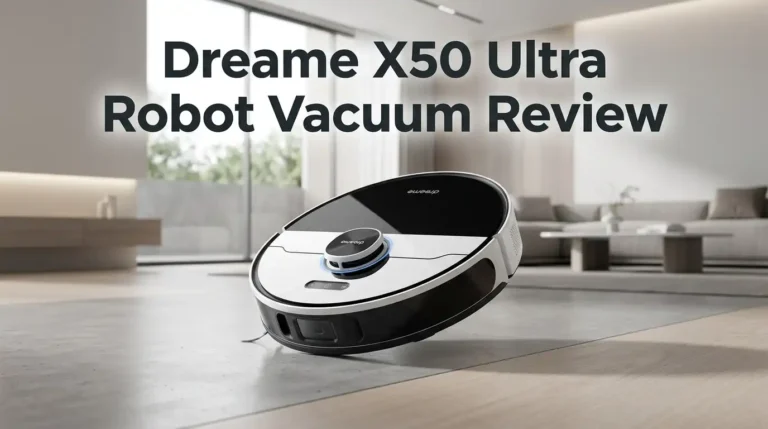
Take the ProLeap system. Retractable legs lift the front of the robot so it can hop over door tracks and raised thresholds. Dreame claims 1.65 inches straight up and 2.65 inches on two tiered steps. Independent testers confirmed a clean crossing of a 36mm board, the first robot to manage it. Competing flagships from Roborock cap out near 30mm.
Then there is the retractable LiDAR turret on the X50 Ultra. Top mounted LiDAR maps homes better than any other method, but it makes robots tall. Dreame solved this by dropping the turret into the body, shrinking the robot to 3.5 inches so it slides under low sofas and bed frames.
The dock hardware improved too. The AceClean DryBoard replaced the old squeegee design with 20 spray nozzles and a flat washing surface. Hot water hits the pads, hot air dries them, and a color sensor checks the dirty water before deciding whether to wash again.
Dreame ships innovation first and polishes it later. That is the honest summary. Early firmware on new models can be rough. Six months in, most of it works as advertised. If you like being slightly ahead, Dreame suits you. If you want boring reliability from day one, wait for the second firmware wave.
Dreame L50 Ultra: The Best Dreame For Most Homes
The L50 Ultra confused people at launch. It carries an L badge, which used to mean midrange, yet it outperforms the X50 flagship that came before it. Dreame’s naming does not always match capability, and this model proves it.
Here is what you get. 19,500Pa of Vormax suction paired with the HyperStream Detangling DuoBrush, a dual roller design that channels hair toward one tapered end instead of letting it wrap. A single extending side brush reaches into corners. Two spinning mop pads scrub floors and lift 10.5mm when the robot senses carpet.
The dock handles nearly everything. It empties the 400ml dust bin into a 3.22L bag rated for 100 days. It washes pads with 167F water across four temperature settings. It dries them with hot air, which matters more than people realize because damp pads smell within two days. It refills the onboard tank and mixes in cleaning solution from a separate reservoir.
Lab numbers back the marketing. Carpet deep clean hit 90%, a top five result out of more than 150 robots tested. Pet hair pickup on carpet reached a perfect 100%. Mopping scored 211 points against an average of 188, and it left just 0.35g of water behind compared to the 1.01g average.
Navigation efficiency measured 0.80 meters per minute, faster than the 0.70 average. Obstacle avoidance scored 20 out of 24 using an RGB camera, front lasers, and an LED for dark rooms.
The L50 Ultra is the model I would buy with my own money.
Unboxing The L50 Ultra: What Actually Arrives
The box is heavier than expected. Around 40 pounds with the dock, so plan on carrying it with two hands or sliding it across the floor.
Inside, the dock sits in the top tray wrapped in molded foam. The robot sits below it. Everything is packed tightly with cardboard inserts rather than loose foam peanuts, which makes the first five minutes cleaner than most appliance unboxings.
You get the robot, the base station, two clean water and dirty water tanks already seated in the dock, a 3.22L dust bag preinstalled, one bottle of Dreame cleaning solution, a spare side brush, a spare filter, two mop pads, and a quick start guide. The included solution bottle runs out in roughly two months of daily mopping. Budget for refills or plan to use plain water.
Setup takes about fifteen minutes. Peel the protective film from the LiDAR dome and sensors, a step people skip and then wonder why navigation fails. Fill the clean water tank. Plug in the dock against a flat wall with half a meter of clearance on each side and at least a meter in front. Download the Dreamehome app, scan the QR code under the dust bin lid, and connect to 2.4GHz WiFi.
The first mapping run took under six minutes in a 900 square foot space. The robot drives the perimeter, builds the floor plan, then asks you to name rooms. Room splitting was accurate enough that I only merged two spaces manually.
One annoyance. The app pushes a firmware update immediately, and you cannot clean until it finishes. Expect ten extra minutes.
Top 3 Alternative for Dreame L50 Ultra

Last update on 2026-09-25 / Affiliate links / Images from Amazon Product Advertising API
Dreame X50 Ultra

Last update on 2026-09-25 / Affiliate links / Images from Amazon Product Advertising API
Dreame Aqua10 Ultra Roller

Last update on 2026-09-25 / Affiliate links / Images from Amazon Product Advertising API
Dreame Matrix10 Ultra
Vacuuming Performance On Carpet And Hard Floors
Suction numbers on the box mean almost nothing. Brush design and seal quality decide how much a robot actually collects, and this is where recent Dreame models pulled ahead.
The DuoBrush uses two rollers in one module instead of a single brush bar. One roller agitates, the other channels debris inward. Hair travels toward the tapered end rather than winding around the axle. In hair tangle testing with 7 inch strands, the X50 Ultra recorded 0% tangling when the average robot ends up at 30%. That result is rare.
On hard floors, both the L50 and X50 swept nearly every debris type cleanly. Rice, oatmeal, cat litter, coffee grounds, and flour all disappeared in a single pass without scattering. Scattering matters because a robot that flings debris into corners creates work rather than removing it.
Carpet results were strong. Deep embedded sand removal from medium pile carpet reached 90% on the L50 Ultra and 83% on the X50 Ultra. Both include carpet boost, which raises suction automatically when the robot detects a rug.
Bench testing told a less flattering story. Raw suction and airflow on the X50 Ultra measured roughly average, and crevice pickup on maximum power was weak. The dual roller design opens a wider gap at the housing, which hurts narrow slot tests. It did not affect real floor results, but it explains why spec sheets alone mislead buyers.
Edge cleaning improved with the extending side brush, though a faint dust line along baseboards still appears. Turning off Collision Avoidance Mode in the app helps the robot drive closer to walls.
Mopping And The Dock Automation
Mopping is where robot vacuums usually disappoint, and where Dreame has quietly improved the most.
Both flagships use two spinning pads rather than a dragged plate. Spinning creates actual scrubbing pressure. One pad extends sideways when the robot detects a wall, so edges get wet instead of staying dry. The pads lift 10.5mm over carpet, letting you vacuum and mop mixed flooring in one run.
The best feature costs nothing extra. Magnetic mop pads can stay in the dock. Choose vacuum only or mop after vacuum, and the robot leaves its pads behind, drives the carpet dry, then returns to collect them for the mopping pass. Very few competitors offer this.
Dried stain results were above average. The L50 Ultra scored 211 combined mopping points against 188 average and used less water doing it. The X50 Ultra reached 187 points, decent but a step behind.
The dock deserves credit. Hot water washing runs at 167F on the L50 and 176F on the X50. Hot air drying follows. A dirty water color sensor triggers extra washes or a remop if the floor was filthier than expected. The AceClean DryBoard resists the gunk buildup that plagued older squeegee designs.
Here is the catch. On the lowest water setting, dried stain performance drops below average. Do not run mop mode on minimum and expect results. Set water flow to medium or one notch higher. Also expect to rinse the dock tray by hand every few weeks, because no robot cleans its own washing bay perfectly.
Obstacle Avoidance And Navigation Intelligence
Obstacle avoidance separates a robot you trust from one you babysit.
Dreame combines three systems. Top mounted LiDAR builds the map. An RGB camera identifies objects using AI trained on 180 to 200 recognized items. 3D structured light measures depth. The L50 Ultra adds an LED so the camera keeps working in dark rooms, which solves the classic problem of robots going blind under furniture.
Test scores landed at 20 out of 24 for both models, well above the 16.6 average. In practice, the robots avoided shoes, charging cables, pet bowls, and socks reliably. Thin cords remain the hardest challenge for every brand, and a stray phone charger still gets swallowed occasionally.
Mapping speed impressed me. Both models mapped a full floor plan in five to six minutes. Multi level maps let you save several floors, and the app supports virtual barriers, no go zones, no mop zones, furniture placement, and custom room order.
The camera also powers remote video monitoring and a pet checkup mode that sends the robot looking for your dog. Fun, and genuinely useful if you travel.
Now the honest part. Early X50 Ultra firmware had real problems. Owners reported the robot spinning in circles, maps vanishing overnight, and false mop pad errors. Firmware patches through 2025 fixed most of it. If you buy a brand new Dreame model in its first months, expect bugs and update immediately.
The other complaint stands. Collision avoidance can make these robots timid. They keep a buffer from walls by design, which leaves dust along baseboards.
Battery Life: The Real Weakness
Every review needs a section like this, and for Dreame it is battery performance.
The specs look fine. A 6,400mAh pack, 200 minutes claimed on the L50 Ultra, 220 minutes on the X50 Ultra. Those numbers come from the quietest suction mode with no mopping, which nobody actually uses.
Measured across realistic settings, the picture changes. The L50 Ultra covered roughly 823 square feet per charge. The average tested robot covers more. The X50 Ultra did somewhat better at about 1,130 square feet, but still scored below average on battery efficiency.
Why? Carpet costs power twice over. The motor works harder and the drive wheels fight more friction. Add mopping, add the extending brush arm, add carpet boost, and consumption climbs. Owners with large carpeted homes notice it most. One user summarized it bluntly: one minute of use equals one percent of battery.
Recharge and resume covers the gap. The robot docks, charges, and returns to finish. The L50 Ultra charges fast, so the pause is shorter than on most rivals. Still, a 2,000 square foot home means the robot runs, rests, and runs again. It feels like the thing never stops working.
Several settings help. Turn on Power Saving Cleaning under More Functions. Use Standard suction on hard floors and low water flow. Disable Automatic Recleaning if you do not need second passes. Choose Quick Route for light cleanups, which skips the edge pass. Reorder rooms so the kitchen finishes before the battery drops.
Start every run at 100% and leave the dock plugged in permanently.
The Dreamehome App And Smart Features
Software makes or breaks an expensive appliance, and Dreamehome is one of the better apps in this category.
Control depth is the strength. You adjust suction across quiet, standard, turbo, and max, with a Max Plus toggle on newer models. Water flow has multiple levels. You set behavior per room, so the bathroom gets heavy water and the bedroom gets a quiet pass. You schedule runs by day, room, and mode.
Useful extras keep appearing. Mopping along the wood grain is a small setting that produces noticeably better looking floors. CleanGenius uses AI to pick settings per room and recleans dirty spots automatically. Auto empty frequency can be raised so the bin dumps several times per session, which matters for heavy shedding pets. Dirt detection flags areas that need attention.
The X50 Ultra added a built in voice assistant, Matter support, smartwatch control, and home screen widgets. Alexa, Google Assistant, and Siri shortcuts work across the lineup.
Two caveats. The iOS app rates noticeably higher than the Android version, and Android users report more sync issues and occasional blank screens. Second, the sheer number of settings overwhelms some people. There are menus inside menus. If you want a single start button and nothing else, this app will feel like too much.
Firmware updates arrive often. Most fix real problems. Occasionally one introduces a new quirk, which is the price of buying from a company that ships features quickly.
Pet Hair Performance: Where Dreame Wins Big
If you own a shedding animal, this section matters more than any spec sheet.
Dreame’s DuoBrush was built for hair, and the results show it. The L50 Ultra picked up 100% of flattened pet hair from carpet in controlled testing where the average robot manages 81%. Flattened hair is the hard version of this test because the fibers press into the pile and resist lifting.
The X50 Ultra scored 98% on the same test, beating the older X40 Ultra at 76%. In long hair tangle testing, the X50 finished with zero percent wrapped around the brush. The redesigned side brush also resists tangling, which used to require weekly scissors work.
The dock helps. A 3.22L bag holds a lot of fur, and hot water pad washing prevents the smell that builds up when you mop with hair soaked pads. Live camera monitoring lets you check on the dog from work.
Here is the limitation nobody advertises. Reviewers with heavy shedding breeds found that the dual brushes spin hair into dense rolls, and those rolls can choke the intake port between the brush and the bin. When that happens, the robot still moves but stops collecting properly. You see hair lines left on the floor and know it is time to clear the port by hand. With a Great Pyrenees mix, this happened multiple times per week.
Three fixes help. Set auto empty to high frequency. Run the robot daily instead of twice weekly. Brush the pet outdoors during shedding season.
What Dreame Robot Vacuums Do Not Do Well
Authentic reviews name the flaws, so here they are without softening.
Battery efficiency trails competitors. Coverage per charge sits below average across the lineup. Homes over 1,500 square feet will see multiple recharge cycles.
Edge cleaning leaves a line. Both flagships keep a deliberate buffer from walls to protect the bumper and camera. The extending side brush closes part of the gap, never all of it. You will still spot clean under cabinets.
The docks are large. These stations are tall, deep, and visually loud. In a small apartment the dock becomes furniture. Measure first.
Low water mopping underperforms. The lowest setting does not lift dried stains. That limits your options if you have delicate flooring that cannot take much moisture.
Mop pads still dampen rugs. Pads lift 10.5mm, yet shaggy pile fibers reach up and touch them. Use the mop drop feature or mark rugs as no mop zones.
New models launch buggy. Spinning, map loss, and pad detection errors hit early X50 buyers. Firmware fixed it, but first adopters did the testing.
Customer support draws complaints. Multiple owners report slow or unhelpful responses when hardware fails. This is the most common frustration I found outside of battery life.
Naming is a mess. Ultra, Pro, Plus, Complete, Max, AE, CE, PE, FE. An L series model can outperform an X series model. You cannot shop by badge alone, which is exactly the problem.
Cheap models are not comparable. D series units with plate mops require manual pad cleaning and separate runs.
Pros And Cons of Dreame Robot Vacuums
Pros
- Class leading pet hair pickup. The DuoBrush collected 100% of flattened carpet hair on the L50 Ultra and produced zero tangling on long strands, beating nearly every rival tested.
- Threshold climbing that actually works. The ProLeap legs cross raised door tracks up to 1.65 inches, opening rooms other robots cannot reach, including sunroom additions.
- Excellent carpet deep cleaning. A 90% embedded sand removal score puts the L50 Ultra in the top five of more than 150 robots tested.
- The most complete dock in the category. Hot water washing, hot air drying, auto emptying into a 100 day bag, solution dosing, tank refilling, and dirty water sensing all happen without you.
- Magnetic mop pad dropping. The robot leaves pads in the dock for vacuum only runs, keeping carpets fully dry. Very few brands offer this.
- Deep app control. Per room settings, mopping along wood grain, scheduling, virtual barriers, pet checkup, and camera monitoring cover almost every request.
Cons
- Below average battery coverage. Roughly 823 square feet per charge on the L50 Ultra means recharge cycles in bigger homes.
- Edge dust remains. A deliberate wall buffer leaves thin dust lines along baseboards even with the extending brush.
- Large dock footprint. Small apartments will feel the size immediately.
- Hair can choke the intake. Heavy shedding households need manual clearing several times weekly.
- Support quality is inconsistent. Slow responses appear frequently in owner reports.
- Confusing lineup. Twenty plus overlapping models make comparison shopping genuinely hard.
Which Dreame Model Fits Your Home
Match the model to your floors and budget rather than chasing the highest number.
Most homes should buy the L50 Ultra. It covers mixed flooring, pets, obstacle clutter, and full dock automation at around $949. Nothing above it changes daily life enough to justify the jump.
Buy the X50 Ultra if you want flagship features for less. It sells near $899 and sometimes lower. You get the retractable LiDAR that drops the body to 3.5 inches, threshold crossing, 20,000Pa suction, and 176F pad washing. Slightly weaker mopping than the L50, better battery coverage.
Choose the Aqua10 Ultra Roller for hard floor homes. The roller mop refreshes continuously with clean water instead of smearing dirty water around. Kitchens, tile, and sticky spills favor this design. Carpet performance is less of a priority here.
Pick the Matrix10 Ultra for maximum automation. Multi mop switching and a three solution dock handle different floor types without your input. It is expensive and the station is big.
Consider the X60 Ultra only for hard homes. Low furniture, tall thresholds, heavy carpet, and several pets justify 35,000Pa and dual AI cameras. Otherwise the value gain does not match the price gain.
Budget shoppers should look at the D20 Pro Plus or D30 Ultra. The D20 Pro Plus gives LiDAR mapping, self emptying, and an anti tangle brush near $320. The D30 Ultra adds spinning mops and a washing dock near $455. Neither matches flagship mopping, and that is fine if vacuuming is your priority.
Price And Value in 2026
Dreame prices move constantly, which works in your favor if you wait.
Current street prices sit roughly like this. The L50 Ultra near $949. The X50 Ultra between $899 and $1,049 depending on the week. The X60 Ultra around $1,400. The Matrix10 Ultra near $1,999. The Aqua10 Ultra Roller in flagship territory. The D20 Pro Plus around $320 and the D30 Ultra near $455.
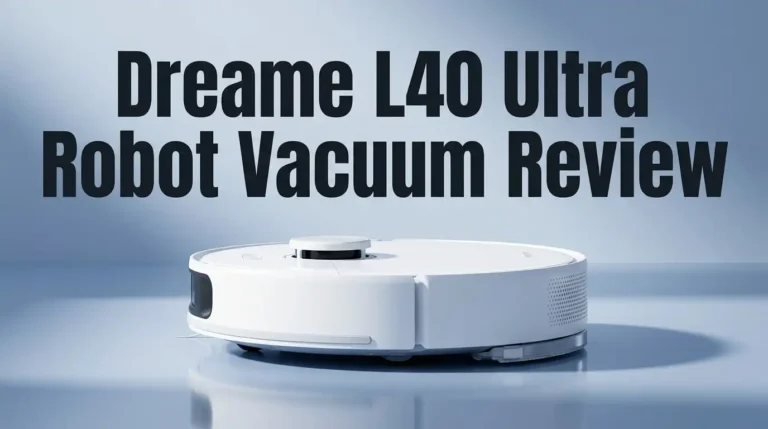
Never pay list price on a Dreame. These models discount heavily during Prime Day, Black Friday, and random lightning deals. The L40 Ultra dropped to $400 in one Amazon lightning deal, less than half its original positioning. Set a price alert and wait two weeks if you can.
Older flagships deliver the best value math. The X40 Ultra still cleans well and appears at steep discounts. The X50 Ultra at $899 gives you 90% of the current flagship experience. Buying last year’s top model is the smartest move in this category.
Factor running costs too. Dust bags, side brushes, filters, mop pads, and cleaning solution add roughly $60 to $100 per year. Accessory kits bundle these at lower cost than individual parts.
Value verdict. Around $900, the L50 Ultra competes directly with Roborock’s flagship tier and wins on pet hair and threshold climbing while losing on battery coverage. Below $500, the D series gives real automation without premium mopping. The awkward zone is $1,400 and up, where the price climbs faster than the capability.
Final Verdict: Should You Buy A Dreame in 2026?
Yes, for most people, with clear eyes about the trade offs.
Dreame builds the most interesting robot vacuum hardware right now. The climbing legs, the retractable LiDAR, the dual roller brush, and the multi function docks are not marketing gimmicks. They measurably change what the robot reaches and how much you touch it. The L50 Ultra sits at the top of independent rankings for good reason.
The brand is not perfect. Battery efficiency lags. Edges need spot cleaning. Docks dominate small rooms. New models arrive with bugs that take months of firmware to settle. Customer service reports are mixed. If any of those are deal breakers, that is a fair conclusion.
Buy the L50 Ultra if you want the best balance available. Buy the X50 Ultra if you find it discounted and want flagship hardware cheaper. Buy the Aqua10 Ultra Roller if your home is mostly tile and hardwood. Buy the D20 Pro Plus if you simply want floors vacuumed on a schedule for the lowest sensible price.
Do not wait for the next model. The Aqua20 with steam mopping and the X60 Pro Ultra with articulated arms are coming, and something better will always be six months out. The current lineup already handles daily cleaning well enough that waiting costs you time you could spend not vacuuming.
Set expectations correctly and a Dreame earns its place. Expect a machine that handles 90% of your floor cleaning and leaves you the corners.
Frequently Asked Questions
Which Dreame robot vacuum is best overall in 2026?
The L50 Ultra. It combines 19,500Pa suction, the detangling DuoBrush, hot water dock washing, and threshold climbing, and it currently holds the top position on independent test rankings. It suits mixed flooring homes with pets better than any other model in the lineup.
Is the Dreame L50 Ultra better than the X50 Ultra?
Yes, in most areas. The L50 Ultra scores higher on carpet deep cleaning, pet hair pickup, mopping, and navigation efficiency despite carrying the L badge. The X50 Ultra wins on battery coverage and offers the retractable LiDAR that lowers the body to 3.5 inches for low furniture.
How long does a Dreame robot vacuum battery last?
Official ratings reach 200 to 220 minutes on the quietest setting. Realistic mixed use coverage lands closer to 823 square feet per charge on the L50 Ultra and about 1,130 on the X50 Ultra. Larger homes trigger recharge and resume cycles.
Do Dreame robot vacuums handle pet hair well?
Very well. Testing recorded 100% flattened pet hair pickup on carpet for the L50 Ultra and zero tangling on long strands. The main annoyance is hair rolls occasionally choking the intake port in heavy shedding homes, which requires manual clearing.
Can a Dreame robot vacuum climb over door thresholds?
Yes. The ProLeap retractable leg system crosses single thresholds up to 1.65 inches and two tiered steps up to 2.65 inches. You specify the threshold in the app. This is the highest climbing capability currently verified in testing.
Does the Dreame dock really clean itself?
Mostly. The AceClean DryBoard washes mop pads with hot water through 20 nozzles, dries them with hot air, and empties debris into a 100 day bag. You still rinse the washing tray occasionally and replace bags, filters, and pads.
Are Dreame robot vacuums worth the price?
At around $900 for the L50 Ultra, yes for pet owners and mixed flooring homes. Above $1,400 the value gain slows considerably. Wait for sales, since Dreame discounts aggressively during major shopping events.

Hi, I’m Grace Bell, the founder of CleanFloorVault.com, where I personally test and review vacuum cleaners to help you find the perfect tool for a spotless home.