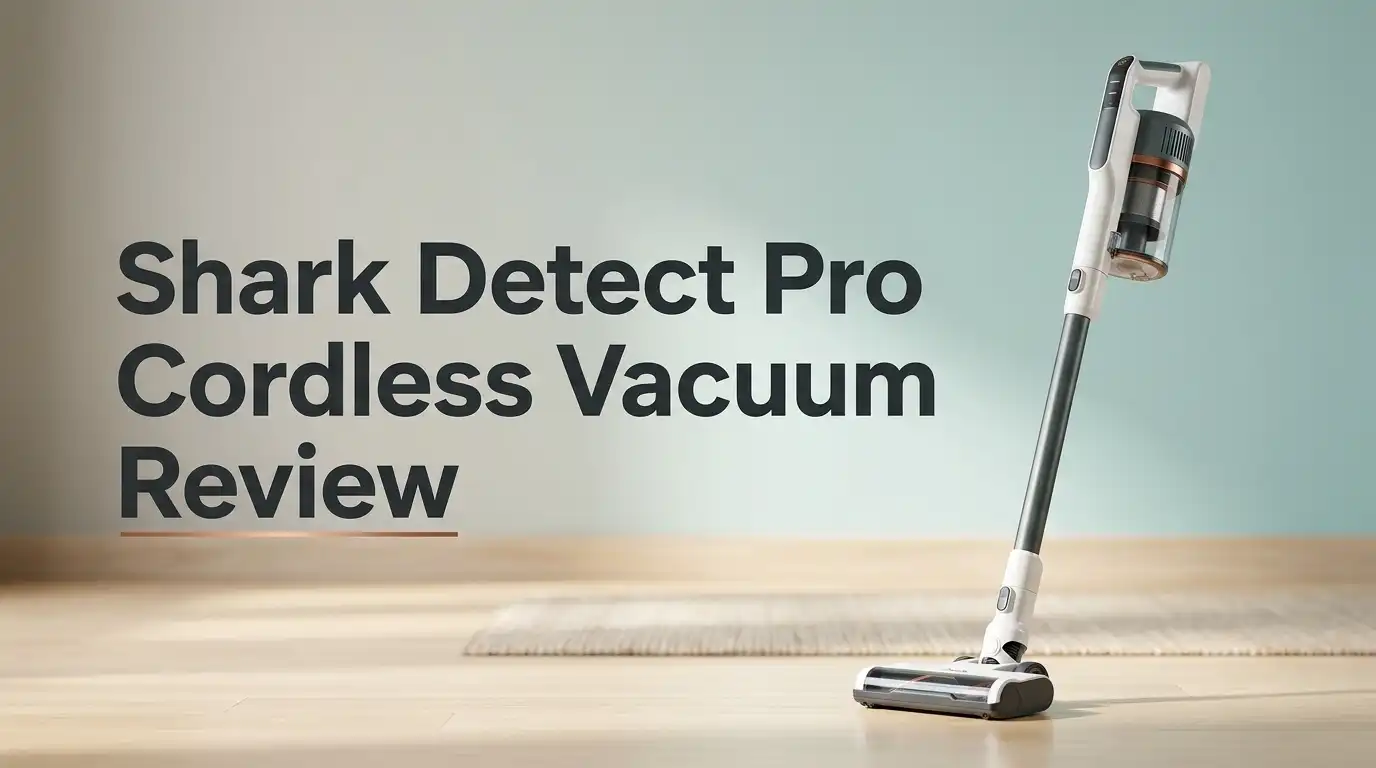
Shark Detect Pro Cordless Vacuum Review 2026: Worth Buying?
Cordless vacuums promise freedom, but most of them trade suction for convenience. The Shark Detect Pro tries to break that pattern with sensors that read your floor and adjust power on their own. It launched as one of Shark’s lightest stick vacuums and it still sells strongly in 2026.
I spent weeks pushing this machine across hardwood, low pile carpet, tile grout, and a very hairy dog bed. Some results impressed me.
A few results annoyed me. This review covers both sides honestly, including the things Shark does not advertise on the box.
In a Nutshell:
- Weight is the headline feature. The handle unit weighs roughly 1,200 grams, making it around 30 percent lighter than a standard Shark cordless stick. You can lift it overhead without your arm shaking.
- Hard floor cleaning is excellent. Independent lab testing recorded close to 99 percent debris pickup on hardwood, which sits well above the category average. Fine sand, cereal, and litter all vanished in one or two passes.
- Detect technology actually works. The vacuum uses a dirt sensor plus a floor type sensor, and it raises suction near walls. It is one of the few cordless vacuums that adjusts both suction and brushroll speed automatically.
- Battery life is the weak point. Shark lists 40 minutes on the standard model and 60 minutes on the Auto Empty version, but max power drains the pack in under 15 minutes. The battery pops out and swaps, which softens the blow.
- The dust cup is small. Capacity sits near 0.44 quarts, so large homes mean frequent trips to the bin unless you buy the self emptying base.
- Value is strong. You get HEPA sealing, tangle resistant combs, and smart sensors for roughly half the price of a flagship Dyson.
Shark Detect Pro Cordless Vacuum Overview

Last update on 2026-11-21 / Affiliate links / Images from Amazon Product Advertising API
The Shark Detect Pro is a cordless stick vacuum built around one idea: let sensors do the thinking. It ships in two main versions. The standard IW1111 comes with the vacuum, a removable battery, a crevice tool, and a wall clip. The IW3511 adds a base station that empties the dust cup for you.
Both versions share the same cleaning head, the same motor, and the same sensor package. Shark calls the floor head QuadClean, a successor to the older DuoClean design. It blends a soft roller and a bristle roller into a single unit with a tall front gate for larger debris.
The result is a vacuum that handles crumbs, pet hair, and fine dust without you switching heads. That flexibility is rare at this price.
Unboxing Experience and First Impressions
The box is smaller than you expect. Shark packs the wand, the handle unit, the floor head, and the crevice tool in molded cardboard with almost no plastic film. Assembly took me about ninety seconds with no tools.
The first thing I noticed was the weight. Picking up the handle unit feels closer to holding a full water bottle than holding a vacuum. It genuinely changes how you clean, because stairs and ceiling corners stop feeling like a workout.
The plastics feel decent, though not premium. The trigger free power button is a welcome touch since you never hold a trigger down. My one complaint at unboxing was the accessory count. One crevice tool is thin for a machine at this price.
Design, Build Quality, and Handling
The Detect Pro uses a slim profile with the motor and battery sitting behind the handle. This balance point keeps the weight close to your wrist instead of out in front. Long cleaning sessions feel easier as a result.
The swivel steering responds quickly. I could weave around chair legs with small wrist movements rather than dragging the head around. The floor head also lies almost flat, so it slides under a sofa with about five inches of clearance.
Build quality sits in the good but not luxurious range. The wand locks firmly with no wobble, and the bin release feels solid. Shark clearly spent its engineering budget on weight reduction and sensors rather than on metal finishes. For most buyers, that is the right trade.
QuadClean Floor Head Explained
The QuadClean head is the most interesting hardware on this vacuum. Instead of separating a soft roller and a bristle roller, Shark combined both functions into one brushroll. The soft section grabs fine dust. The bristle section agitates carpet fibers.
A tall front gate lets large debris roll under the head rather than getting pushed forward. In my cereal test, nothing scattered across the floor. That is a common failure point on soft roller vacuums, so the fix matters.
The head also carries LED lights and side sensors. The lights look nice but sit too high to reveal fine dust in a dark room. Dyson still owns that trick. For debris pickup, though, the QuadClean head competes with heads that cost far more.
Top 3 Alternative for Shark Detect Pro Cordless Vacuum
If the Detect Pro does not match your needs, these three models deserve a look.

Last update on 2026-11-20 / Affiliate links / Images from Amazon Product Advertising API
Dyson V15 Detect Cordless Vacuum Cleaner


Last update on 2026-11-21 / Affiliate links / Images from Amazon Product Advertising API
Shark PowerDetect Cordless Stick Vacuum IP1251

Last update on 2026-11-20 / Affiliate links / Images from Amazon Product Advertising API
Tineco Pure ONE S15 Essentials Cordless Vacuum Cleaner
Each one solves a different problem. The Dyson brings laser dust illumination and higher raw suction for buyers who want maximum power. The Shark PowerDetect stretches runtime to around seventy minutes with a bigger dust cup. The Tineco offers smart dust sensing at a friendlier price for smaller homes and apartments.
Detect Technology: Does It Really Work?
Yes, and it works better than I expected. The Detect Pro combines a particle counter with a floor type sensor. When you move from tile to rug, the brushroll speed and suction shift within a second or two.
A second system watches for walls. Sensors on both sides of the head boost suction when you edge along a baseboard. This fixes the classic cordless problem of dust lines left along skirting boards.
The LED ring on the handle glows when the sensor finds heavy debris, then changes color as the area gets clean. It sounds like a gimmick. In practice it stopped me from leaving a dirty patch under the kitchen table. Detect mode also protects battery life by avoiding full power on clean floors.
Cleaning Performance on Hard Floors
Hard floors are where this vacuum shines. Lab testing measured around 99.1 percent debris removal on hardwood, roughly six points above the average machine. My own results matched that feeling.
Sugar, flour, oats, and sand disappeared in a single forward pass. The soft roller section polishes the surface rather than skating over it. Larger debris like dry pasta went under the front gate without bouncing away.
Edge cleaning also impressed me. The wall sensors kicked in near cabinets and pulled dust out of the gap between the floor and the toe kick. If your home is mostly tile, vinyl, or wood, this is one of the easiest recommendations in the cordless category.
Carpet and Rug Results
Carpet performance is good, though not class leading. On low pile carpet the Detect Pro lifted surface debris and embedded sand with solid scores in deep clean testing. Everyday crumbs and pet hair came up quickly.
Medium pile carpet is where the limits show. The motor produces lower raw suction than premium rivals, so deeply embedded grit needs several slow passes. Thick plush carpet is not this machine’s happy place.
The brushroll does keep spinning at a useful speed on carpet thanks to the floor sensor. Think of the Detect Pro as a strong all rounder with a hard floor bias rather than a dedicated carpet machine. Homes with wall to wall plush carpet should consider a higher suction model instead.
Pet Hair and Tangle Resistance
Pet owners care about one thing: does hair wrap around the roller? Shark builds small combs into the head that scrape hair off the brushroll while it spins. In testing with both short and long hair samples, the system worked almost perfectly.
I ran fourteen inch hair strands through it repeatedly. Nearly everything went into the bin instead of knotting around the bar. You still get occasional fine strands near the end caps, so a quick check every month helps.
One honest caveat exists. Some owners report clogs when thick pet hair mixes with larger debris in the narrow neck above the head. It is not a daily problem, but it happens more often than on wider inlet vacuums.
Battery Life and Charging Reality
Here is the section where the Detect Pro loses points. Shark advertises 40 minutes on the standard model in low power. The Auto Empty model claims 60 minutes. Those numbers only appear in eco mode with a non powered tool.
Real usage tells a different story. Max power drained the battery in just under 15 minutes during my testing. Detect mode landed somewhere in the middle, usually around 25 to 30 minutes of mixed floor cleaning.
The saving grace is the removable battery. You can buy a spare, swap it in seconds, and double your cleaning window. Charging a depleted pack takes roughly three to four hours, so a second battery is close to essential for larger homes.
Dust Cup, Emptying, and the Auto Empty Base

Last update on 2026-11-21 / Affiliate links / Images from Amazon Product Advertising API
The dust cup holds about 0.44 quarts, which is roughly 330 milliliters. That is below average for the category and a direct result of the lightweight design. Expect to empty it every one or two rooms if you have pets.
Emptying is clean and simple. You press a button and the bottom hatch swings open over the trash. The bin rarely needs finger digging, which is a genuine plus for allergy sufferers.
The IW3511 Auto Empty model solves the capacity problem differently. The base sucks the dust cup empty into a sealed bag that lasts up to thirty days. The base adds noise and cost, but it removes the most annoying chore in cordless vacuuming.
Filtration, Noise, and Daily Comfort
Shark uses a complete seal HEPA system on both versions. Dust that enters the machine stays inside the machine. For anyone with asthma or seasonal allergies, that sealed path matters more than headline suction numbers.
Noise levels sit in the moderate range. Eco and Detect modes produce a steady hum you can talk over. Max power gets loud and whiny, though no worse than competing sticks.
Filter maintenance is easy but not free. You rinse the foam pre motor filters and let them dry fully, then tap out the HEPA filter. Replacement filters cost very little online. Skipping filter cleaning is the fastest way to lose suction on this vacuum, so put a monthly reminder on your phone.
What the Shark Detect Pro Does Not Do Well
Honest reviews name the flaws, so here they are. Raw airflow and suction measurements fall below average for the price bracket. Cleaning results stay strong because of the head design, but the motor is not a powerhouse.
The accessory kit is thin on the base model. One crevice tool does not cover upholstery, car interiors, or ceiling dusting. The LED lights on the head point too high to reveal fine dust on dark floors.
Thick carpet needs patience. Battery life under heavy load disappoints. The dust cup is small enough that pet owners will notice it quickly. None of these issues break the vacuum, but each one is real and worth weighing before you buy.
Pros and Cons
Pros
- Extremely light handle unit at around 1,200 grams, which makes stairs and high dusting simple.
- Outstanding hard floor pickup with close to 99 percent debris removal in lab testing.
- QuadClean head handles fine dust and large debris without switching attachments.
- Smart Detect sensors adjust suction, brushroll speed, and edge power automatically.
- Tangle resistant combs keep long hair off the brushroll with near perfect results.
- Sealed HEPA filtration keeps allergens inside the machine.
- Removable battery lets you swap in a fresh pack instantly.
- Price sits roughly half that of a flagship Dyson.
Cons
- Max power runtime drops under 15 minutes, which limits deep cleaning sessions.
- Dust cup capacity of 0.44 quarts fills fast in pet homes.
- Below average raw suction compared with premium rivals.
- Only one attachment included with the base model.
- Head LEDs sit too high to reveal fine dust effectively.
- Thick plush carpet needs multiple slow passes.
- Auto Empty base uses proprietary bags that add running cost.
Who Should Buy the Shark Detect Pro in 2026
Buy this vacuum if your home is mostly hard flooring with area rugs. That is the exact scenario where the QuadClean head and the floor sensors deliver the best results. Apartment owners and townhouse residents will love the light weight.
It also suits anyone with shoulder, wrist, or back limitations. The weight reduction is not a marketing line, it is the single most noticeable feature in daily use. Pet owners with one or two animals will appreciate the tangle resistant roller.
Skip it if you have wall to wall plush carpet, a very large home, or three shedding dogs. In those cases a higher suction model with a seventy minute battery and a bigger bin will serve you better over the long run.
Price and Value Verdict for 2026
The Detect Pro has been on the market long enough that discounts appear regularly. The standard model often drops well below its launch price during sales events. The Auto Empty version carries a premium that usually lands around the cost of a midrange cordless vacuum on its own.
Value depends on your floors. For hard floor homes, cleaning results rival vacuums costing twice as much. For carpet heavy homes, the value gap narrows quickly.
My verdict is simple. The Shark Detect Pro is a smart, light, and genuinely effective cordless vacuum with two obvious compromises in battery and bin size. If those compromises fit your home, it remains one of the best value cordless vacuums you can buy in 2026.
Frequently Asked Questions
How long does the Shark Detect Pro battery last?
Shark lists 40 minutes for the standard model and 60 minutes for the Auto Empty version in low power mode. Max power cuts that to roughly 15 minutes. Detect mode usually delivers 25 to 30 minutes of real cleaning. The battery detaches, so a spare pack doubles your runtime.
Is the Shark Detect Pro good for pet hair?
Yes, for most households. The tangle resistant combs strip hair off the brushroll while it spins, and long strands rarely wrap. The small dust cup is the limiting factor rather than the cleaning ability. Heavy shedding homes should consider the Auto Empty version.
What is the difference between IW1111 and IW3511?
The IW1111 is the standard Detect Pro with a wall clip and a crevice tool. The IW3511 adds a base station that empties the dust cup automatically into a sealed bag and extends the quoted runtime to 60 minutes. The vacuum itself is nearly identical.
Does the Shark Detect Pro work on carpet?
It works well on low pile carpet and acceptably on medium pile. The floor sensor raises brushroll speed when it detects carpet. Thick plush carpet exposes the lower raw suction, so expect several slow passes for embedded grit.
How often should I clean the filters?
Rinse the foam pre motor filters about once a month and let them air dry for 24 hours. Tap out the HEPA filter every few months. Suction loss on this model is almost always a dirty filter rather than a motor fault.
Is the Shark Detect Pro better than a Dyson?
It depends on your priority. Dyson offers higher suction, laser dust illumination, and longer runtime at a much higher price. The Detect Pro offers lighter weight, excellent hard floor pickup, and automatic sensing for roughly half the cost. For hard floor homes, the gap in real cleaning results is small.

Hi, I’m Grace Bell, the founder of CleanFloorVault.com, where I personally test and review vacuum cleaners to help you find the perfect tool for a spotless home.