Craftsman CMXEVBE17595 Wet/Dry Shop Vac Review 2026: Still Worth It?
Big messes do not wait for a convenient weekend. A water heater leaks on a Tuesday. A drywall project turns your garage into a dust cloud by noon.
A household vacuum simply gives up in those moments. The Craftsman CMXEVBE17595 is built for exactly those jobs, and it has quietly become one of the most purchased heavy duty shop vacuums in America.
This review covers real performance, real annoyances, and real value. You will learn how fast it clears water, how loud it actually runs, what the unboxing feels like, and where it falls short.
Key Takeaways
- Raw power is the headline. The 6.5 peak HP motor and 2.5 inch hose move roughly 274 cubic feet of air per minute in independent lab testing, which is the highest airflow in its class. Debris simply disappears instead of rattling around the hose.
- Wet cleanup is its strongest skill. Testers cleared a standing water mess in about 6 seconds, and the oversized bottom drain lets you empty 16 gallons without lifting or tipping the tank.
- The tank size is a blessing and a burden. You stop far less often to empty it. You also give up floor space, because the unit measures roughly 21 by 21 by 26.7 inches and weighs close to 24 pounds empty.
- It is loud. Measured sound sits around 96 decibels during use. Hearing protection is a smart call for long sessions in an enclosed garage.
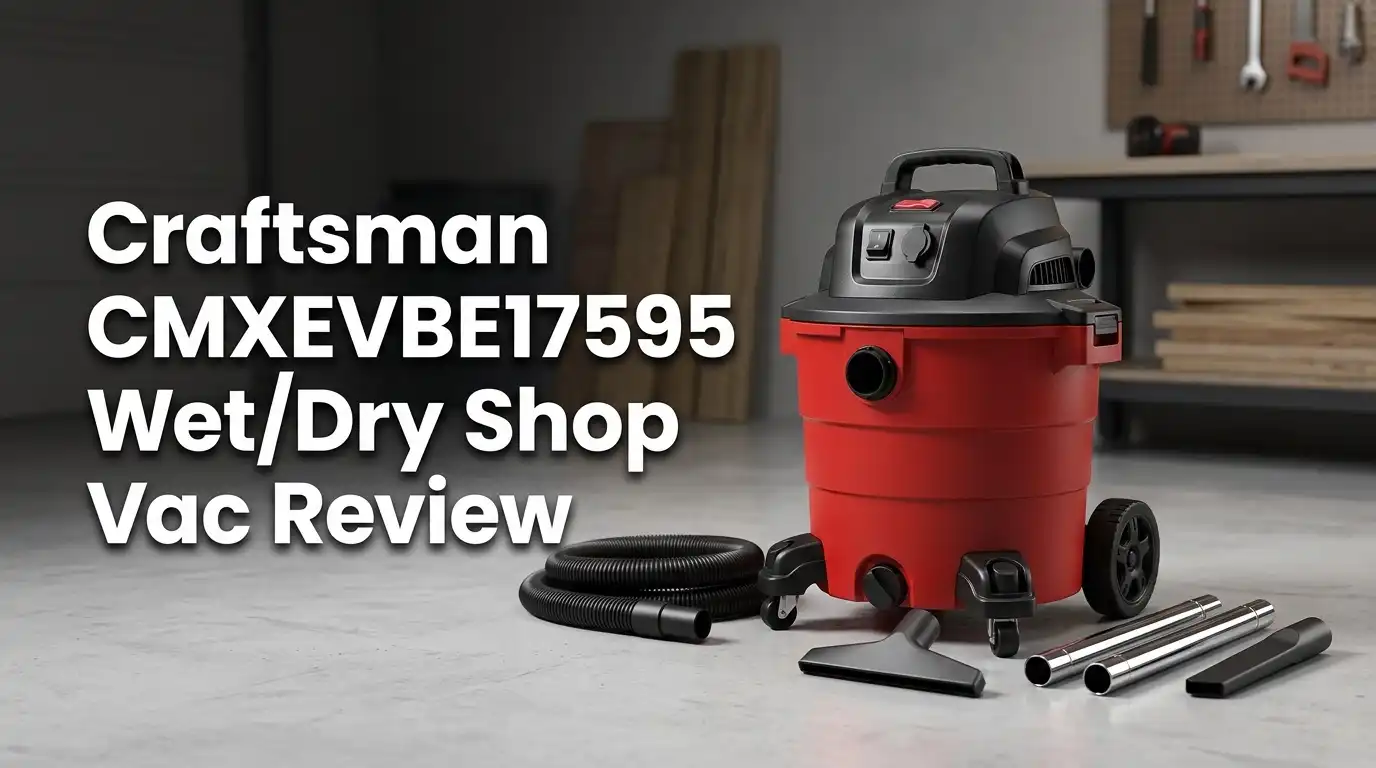
- Accessories are generous for the price. You get a utility nozzle, wet nozzle with squeegee, car nozzle, crevice tool, extension wands, filter, and a dust bag in the box.
- Weak spots are real. The lid latch feels flimsy, the car nozzle is awkward, caster installation takes patience, and replacement bags add ongoing cost.
Craftsman CMXEVBE17595 Wet/Dry Shop Vac Overview


Last update on 2026-11-20 / Affiliate links / Images from Amazon Product Advertising API
The CMXEVBE17595 sits at the top of Craftsman’s corded wet/dry vacuum range. It pairs a 16 gallon polypropylene tank with a 6.5 peak HP motor, which places it in the same category as professional jobsite vacs from Ridgid and Vacmaster.
Craftsman built this model for volume work. Think renovation debris one week and a flooded laundry room the next. It carries a 20 foot power cord, a 7 foot Dual Flex hose, a Qwik Lock filter system, and a rear blower port.
Street price usually lands between $150 and $180, depending on the retailer and the season. For that money you get capacity and airflow that smaller 5 and 9 gallon vacs cannot match. You also get a machine that needs a permanent home in your garage.
Unboxing Experience And First Impressions
The box arrives tall, wide, and heavier than expected. Everything sits nested inside the tank, which is a smart use of space and a small puzzle when you start pulling parts out.
Inside you find the motor lid, the tank, four casters with feet, the hose, two extension wands, four nozzles, a cartridge filter, and a dust collection bag. No tools are required, though a rubber mallet makes life easier.
The casters are the one frustrating step. They press fit into the feet, and they need real force to seat fully. Most people spend five to ten minutes here and feel a little annoyed.
Once assembled, the machine feels solid. The tank walls resist flex, the handle sits centered on top, and the whole unit looks like shop equipment rather than a household appliance.
Full Specifications At A Glance
Here is the quick technical picture in plain language.
The tank holds 16 gallons of wet or dry debris. The motor is rated at 6.5 peak horsepower and draws roughly 12 amps on a standard 120 volt outlet. The hose measures 2.5 inches wide and 7 feet long with Dual Flex ends that swivel 180 degrees to resist kinking.
The power cord stretches 20 feet, which is longer than many rivals in this price bracket. Measured weight is around 23.75 pounds empty. Dimensions sit near 21 by 21 by 26.7 inches.
Lab measured airflow reached 274 CFM, with water lift near 50 inches. Translation: it moves enormous volumes of air rather than relying on narrow, high pressure suction. That design choice explains why it swallows wood chips and bark without clogging.
Top 3 Alternative for Craftsman CMXEVBE17595

Last update on 2026-11-20 / Affiliate links / Images from Amazon Product Advertising API
RIDGID 16 Gallon Stainless Steel Wet Dry Vacuum

Last update on 2026-11-20 / Affiliate links / Images from Amazon Product Advertising API
Vacmaster Professional Beast Series 16 Gallon Wet/Dry Vac

Last update on 2026-11-20 / Affiliate links / Images from Amazon Product Advertising API
Shop Vac 5761311 12 Gallon Wet/Dry Shop Vacuum
Suction Power And Airflow Performance
Airflow is where this Craftsman separates itself. Independent testing recorded 274 CFM, the top result in a field that averaged far lower. That number matters more than marketing horsepower claims.
Wide hoses usually cost you suction. This motor compensates. Sawdust, screws, wood shavings, pine needles, and drywall dust all travel through the 2.5 inch hose without hesitation.
We pushed the nozzle straight into a pile of bark mulch and it kept eating. That is the kind of behavior that saves twenty minutes on a cleanup day.
Water lift sits near 50 inches, which is middle of the road. Deep pile carpet and embedded fine grit are not its specialty. Volume is its specialty. For garage floors, workshops, basements, and job sites, that tradeoff lands in your favor almost every time.
Wet Pickup And Draining The Tank
Water handling is the feature owners praise most. In timed testing, this vac cleared a wet mess in roughly 6 seconds, faster than every competitor in the same test group.
The wet nozzle includes an integrated rubber squeegee. It pulls water off concrete and tile in clean passes instead of pushing it around.
Then comes the part that really matters. The oversized bottom drain plug turns emptying into a thirty second job. Nobody wants to lift a tank holding over 100 pounds of water.
Picture a burst washing machine hose at 6 AM. You vacuum, crack the drain, let it run toward a floor drain, then keep going. That workflow is why plumbers and restoration crews buy machines like this one.
Dry Debris And Workshop Cleanup
On dry messes the results stay strong. Testers cleared two gallons of mixed dry debris in 35 seconds with zero clogs, the fastest time recorded in their lineup.
Fine dust is a different conversation. The included cartridge filter handles general debris well, but very fine drywall dust and concrete dust will load it quickly. Add a dust collection bag for those jobs. Bags keep the filter cleaner and make emptying far less messy.
The vacuum also works as a dust collector for a table saw or miter saw, though it is not a dedicated cyclone system. A separator bucket between the tool and the vac extends filter life dramatically.
For garage sweeps, car interiors, basement cleanouts, and post project debris, it simply works without drama.
Filter System And Maintenance
Craftsman uses a Qwik Lock filter system, and it earns its name. You twist the filter off and on without tools, usually in under a minute.
That speed matters because switching between wet and dry modes requires removing the cartridge filter. Vacuuming water with the dry filter installed soaks it and shortens its life.
Maintenance is simple. Tap the filter clean outdoors after dusty jobs, rinse it occasionally if it is a washable type, and let it dry fully before reinstalling.
Plan for consumables. Replacement filters and dust bags are an ongoing cost, and several owners feel the bags are priced higher than they should be. Buy compatible part numbers listed for this model rather than guessing with generics, because a loose fit leaks dust into the motor housing.
Noise Levels: What To Expect
Let us be direct. This machine is loud. Measured output reached roughly 96 decibels in testing, which sits above the average for shop vacuums.
Craftsman publishes a much lower no load figure. Real world use tells a different story, especially inside a closed garage where sound bounces off concrete and drywall.
Conversation becomes impossible while it runs. You will raise your voice or simply wait until you switch it off.
Wear hearing protection for anything longer than a few minutes. Cheap foam plugs solve the problem entirely.
If noise is a dealbreaker, look at ultra quiet models from Vacmaster or Ridgid units with scroll noise reduction. You will trade some airflow for peace, and only you can decide which matters more in your space.
Blower Mode And Accessories
Flip the hose to the rear blower port and the vacuum becomes a blower. It clears leaves off a driveway, pushes sawdust out of corners, and dries a washed car in a hurry.
It is a bonus feature, not a leaf blower replacement. The airflow is strong, but you are dragging a 24 pound canister and a cord behind you.
The accessory bundle is genuinely useful. The 8.75 inch utility nozzle handles most floor work. The crevice tool reaches between workbench legs and car seats. The wet nozzle with squeegee is excellent.
The car nozzle is the weak link. It is too wide for tight crevices and too narrow for open areas, so most owners reach for other tools instead.
Build Quality, Casters And Portability
The tank feels thick and takes knocks without cracking. Attachments store on friction fit points on the lid and caster feet, and they stay put during transport.
The casters sit spread around the outside of the canister rather than tucked underneath. That wider stance makes the vac noticeably harder to tip and gives smooth 360 degree movement across concrete.
Hose clips hold the hose on the lid, and the handle doubles as cord wrap. Everything travels together, which is a relief if you move between job sites.
Portability is honest rather than impressive. At nearly 24 pounds empty and over two feet tall, this is a roll it, not carry it, machine. Stairs are unpleasant. A truck bed lift is manageable thanks to the centered top handle.
What This Shop Vac Does Not Do Well
Honest reviews name the flaws, so here they are without softening.
The lid latches are the weakest part of the build. They close fine, but they feel thin and owners report breakage over time. Handle them gently.
Stability drops once the tank fills with water, because that mass sits low but shifts when you pull the hose hard.
The unit is bulky. Apartment dwellers and anyone with a crowded garage will resent the footprint.
Fine dust escapes through the standard filter unless you add a bag or upgrade the filter. It is not a HEPA class machine out of the box.
Finally, peak horsepower ratings across this entire category are marketing numbers. Judge it on airflow and real test times instead.
Pros And Cons
Pros
- Class leading airflow near 274 CFM clears mixed debris faster than most rivals
- 16 gallon tank means far fewer stops to empty during long projects
- Oversized bottom drain empties water in seconds without lifting the tank
- Fastest wet pickup time in comparative testing at roughly 6 seconds
- Qwik Lock filter swaps take under a minute with no tools
- Generous accessory set covers floors, crevices, cars, and liquids
- 20 foot cord and 7 foot Dual Flex hose give a wide working radius
- Wide caster stance resists tipping and rolls smoothly
Cons
- Loud at roughly 96 decibels, so hearing protection is recommended
- Large footprint makes storage difficult in small spaces
- Lid latches feel fragile compared with the rest of the build
- Caster installation requires real force and some patience
- Car nozzle is awkward and rarely the right tool
- Fine dust needs a bag or filter upgrade for clean results
- Replacement bags and filters add ongoing cost
Price And Value In 2026
At roughly $150 to $180, this Craftsman sits in fair middle ground. It is not the cheapest 16 gallon vac available, and it is not trying to be.
What you buy is airflow, capacity, and a drain that saves your back. Comparable Ridgid and Vacmaster units often cost more for similar numbers, and budget vacs usually cut the hose diameter down to 1.25 inches, which strangles performance.
Value depends entirely on how often you use it. Clean your garage twice a year and a 5 gallon model saves money and space.
Run a workshop, flip houses, or own a flood prone basement, and this pays for itself on the first big job. Watch for holiday pricing, since it frequently dips below $150.
Who Should Buy It And Who Should Skip It
Buy it if you handle renovation debris, sawdust, jobsite cleanup, or standing water on a regular basis. Buy it if you have a dedicated garage or workshop corner with room to spare.
Contractors, serious DIYers, woodworkers, and homeowners with finished basements get the most value here.
Skip it if you live in an apartment, carry your vacuum up stairs, or only need light occasional cleanup. A 5 or 9 gallon Craftsman serves you better and costs less.
Skip it if quiet operation is a priority. This machine announces itself to the entire neighborhood.
Also skip it if fine dust control is your main goal. A dust extractor with HEPA filtration is the right tool for that specific job.
Final Verdict
Last update on 2026-11-20 / Affiliate links / Images from Amazon Product Advertising API
The Craftsman CMXEVBE17595 earns a strong recommendation for the right buyer. It delivers the fastest dry and wet cleanup times in its class, a tank big enough to finish a job without interruption, and a drain system that genuinely saves effort.
Its flaws are real but predictable. It is loud, large, and the lid latch deserves a gentle hand. None of those issues affect how well it cleans.
If you have the space and the messes to justify it, this is one of the best value heavy duty shop vacuums available in 2026.
If you need compact and quiet, shop smaller. If you need raw capability, this one keeps delivering year after year.
Frequently Asked Questions
Is the Craftsman CMXEVBE17595 good for wet cleanup?
Yes. It maintains strong suction through standing water and posted the fastest wet pickup time in comparative testing. The oversized bottom drain lets you empty the full 16 gallon tank without lifting it. Remove the dry cartridge filter before vacuuming liquids.
How loud is this shop vac?
Measured sound reached roughly 96 decibels during real use, above the average for the category. The manufacturer rating is lower because it reflects no load conditions. Wear hearing protection during extended sessions, especially inside a closed garage.
Does it come with a blower function?
Yes. A rear blower port converts the vacuum into a blower for leaves, sawdust, and drying surfaces. It works well for light outdoor tasks but does not replace a dedicated leaf blower.
What filter does it use?
It uses the Craftsman Qwik Lock cartridge filter system. Swaps take under a minute with no tools. Add a dust collection bag for drywall dust and other fine particles to protect the filter.
Can it handle fine drywall dust?
It can, but the standard filter loads quickly and some fine dust escapes. Pair it with a dust collection bag or a fine dust filter for cleaner results on sanding projects.
How heavy is it when full of water?
Empty weight is about 24 pounds. A full 16 gallon tank of water adds roughly 130 pounds. Always use the drain rather than tipping the tank.
Is the hose compatible with other brands?
The hose measures 2.5 inches, which is a common shop vac size. Many Ridgid and Shop Vac accessories in that diameter fit, though fit tolerance varies slightly between brands.

Hi, I’m Grace Bell, the founder of CleanFloorVault.com, where I personally test and review vacuum cleaners to help you find the perfect tool for a spotless home.