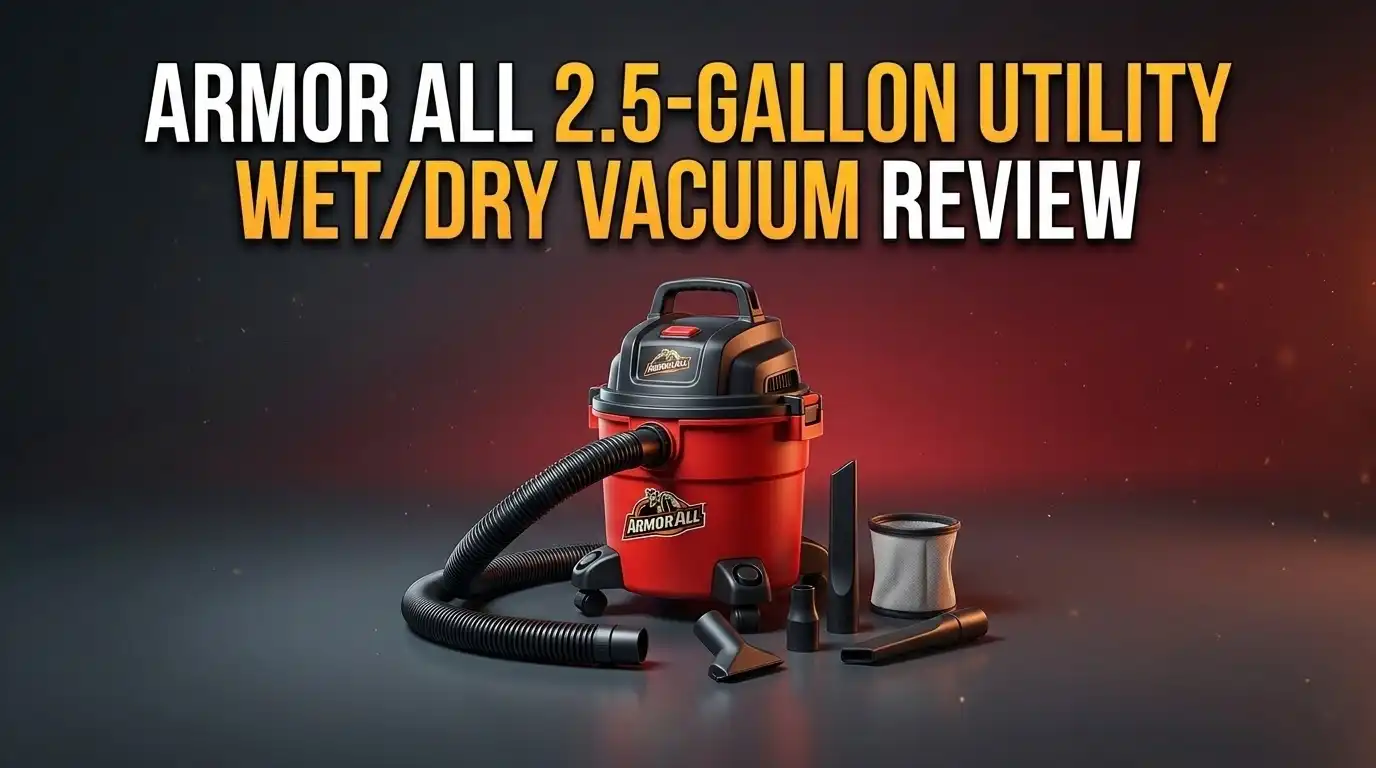
Armor All 2.5-Gallon Utility Wet/Dry Vacuum Review 2026: Worth Buying?
Car crumbs hide in places no broom can reach. Wet floor mats drip onto the garage floor. A full size shop vacuum feels like overkill for a sedan interior, yet a handheld cordless unit dies halfway through the job.
That gap is exactly where the Armor All 2.5 Gallon Utility Wet/Dry Vacuum lives.
This little orange and black tank has sold for years, and it keeps showing up in driveways, workshops, and apartment closets. It promises 2 Peak HP of suction, a blower mode, and a bag of attachments, all in a body that weighs under 10 pounds. But marketing numbers rarely tell the full story.
In a Nutshell:
- Compact and genuinely portable. The unit weighs roughly 9.8 pounds with a balanced top handle. You can carry it one handed from the garage to the driveway without strain. Storage is easy too, since it fits in a closet corner or on a shelf.
- Suction is strong for the size, not for big jobs. Rated at 53 CFM and 48 inches of water lift, it pulls dry dirt, crumbs, pet hair, and sand out of upholstery quickly. It is not a replacement for a 12 gallon workshop vac.
- The accessory kit is the real value. You get a 6 foot hose, three extension wands, a crevice tool, a deluxe car nozzle, a round dust brush, a detail brush, a 2 in 1 utility nozzle, a floor squeegee head, and a blower adapter.
- Wet pickup works, but the tank fills fast. A 2.5 gallon drum sounds fine until you tackle a flooded floor mat. Expect to empty it often, and remember usable capacity sits below the printed number.
- Noise and cord length are the main complaints. It runs loud, like most small shop vacs, and the 12 foot cord often needs an extension in a two car garage.
- Best for car detailing, small spills, and apartment use. Heavy contractors and people cleaning whole basements should buy bigger.
Armor All 2.5 Gallon Utility Wet/Dry Vacuum: Quick Verdict

Last update on 2026-11-21 / Affiliate links / Images from Amazon Product Advertising API
The Armor All AA255 earns its reputation as a budget car cleaning tool. It sits in the sweet spot between a dustbuster and a full shop vacuum. The 6 amp motor spins up fast and holds steady suction until the filter clogs. For interior detailing, it handles floor mats, seat seams, trunk liners, and cupholder grit without complaint.
Where it struggles is scale. Ask it to clean a flooded basement or a drywall renovation and you will spend the afternoon emptying the tank. Treat it as a precision tool instead of a workhorse and your expectations stay realistic.
Score: 4.2 out of 5 for the intended buyer. The price, the accessory bundle, and the small footprint cover most of its flaws.
Unboxing Experience: What Arrives in the Box
The box is smaller than people expect. It arrives in a plain cardboard carton with the orange drum visible through the branding graphics. Lift the lid and the vacuum body sits upside down, with every accessory nested inside the tank itself. That packing trick keeps shipping damage low.
Pull the motor head off and you find the hose coiled inside, plus a plastic bag holding the nozzles and wands. The cloth filter sits already installed on the cage, which saves a step. The foam wet filter rides loose in the bag, so check carefully before you recycle the carton.
Setup took me under four minutes. Snap the casters into the base, attach the hose to the port, and plug it in. No tools required. The manual is thin but clear, with a filter swap diagram that actually makes sense.
Design and Build Quality: Plastic Done Right
The tank uses polypropylene rather than steel. That choice keeps weight down and prevents rust during wet jobs. The plastic feels thick near the base and slightly thinner along the upper rim. Two latches lock the motor head to the drum, and they click with reassuring firmness.
Onboard storage is the standout design feature. Accessory holders clip the wands and nozzles to the body, so tools stop vanishing into the garage void. The cord wraps around a rear hook without slipping off.
The top handle sits centered over the mass. Carrying it feels balanced, not tippy. Four small casters let it roll, though they are tiny and catch on gravel or thick carpet. On smooth concrete they glide fine.
Fit and finish match the price. This is honest budget hardware, not premium gear.
Top 3 Alternatives for Armor All 2.5 Gallon Utility Wet/Dry Vacuum


Last update on 2026-11-21 / Affiliate links / Images from Amazon Product Advertising API
CRAFTSMAN CMXEVBE17250 2.5 Gallon 2.5 Peak HP Wet Dry Shop Vacuum

Last update on 2026-11-21 / Affiliate links / Images from Amazon Product Advertising API
Shop Vac 5760288 2.5 Gallon 2.5 Peak HP Wet/Dry Vacuum

Last update on 2026-11-21 / Affiliate links / Images from Amazon Product Advertising API
Vacmaster VBV1210 12 Gallon 5 Peak HP Wet/Dry Vacuum with Detachable Blower
Suction Power and Real World Performance
Numbers first. The motor draws 6 amps at 120V, producing 53 CFM airflow, 48 inches of water lift, and 95 air watts. Peak horsepower ratings in this category are lab figures, so ignore the 2 HP badge and watch the airflow instead.
In practice, suction impressed me on fine debris. Sand buried in carpet fibers came up in two passes. Dog hair needed the detail brush plus slow strokes, which is normal for any vacuum without a rotating brush roll.
Large debris is where airflow matters. The 1.25 inch hose swallows pebbles, cereal, screws, and leaves without jamming. Bigger chunks like wood scraps can lodge at the hose elbow.
Suction fades as the cloth filter loads with dust. That drop happens faster than on larger vacuums because the filter surface area is small. Tap the filter clean every few jobs and performance returns.
Wet Pickup Test: Spills, Mats, and Puddles
Switching to wet mode means removing the cloth filter and sliding on the foam sleeve. The process takes about 30 seconds once you learn it. Forget the swap and you soak the cloth filter, which then smells sour for weeks.
I poured two quarts of water onto a tile floor and vacuumed it up in under a minute. The squeegee nozzle pulled the puddle into a clean line with no streaking. Soaked car mats also drained well, though pressing down on the fabric helped release trapped water.
The float shutoff works. When the tank nears full, suction cuts and the motor pitch changes. That warning prevents water from reaching the motor.
Capacity is the limit. Usable wet volume sits well under 2.5 gallons, so plan on frequent trips to the drain.
Blower Mode: Useful or Gimmick?
Pop the hose into the exhaust port, attach the blower nozzle, and the vacuum becomes a leaf blower. Output is modest but useful. It clears dry leaves from a garage floor, blasts grass clippings off a patio, and dries water from door jambs and side mirrors after a wash.
I used it most for drying. Blowing trapped water out of body panel gaps and badge edges prevents those annoying drip streaks that appear ten minutes after you towel the car.
One known quirk frustrates owners. Suction and blowing run on the same motor at the same time. You cannot disable one side, so the intake port still pulls air while you blow. Keep the intake clear of loose dust.
Treat blower mode as a bonus, not a reason to buy.
Attachments and Accessories You Actually Use
The kit looks generous on paper and mostly delivers. Here is the honest breakdown of what earns space in the storage clips.
The crevice tool is the hero. Seat rails, console gaps, and door pockets all surrender their crumbs to it. The deluxe car nozzle works well on upholstery and cloth seats, with a narrow profile that reaches under headrests.
The detail brush handles dashboard vents, speaker grilles, and gear shift surrounds. Soft bristles mean no scratched trim.
Three extension wands snap together for ceiling cobwebs or truck bed cleaning. You rarely need all three for car work.
The floor and squeegee nozzle shines on wet jobs but feels oversized for interiors. The 2 in 1 utility nozzle covers general sweeping.
Filters and Maintenance Over Time
Two filters ship in the box. The reusable cloth filter handles dry debris. The foam sleeve covers wet work. A 2 in 1 filter bag is also available for fine dust.
Cleaning the cloth filter matters more than anything else. Rinse it with water and a drop of dish soap, then let it dry completely before reinstalling. A damp filter breeds mildew and chokes airflow.
Fine dust like drywall powder or fireplace ash will blow straight through the standard cloth filter. Buy filter bags if those messes are in your future. Replacement filters are cheap and widely available, including third party multipacks.
Budget roughly one filter replacement per year with regular use. Inspect the foam sleeve for tears after every few wet jobs, since a split sleeve lets water reach the motor.
Noise Level: Loud but Tolerable
No small shop vacuum is quiet, and this one is no exception. The motor sits close to your ear when the unit rests on a bench. Measured informally at arm’s length, output lands in the range of a loud kitchen blender.
Pitch is high rather than deep, which some people find more irritating than a larger vac’s low roar. Running it inside a closed garage amplifies the sound further.
Hearing protection is smart for long sessions. Cheap foam plugs solve the problem for under a dollar.
The noise does not indicate a fault. A high speed bypass motor in a small plastic drum simply resonates. If silence matters more than price, look at larger units with insulated housings, which spread the same airflow across a quieter motor.
What This Vacuum Does Not Do Well
Honest reviews name the flaws, so here they are without softening.
Capacity disappoints on wet jobs. Two and a half gallons vanishes fast. A single soaked floor mat can fill a meaningful share of the drum.
The cord is short. Twelve feet covers one side of a car. Walking around a vehicle usually means unplugging and moving, or adding an extension cord.
Casters are too small. They roll on concrete and stall on gravel, grass, or shag carpet. You end up carrying it instead.
Filter clogging reduces suction quickly. The small filter area fills sooner than larger vacuums.
The hose is stiff. Cold weather makes it stiffer, and it fights you around tight seat bases.
Finally, build materials feel basic. Latches and clips are the parts most likely to break first.
Pros and Cons
Pros
- Lightweight at under 10 pounds, with a balanced handle that makes one handed carrying simple.
- Strong suction for the class, with 53 CFM airflow that lifts sand, crumbs, pet hair, and small debris.
- Complete accessory kit including a crevice tool, detail brush, car nozzle, three wands, and a squeegee head.
- Onboard storage keeps every attachment and the cord attached to the body.
- Wet and dry capability with a working float shutoff that protects the motor.
- Blower function for drying vehicles and clearing leaves.
- Low price compared with larger shop vacuums.
- Cheap, easy to find replacement filters.
Cons
- Small tank that needs frequent emptying during wet cleanups.
- Twelve foot cord forces repositioning around a full size vehicle.
- Loud operation that calls for ear protection on long jobs.
- Tiny casters that struggle on anything rougher than smooth flooring.
- Suction drops noticeably as the cloth filter loads with dust.
- Blower and suction run together, which cannot be switched off independently.
- Stiff hose that resists tight bends in car interiors.
Who Should Buy This Vacuum
Car owners who detail their own vehicles get the most value. The attachment set, the compact size, and the wet capability cover nearly every interior cleaning task a driver faces.
Apartment dwellers also benefit. It stores in a closet, handles spills, and cleans out kitchen corners that a regular vacuum ignores.
Workshop hobbyists with small benches will find it handy for sawdust and metal shavings, provided they add filter bags.
Skip it if you are a contractor. Drywall dust, tile slurry, and jobsite debris demand a 10 gallon or larger vacuum with a HEPA rated filter. Also skip it if you need to clean a whole house, because the drum empties too often to stay efficient.
Price and Value in 2026
Pricing hovers in the low budget tier, usually well under the cost of a mid size shop vacuum. Seasonal sales around spring cleaning and the holiday period push it lower.
Value depends on the accessory kit. Buying those nozzles separately for another vacuum would cost a meaningful fraction of the unit price. That bundle alone makes the package worth considering.
Compared with the Craftsman CMXEVBE17250, the Armor All offers more car specific tools, while the Craftsman offers slightly higher rated horsepower. Compared with the Vacmaster 12 gallon, you trade capacity for portability.
Longevity is the question mark. Owners report years of service with gentle use, and early failures with heavy abuse. Clean the filter, avoid overfilling, and it should last.
Final Verdict on the Armor All 2.5 Gallon Utility Wet/Dry Vacuum

Last update on 2026-11-21 / Affiliate links / Images from Amazon Product Advertising API
This vacuum does one job well. It cleans car interiors and small messes without demanding storage space or a large budget. Suction is respectable, the tool kit is complete, and setup takes minutes.
It is not a do everything machine. The tank is small, the cord is short, and the noise is real. Anyone expecting shop vacuum endurance will feel let down within a week.
Buy it for detailing, spills, pet hair, workshop dust, and quick cleanups. Pair it with a filter bag pack and a short extension cord, and most complaints disappear.
For the money, few compact wet and dry vacuums match this feature set in 2026. It remains an easy recommendation for drivers who like a clean cabin.
Frequently Asked Questions
Can this vacuum pick up water safely?
Yes. Remove the cloth filter, install the foam wet sleeve, and vacuum liquids directly into the tank. A float shutoff stops suction when the drum fills, which protects the motor from water damage.
How loud is the Armor All 2.5 Gallon vacuum?
It runs loud, similar to a powerful kitchen blender. The high pitched motor tone carries in enclosed garages. Foam ear plugs make longer cleaning sessions comfortable.
Does it come with a filter bag?
A reusable cloth filter and a foam wet filter ship in the box. Disposable filter bags for fine dust are sold separately and are strongly recommended for drywall or ash.
How long is the power cord?
The cord measures 12 feet. Cleaning a full size vehicle usually requires an extension cord or moving the plug between sides.
Can I use it as a blower?
Yes. Move the hose to the exhaust port and attach the blower nozzle. It clears leaves and dries vehicle panels after washing.
How often should I clean the filter?
Rinse the cloth filter after every few dry jobs, or sooner if suction drops. Dry it fully before reinstalling to prevent mildew and airflow loss.

Hi, I’m Grace Bell, the founder of CleanFloorVault.com, where I personally test and review vacuum cleaners to help you find the perfect tool for a spotless home.