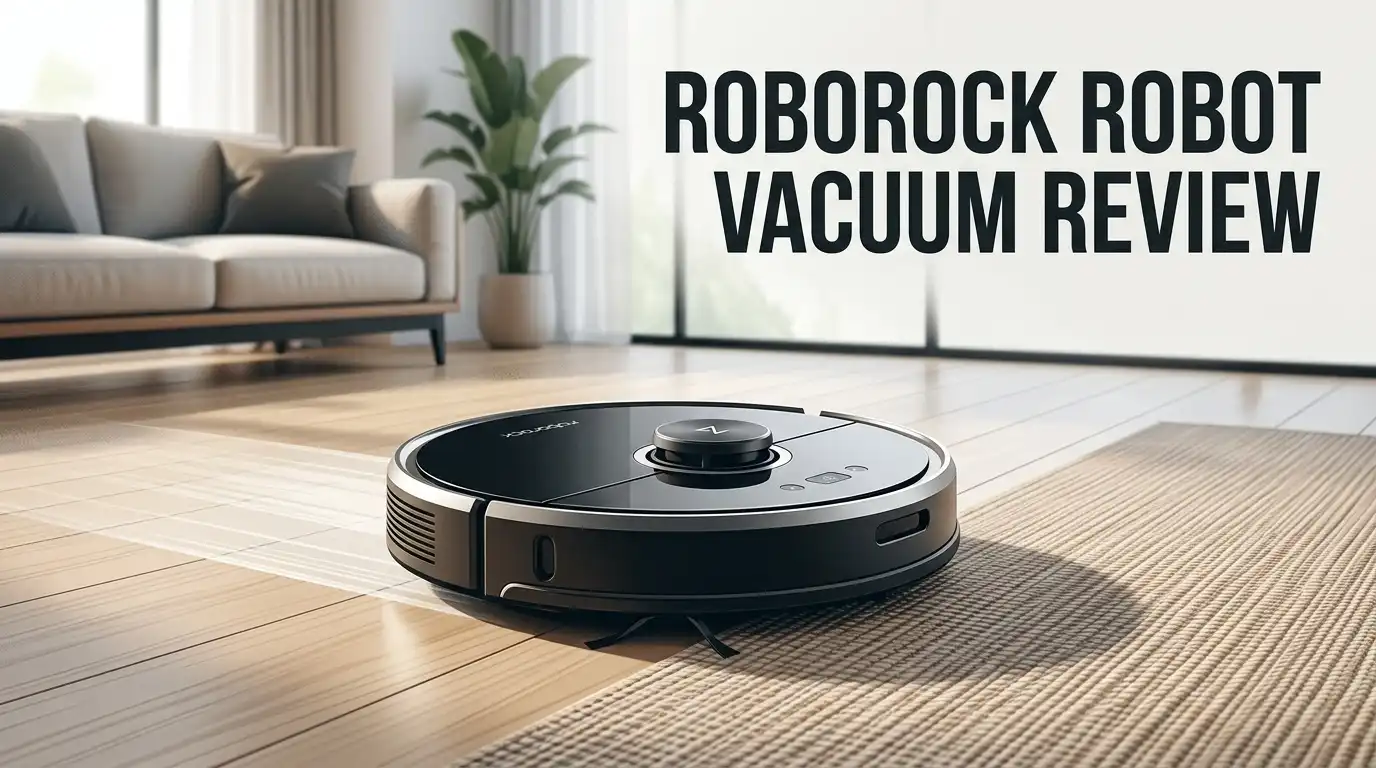
Roborock Robot Vacuum Review 2026: Still Worth It?
Roborock sells more premium robot vacuums than almost anyone else, and 2026 is the year the gap widened.
The company now offers slim flagships, climbing chassis, robotic arms, and docks that wash mops with boiling water. But the lineup is confusing, prices swing by hundreds of dollars, and not every model earns its price tag.
I spent weeks living with Roborock machines across tile, hardwood, and medium pile carpet. I tracked pet hair, dried coffee spills, cable snags, and dock refills.
In A Nutshell:
- The Roborock Saros 10R is the best overall pick for most homes. It stands only 3.14 inches tall, slides under low furniture, and scored a perfect obstacle avoidance result in independent lab testing. Cable chewing basically stops being a worry.
- Suction numbers are marketing, not gospel. The Saros 20 claims 36,000 Pa and the Curv 2 Pro claims 25,000 Pa, yet real carpet deep clean scores land around 80 percent for both. Brush design matters more than the Pa figure.
- Mopping improved a lot, but it is not perfect. Spinning pads lift dried stains well. They still leave slight streaking on dark tile, and no Roborock scrubs grout like a human with a brush.
- The dock does the boring work. Hot water washing, heated drying, dust bagging, and detergent dosing all run automatically. You still empty a dirty water tank and wipe the tray by hand.
- Budget models remain smart buys. The Q7 M5 Plus vacuums well, empties itself for weeks, and costs a fraction of a flagship.
- Reliability is the real gamble. Owner reports mention WiFi dropouts, dock errors, and slow support replies. Buy from a seller with a friendly return window.

Last update on 2026-11-20 / Affiliate links / Images from Amazon Product Advertising API
Why Roborock Still Leads the Market in 2026
Roborock pushed the category forward faster than its rivals over the past two years. The company moved from spinning LiDAR towers to solid state sensing, which shaved almost an inch off robot height. That single change lets machines clean under sofas, bed frames, and kitchen cabinets that older robots simply bumped into.
The second advantage is the brush system. Most Roborock models now use a split roller with a channel in the middle. Long hair slides into that gap instead of wrapping the bar. In hair resistance testing, the Saros 10R shed 100 percent of seven inch strands. Average robots keep about 39 percent tangled around the brush.
The third advantage is the chassis. Roborock robots lift their front wheels to climb thresholds. Testers cleared boards at 20 mm and 26 mm reliably. The newest Saros 20 claims double step climbing up to 3.46 inches, which matters in older homes with raised doorways.
Finally, the software. The Roborock app handles multi floor maps, no go zones, room specific suction, and pet monitoring through the onboard camera. It is one of the few vacuum apps that feels finished rather than rushed. Dreame and Narwal compete hard on hardware, but the app polish still favors Roborock.
Roborock Saros 10R: The Model Most People Should Buy
The Saros 10R is the model I kept recommending to friends. It combines a slim 3.14 inch body with StarSight navigation, dual spinning mops, and a dock that handles everything except the trash walk.
Cleaning results were strong across surfaces. It lifted 92 percent of flattened pet hair from carpet against an 80 percent average. On the carpet deep clean test, it pulled 80 percent of embedded sand out of medium pile fibers. Hard floors came out spotless in a single pass, including fine flour and spilled rice.
Obstacle avoidance is the headline. The camera and beam system recognizes 108 object types and scored a flawless 24 out of 24 in lab testing. During my run it dodged charging cables, a dog toy, and a sock without once stopping for help. That reliability is why you can actually leave the house while it runs.
Mopping impressed me on dried ketchup and coffee rings. The extending right pad reaches baseboards, and the robot can drop both pads at the dock before vacuuming carpet. Water use ran slightly heavy at 1.05 g residue, so glossy tile shows faint streaks under sunlight.
The weak points are real but manageable. The 270 ml dust bin fills quickly in shedding season, and navigation efficiency is merely average because there is no tower LiDAR guiding the route.
Unboxing And First Setup Experience
The box arrives heavy, close to 40 pounds with the dock inside. Roborock packs everything in molded pulp trays rather than foam, which feels tidy and recycles easily. Lifting the dock out alone is awkward, so grab a second pair of hands.
Inside you get the robot, the dock, a disposable dust bag already seated, a spare bag, one extra side brush, a bottle of floor detergent, and a slim quick start card. Peel the blue film from the sensor window and the bumper before the first run. People forget this and then complain about bad mapping.
Setup took me eleven minutes. Plug the dock against a flat wall, leave roughly 20 inches of clearance on each side, fill the clean water tank, and press the two buttons to pair. The app found the robot instantly and pushed a firmware update that added a few minutes.
The first mapping run is the fun part. The robot drives the perimeter of every room, draws walls in real time, and then labels rooms by itself. Its room guesses were correct in four out of five cases, and renaming takes seconds.
One tip that saved me grief: run a mapping pass with doors open and floors clear. A clean first map means better routing for months.
Roborock Saros 20: The New Power Flagship

Last update on 2026-11-19 / Affiliate links / Images from Amazon Product Advertising API
The Saros 20 sits above the 10R and targets homes with thick carpet and raised thresholds. Roborock rates it at 36,000 Pa suction with mop pressure up to 13 N, the highest in the lineup.
In practice the extra suction shows on plush carpet and deep pile rugs. The robot claims cleaning depth up to 1.18 inches into fibers, and it pulled noticeably more grit from my thick bedroom rug than mid range models. On hard floors the difference is invisible, because 20,000 Pa already clears everything a home throws at it.
The AdaptiLift Chassis 3.0 is the more useful upgrade. It climbs double layer steps up to 3.46 inches, which solves a genuine problem in split level homes and rooms with tall transition strips. If a single doorway currently blocks your robot, this is the fix.
The body stays slim enough for low furniture, and the dock adds hot water washing plus heated air drying. Detergent dosing happens automatically.
Honest downsides exist. Early owners report navigation that skips narrow gaps between furniture legs, and the price sits at flagship level. The Saros 20 also runs louder at maximum suction, loud enough that I scheduled it while out of the house.
Top 3 Alternative for Roborock Saros 10R
Last update on 2026-11-19 / Affiliate links / Images from Amazon Product Advertising API
Roborock Saros 20

Last update on 2026-11-19 / Affiliate links / Images from Amazon Product Advertising API
Roborock Saros Z70

Last update on 2026-11-19 / Affiliate links / Images from Amazon Product Advertising API
Roborock Qrevo Edge 2
Suction Power And Vacuuming Performance
Pa ratings sell vacuums, but they explain very little. Roborock quotes 10,000 Pa on the Q7 M5 Plus, 22,000 Pa on the Saros 10R, 25,000 Pa on the Qrevo Edge 2, and 36,000 Pa on the Saros 20. Deep clean scores across those models cluster between 75 and 96 percent, so the ranking does not follow the numbers.
What actually drives results is brush contact, seal quality, and airflow path. Roborock’s split roller keeps bristles pressed into carpet while the channel feeds hair straight into the duct. That design explains why mid tier models often match flagships on debris pickup.
On hard floors every current Roborock handled my test mix of rice, oats, sugar, and flour in one pass. Edges came out clean thanks to the extending side brush that flicks out near walls. Corners remain the one spot where a handheld still wins, because round robots cannot reach a 90 degree angle fully.
Carpet performance separates the range. Budget models leave visible grit in medium pile after one pass and need a second run. Saros models grab embedded sand in a single sweep. If your home is mostly hardwood or tile, save your money and skip the high suction tier.
Mopping Results On Real Household Messes
Roborock mopping falls into two camps. Most models use twin spinning pads. The newer Curv 2 Flow uses a roller mop that rinses itself continuously while cleaning.
Spinning pads scored 103 points on the dried stain test against a 98 average. They removed dried coffee, juice, and soy sauce in two passes. Sticky syrup needed three. The pads rotate under real downward pressure, so scrubbing feels closer to hand mopping than the old vibrating plates.
The roller design handles wet spills better. It picks up liquid instead of pushing it around, which matters if you have kids or pets who knock over bowls. The tradeoff is a slightly taller body and a more involved dock.
Water control is the weak link. Residue measured 1.05 g on the Saros 10R against a 0.95 g average, which means thin streaks on dark glossy tile until the floor dries. Lowering the water level in the app fixes appearance but reduces stain lifting.
Grout stays untouched. No robot mop reaches into textured grout lines, and no amount of hot water in the dock changes that. Plan on a manual scrub every few months regardless of which model you own.
Navigation And Obstacle Avoidance In Daily Use
This is where Roborock earns its premium. StarSight navigation replaces the spinning tower with solid state sensing and time of flight measurement. Mapping accuracy stays high while the robot gets shorter.
Obstacle avoidance uses an RGB camera, AI recognition trained on 108 objects, and a vertical light beam that spots low items. The Saros 10R cleared every item in a 24 point lab gauntlet. In my home it avoided phone chargers, shoelaces, a cat bowl, and a dropped hair tie. It only failed once, nudging a thin ribbon it clearly could not see.
Threshold climbing works as advertised up to about 26 mm on single steps. Roborock claims 44 mm on two tier thresholds. Testing showed single thresholds near 36 mm still stop the robot, so measure your doorways before buying on that promise alone.
Route efficiency is the honest weak spot. Slim Saros models take slightly longer paths than tower LiDAR models at the same price. The robot still covers the whole floor, it just wanders more on the way.
Pet owners get the best feature of all: the camera lets the robot find your dog and stream live video while you are away.
Pet Hair Handling And Tangle Resistance
If you own a long haired dog or a shedding cat, tangle resistance matters more than suction. Cutting hair off a brush bar with scissors every week is the single most hated robot vacuum chore.
Roborock’s dual anti tangle system attacks the problem from two directions. The split main roller channels hair toward the suction port instead of letting it wrap. The FlexiArm side brush uses flexible bristles that release strands rather than knotting them.
Results were excellent. The Saros 10R kept zero percent of seven inch test hair tangled, and it captured 92 percent of flattened pet hair from carpet. After three weeks with a shedding retriever in the house, my brush needed no scissors at all. That alone justifies the upgrade from an older model.
Hair does still collect in two places. Thin strands wrap the small axle at the brush end cap, and fine fur sticks to the mop pads after mopping. Both clear in under a minute by hand.
The honest limitation is bin size. Heavy shedders will fill a 270 ml onboard bin fast, which triggers more dock trips and longer cleaning cycles. Setting the robot to empty every room instead of every run solves it.
The Dock And Daily Maintenance Reality
Roborock docks do an absurd amount of work. The flagship stations empty the robot into a 2.7 L bag, wash mop pads with water near 212 degrees Fahrenheit, blow heated air to dry them, refill the clean water tank, dose detergent from a 590 ml reservoir, and clean their own tray with spinning squeegees.
A dirty water sensor triggers extra rinse cycles when the pads come back filthy. Fast charging tops the battery quickly, and off peak charging can shift power draw to cheaper hours.
You can also buy a plumbing connected version. It ties into your water supply and drain, which removes tank filling entirely. If you can run a line to a laundry room, this is the closest thing to a hands off floor cleaner that exists.
Here is what the marketing skips. The standard dock is large and visually loud, roughly the size of a small trash can. Wash cycles are noisy, sometimes startlingly so at night. You still rinse the dirty water tank weekly or it develops a smell, and the drying fan runs for a long stretch after every mop run.
Expect about five minutes of hands on upkeep per week. That is excellent, but it is not zero.
Battery Life And Coverage Per Charge
Roborock rates the Saros 10R at 180 minutes in low power mode. That trails older flagships at 240 minutes, yet real coverage came out better than expected.
Efficiency testing showed 1.8 minutes of cleaning per battery percent against a 1.5 average. Estimated coverage reached 1,389 square feet per charge versus 1,020 for the average robot. In other words, the battery is smaller but the robot works smarter.
For most apartments and mid size homes, one charge finishes the whole job. A 2,000 square foot home with vacuuming and mopping on high settings will trigger a recharge break. The robot returns to the dock, refills the battery, and resumes exactly where it stopped without prompting.
Settings change everything. Maximum suction plus maximum water roughly halves runtime. Balanced suction with standard water is the sweet spot for real cleaning results and sensible battery use.
One quiet advantage: fast charging gets the robot back to work in well under an hour, so resume cycles no longer eat your afternoon. Older robots could take three hours to recover, which made whole home runs impractical.
Battery health over years remains unknown for 2026 models. Expect gradual capacity loss like any lithium pack, and budget for a replacement around year four.
The Roborock App Experience
The app is a genuine reason to choose Roborock. Setup walks you through pairing in plain language, and the live map fills in as the robot explores.
Room editing is simple. You split rooms, merge them, assign names, set flooring type, and pick suction and water levels per room. Furniture can be placed on the map so routing improves. No go zones and invisible walls take two taps.
Scheduling supports multiple routines. I ran a daily hard floor vacuum at 9 am and a full vacuum plus mop on weekends. Multi floor maps switch automatically, which matters if you carry the robot upstairs.
Voice control works with Alexa, Google Assistant, and Siri shortcuts. There is also an onboard voice assistant that responds to spoken commands without a phone. It feels gimmicky at first and then becomes genuinely handy.
The camera adds pet monitoring, two way talk, and a pet checkup routine that drives around looking for your animal.
Complaints do exist. Owners report WiFi dropouts on 2.4 GHz networks, occasional dock communication errors, and firmware updates that reset preferences. Most clear with a router reboot or a re pair, but it is a nuisance on a device this expensive.
Pros And Cons
Pros
- Class leading obstacle avoidance. The Saros 10R scored a perfect 24 out of 24 and dodged cables, socks, and toys without stopping.
- Genuine tangle resistance. The split roller and flexible side brush kept zero percent of long test hair wrapped, which ends weekly scissor duty.
- Slim 3.14 inch body. It reaches under sofas, beds, and toe kicks that taller robots cannot enter.
- Excellent multifunction dock. Hot water washing, heated drying, self emptying, detergent dosing, and optional plumbing hookup cover nearly all maintenance.
- Best app in the category. Multi floor maps, room level settings, furniture placement, and pet monitoring all work smoothly.
- Strong coverage per charge. Roughly 1,389 square feet on a single charge, well above the market average.
Cons
- Small 270 ml onboard bin. Heavy shedding homes need more frequent dock trips during a single run.
- Average route efficiency. Slim models wander more than tower LiDAR rivals at the same price.
- Slight mop streaking. Water residue measured above average, and dark glossy tile shows faint lines until dry.
- Grout and corners stay dirty. Round robots and flat pads cannot reach either, so manual cleaning continues.
- Large, noisy dock. The station dominates a corner and wash cycles are loud.
- Support and reliability complaints. Owner reviews mention WiFi drops, dock errors, and slow warranty responses.
What Roborock Does Not Do Well
An honest review needs a list of failures, so here it is without softening.
Roborock robots do not clean corners. The circular body and round pads leave a small triangle of dust in every 90 degree angle. The extending side brush helps along edges but cannot solve geometry.
They do not deep clean carpet like an upright vacuum. An 80 percent embedded debris score is excellent for a robot and mediocre for a decent upright. Keep a real vacuum for seasonal deep cleaning.
They do not handle clutter you leave behind. Obstacle avoidance means the robot drives around a pile of laundry, so the floor under it stays dirty. Only the Saros Z70 with its arm moves small items, and that arm is slow and limited to light objects like socks.
They do not clean stairs, upholstery, or anything above floor level.
Reliability is the biggest unknown. Trustpilot and Reddit threads include owners whose units failed within months and who waited a long time for repairs. Roborock’s hardware is ambitious, and ambitious hardware breaks more often than simple hardware. Buy from a retailer with easy returns and consider an extended warranty if that risk bothers you.
Which Roborock Model Fits Your Home
Match the model to your floors rather than to the spec sheet.
For mostly hard floors and a tight budget, the Q7 M5 Plus is the value pick. It offers 10,000 Pa suction, dual anti tangle brushes, LiDAR mapping, and a dock that runs seven to nine weeks between bag changes. It mops lightly rather than scrubbing.
For mixed floors in an average home, the Saros 10R is the right answer. Slim body, flawless avoidance, and a full featured dock cover almost every scenario.
For thick carpet or tall thresholds, step up to the Saros 20. The 36,000 Pa suction and climbing chassis solve problems the 10R cannot.
For big wet spills and kitchens, look at the Qrevo Curv 2 Flow with its self rinsing roller mop, or pair any robot with the F25 Ultra steam mop for periodic deep cleaning.
For gadget lovers with cluttered floors, the Saros Z70 and its OmniGrip arm genuinely tidy light objects. Treat it as a fun extra rather than a reason to buy.
Skip the highest tier if your home is small and mostly smooth flooring. A mid range Roborock cleans it just as well.
Final Verdict
Roborock earns its reputation in 2026. The Saros 10R remains the model I would put in my own home, because it combines the best obstacle avoidance available, real tangle resistance, a slim profile that reaches forgotten floor space, and a dock that removes nearly every chore.
The Saros 20 is the upgrade for thick carpet and raised thresholds. The Q7 M5 Plus proves you do not need to spend flagship money for clean hard floors.
None of these robots replace a vacuum and a mop entirely. Corners stay dusty, grout stays dark, and clutter still needs human hands. What they replace is the daily grind. Floors stay consistently clean instead of swinging between spotless and awful, and that change is worth the money for most busy households.
Buy with return protection, keep expectations grounded, and Roborock will likely be the best appliance purchase you make this year.
FAQs
Is the Roborock Saros 10R worth the price in 2026?
Yes for mixed floor homes. Its perfect obstacle avoidance score, slim 3.14 inch body, and full service dock deliver real daily value. If your home is small and all hard flooring, a mid range model saves money with similar cleaning results.
Does Roborock actually stop hair tangles?
Largely, yes. The split main roller channels long strands into the suction port, and testing showed zero percent tangling on seven inch hair. You will still pull a little fur off the mop pads and end caps by hand occasionally.
How much suction power do I really need?
Around 10,000 Pa handles hard floors completely. Medium pile carpet benefits from 20,000 Pa or more. Beyond 25,000 Pa you are paying for thick carpet performance and brush design rather than a visible everyday difference.
Can Roborock robots climb thresholds between rooms?
Most current models clear single thresholds up to roughly 26 mm reliably. The Saros 20 climbs double layer steps up to 3.46 inches. Measure your doorways first, since single steps near 36 mm still stop the slim models.
How much maintenance does the dock need?
Plan about five minutes weekly. You empty the dirty water tank, refill clean water, wipe the wash tray, and change the dust bag every few weeks. The plumbing connected dock removes the water tank steps entirely.
Which Roborock is best for pet owners?
The Saros 10R leads for pet homes thanks to 92 percent flattened pet hair pickup, tangle free brushes, and a camera that finds your pet on demand. Heavy shedders should set the robot to empty its bin more frequently.

Hi, I’m Grace Bell, the founder of CleanFloorVault.com, where I personally test and review vacuum cleaners to help you find the perfect tool for a spotless home.