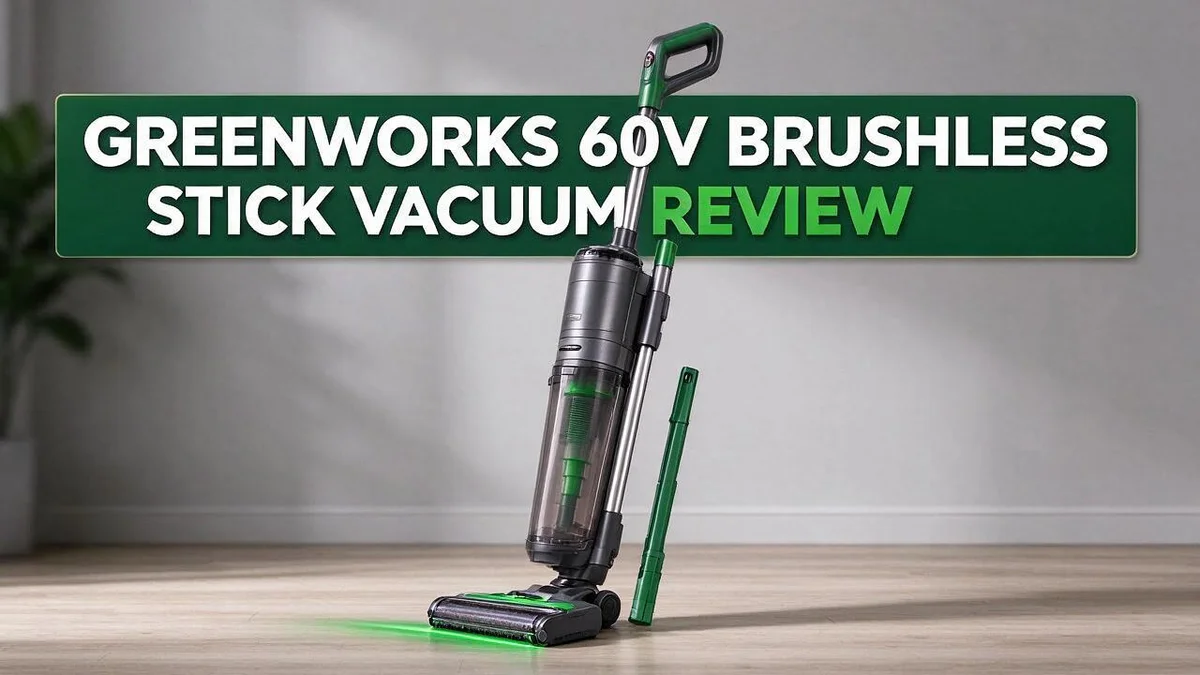
Greenworks 60V Brushless Stick Vacuum Review
Cleaning floors should feel quick and simple. The Greenworks 60V Brushless Stick Vacuum aims to make that happen. Many shoppers want a cordless option that can handle daily messes without fuss. Cordless models give you the freedom to move from room to room.
This model uses a TRUBRUSHLESS motor and offers three power modes. It can reach up to 170 air watts of suction. Runtime reaches up to 90 minutes on a single charge.
Those numbers raise a good question. Does this stick vacuum truly deliver on its promises? In this review, we explore the design, the performance, and whether it fits your home.
In a Nutshell
- Shared battery platform: This stick vacuum uses the same 60V battery platform as the Greenworks 60V blower. Owners who already have a blower may find it easy to add a vacuum to their tool set.
- Brand comparison: Greenworks also sells a 24V stick vacuum with a 4Ah battery. Shoppers can compare both models side by side to see which voltage level fits their home.
- A useful benchmark: Dyson appears in comparison videos about this model. Its name gives shoppers a familiar reference point, although the research did not include Dyson specs.
- Runtime depends on use: The listed runtime can change based on the power mode you choose. Testing the vacuum on your own floors will show how long it lasts during your daily routine.
- Limited owner feedback: Few verified reviews exist for this exact model yet. Read recent owner comments carefully before you decide, especially comments about filters and canisters.
- Match the vacuum to your home: Think about your floor types, number of rugs, and home size. These details shape which features matter most to you.
Suction Power and Cleaning Modes

Last update on 2026-11-19 / Affiliate links / Images from Amazon Product Advertising API
Suction power decides how well a stick vacuum lifts dirt from your floors. The listed rating for this model is up to 170 air watts. That number shows the peak level, so it does not guarantee the same result on every surface.
Think of suction as the pull that draws dust, crumbs, and pet hair into the bin. Strong airflow matters most on carpets, where dirt sits deep in the fibers. Hard floors often need less force, so you may not need the top setting every time.
Cleaning modes let you match the power to the job. Lower settings work well for light dust on wood or tile. Higher settings suit rugs, entryways, and spots with heavy debris.
Thick rugs need extra help. Use a higher setting on these areas, and test a small corner first. Watch the surface after one pass to see if any grit remains.
Try this simple routine. Start on a middle setting for a quick pass across the room. If you still see dirt, move up one level. If the floor looks clean after one pass, drop back down.
Edges and corners deserve attention too. Suction at the nozzle matters most along baseboards and under furniture. Slow down in these spots so the airflow can pull debris from the gaps.
Keep the path clear for steady results. Check the brush and nozzle for hair and string, because a blocked path cuts airflow fast. Empty the bin after each use, and clean the filter as the manual explains.
Pet owners should look closely at suction levels. Pet hair wraps around brush rolls and sticks to fabric. A higher mode can lift more hair in one pass, though you may need to pause and clear the brush often.
In short, suction and modes work together. Pick the setting that fits the floor in front of you, and keep the airflow path open. This simple habit helps you get better results from every cleaning session.
Motor and Build Quality
A stick vacuum lives or dies by its motor and frame. The motor does the heavy lifting, while the body must handle daily bumps against door frames and furniture. Here is how the Greenworks 60V model fits that picture.
Brushless motors spin without carbon brushes. That design generally means less wear over time. Fewer rubbing parts can also keep the machine quieter. Many brushless designs also run cooler during longer sessions.
Vibration also tells a story. Hold the handle while the motor runs. Smooth operation suggests balanced parts inside. Heavy shaking can make cleaning feel tiring.
Build quality shows up in small details. Start with the wand connection. A firm, snug joint feels safer than a loose one. Gently push and twist the joint before you decide.
Next, test the dust bin latch. A bin that snaps shut firmly helps prevent leaks during emptying. Open and close it several times. Notice whether it feels sturdy or flimsy.
Pick up the floor head and check its weight. A balanced head glides across tile with less effort. A heavy head can tire your wrist after a long clean.
Plastic parts matter too. Smooth edges and tight seams often suggest careful assembly. Rough edges or gaps may point to rushed production.
Pay attention to attachments too. Each tool should lock onto the wand with a clear click. Loose tools can slip off while you work.
The battery should click into place with no wobble. A loose battery can cut power in the middle of a clean. Give it a gentle tug to confirm it is secure.
Testing it by hand matters most for any new model. Trust what your hands tell you. Ask the store if you can handle a display unit before you commit.
Solid build quality helps the machine last through many seasons of cleaning. Check these details and you will know quickly if it feels solid enough for your home.
Runtime and Charging
Runtime matters more than most people think. A long runtime lets you clean a small apartment in one go. Larger homes may need a quick pause partway through.
The listed figure for this model is up to 90 minutes. Real results often land lower because of floor type and how hard you push. Test it once in your own space to learn your pattern.
Charging habits affect how the battery performs over time. Store the vacuum indoors at room temperature. Extreme heat or cold can shorten battery life, so avoid leaving it in a hot car or a cold garage.
Plug in after each full cleaning session. Returning the vacuum to its charger keeps the battery ready for the next job. A charged battery saves you from waiting before a quick spot clean.
A simple routine helps. Charge the battery overnight, then clean one main area per day. Splitting big chores this way keeps the battery from running flat in the middle of a room.
Check the charging light before you start. Confirm the signal in the manual, since light patterns can differ. Skipping this step can leave you with a half charged machine at the worst moment.
Battery health also depends on how often you run it empty. Letting the battery drain fully on every use can wear it down faster. Try to recharge before the battery hits zero.
Keep the battery contacts clean. Dust or hair on the connection points can slow charging. A quick wipe with a dry cloth keeps the connection solid.
Consider a spare battery for big homes. Owning a second charged pack can help you finish large floors without a break. Keep one pack charging while you clean with the other.
Plan your cleaning around the battery. Start with the spots you use most, like the hallway and kitchen. Save the least used rooms for the end of the session. A little planning keeps the battery working for you, not against you.
Top 3 Alternatives
Dyson V8 Cordless


Last update on 2026-11-19 / Affiliate links / Images from Amazon Product Advertising API
Many shoppers choose the Dyson V8 Cordless for its strong suction. It picks up dust, dirt, and pet hair from hard floors and carpets with ease. The battery lasts long enough for most homes. Its light body makes daily cleaning feel quick. The included tools reach tight corners, under sofas, and along baseboards. Anyone who wants reliable power in a small package will appreciate this model.
Shark Cordless Pro

Last update on 2026-11-19 / Affiliate links / Images from Amazon Product Advertising API
The Shark Cordless Pro offers a simple way to clean everyday messes. It switches from a stick vacuum to a handheld unit in seconds. Pet owners often love its strong brush roll for fur. The bin empties fast, which saves time after each session. It works well for busy families who want a clean home without much effort. Stairs, cars, and furniture all get attention too.
Tineco A10 Hero

Last update on 2026-11-19 / Affiliate links / Images from Amazon Product Advertising API
The Tineco A10 Hero stands out with smart cleaning power. Its sensors adjust suction based on the floor type. It runs quieter than many rivals in its class. The frame feels comfortable during longer cleaning sessions. A simple charging dock keeps the vacuum ready for the next job. This option suits people who want less fuss and more clean floors.
Attachments and Floor Coverage
Attachments turn a stick vacuum into a handy cleaning kit. Each tool reaches a different part of your home.
Match the floor head to your flooring. Hard floors need a soft brush or roller. Carpets need a head that can grip deeper fibers.
Hard floors like tile, wood, and laminate need gentle care. A soft brush or roller keeps scratches away while it pulls fine dust toward the nozzle.
Rugs and carpets ask for more effort. Look for a floor head with a firm roller or bristles. These grip dirt that sits deep in the pile.
Crevice tools reach tight gaps. Use the narrow nozzle for spaces between couch cushions. It also fits behind radiators and along baseboards.
A dusting brush handles shelves, blinds, and electronics. Its soft bristles protect delicate surfaces from scratches.
Upholstery tools keep furniture fresh. Use them on sofas, car seats, and pet beds. Short bursts work best on fabric.
Pet owners should check the brush roll. Hair often wraps around the roller. Pick a design that lets you remove and clean it fast.
Attachment storage matters more than many people expect. A clip or wall mount keeps tools together. Lost tools make cleaning slower.
Check what comes in the box. Official listings may not yet show every attachment for this model. Read the product details closely before you decide.
Switch tools in a smart order. Start with hard floors using the soft roller. Move to rugs with the firm head. Finish with the crevice tool along the walls.
Swapping heads takes only a few seconds on many stick models. Keep the tools near the vacuum so switching feels easy.
Mixed floors need extra thought. Many homes have tile in the kitchen and carpet in the bedroom. Plan your cleaning by room so you do not switch back and forth.
Protect your floors with care. Avoid using a spinning brush on delicate wood without checking the setting first. A quick test on a hidden spot helps.
Pros and Cons
Pros
– Shares one battery platform with the Greenworks 60V blower vacuum, so one pack can power multiple tools.
– Sits in the 60V line, which points to more power headroom than the 24V Greenworks stick model on paper.
– Competes directly with Dyson stick vacuums in the same comparison group.
– Comes from a brand that also makes lower voltage stick vacuums, so buyers can compare options within one family.
Cons
– Verified drawbacks for this exact model were not found in current research.
– The listed runtime is a best case figure, so everyday use may run shorter.
– The highest power setting will likely drain the battery faster than the lower modes.
– Few independent reviews are available, so long term reliability is still unknown.
Who Should Buy It
This stick vacuum suits people who clean in short bursts. Many busy people do not want to set up a large machine for a small mess. A cordless stick makes quick cleanups simple.
Parents often face spills after meals and dirt near the front door. Grabbing a vacuum from a closet takes seconds.
Kitchens and entryways gather crumbs and grit every day. A stick design handles these spots without fuss.
Shift workers and people with tight schedules also benefit. A short cleaning session fits into a lunch break or an evening. Less time spent on setup leaves more time for rest.
Renters and people in compact homes often need storage that takes little room. A slim stick vacuum can stand in a closet corner. This makes daily use more likely.
Older adults or anyone who finds heavy machines hard to handle may appreciate a stick design. Stick vacuums generally weigh less than full upright units. Check the weight details on the product page before you buy.
Shoppers who want a deep carpet clean should look elsewhere. A stick works best for light to moderate tasks. Thick pile carpets and whole house floors may need a larger machine.
Students and first time apartment renters often want an easy starter vacuum. A simple design keeps the learning curve short.
Anyone who wants a cleaner home without a big routine may find this model useful. Small daily sweeps can keep dust from building up.
Think about how often you clean before you decide. Frequent quick sessions match this design well. Occasional deep cleans may call for a different tool.
Buyers who need proof of pros and cons should read owner reviews first. The research for this exact model did not show verified praise or complaints. Recent owner feedback can fill that gap. Look for comments about everyday use.
A simple checklist helps. List your floor types, room sizes, and cleaning habits. Then compare that list with the model features.
Final Verdict
Our final verdict leans positive, with one clear caveat. Research for this exact model is thin. Most praise found belongs to a different Greenworks stick vacuum, so treat this review as a starting point.
Think of this machine as a promising candidate, not a guaranteed winner. Its 60V platform and shared battery make sense for people who already own Greenworks tools. Anyone else should read real owner feedback before buying.
Who should say yes? Owners of existing Greenworks batteries can skip buying a new pack. That makes the decision simpler for households already invested in the brand’s tools.
What should you check before buying? Read recent owner comments about battery life and filter cleaning. Confirm the included attachments and warranty terms on the official listing. Ask whether battery life holds up during your typical cleaning sessions.
Who should keep looking? Buyers who need proven long term results may prefer a model with a larger review history. Compare options side by side before deciding.
Our bottom line is simple. This Greenworks stick vacuum deserves a spot on your shortlist. Pair that interest with fresh owner feedback before you commit to a purchase.
Set realistic expectations from day one. Stick vacuums handle daily messes well. Bigger jobs may call for a different tool or a full size machine.
Think about upkeep as part of the purchase. A clean filter and an empty bin help keep suction steady. Make a simple habit of emptying the bin after each session.
Plan a quick test run. Charge the battery fully and try each power mode. Note how long the vacuum keeps pace with your home. This simple check reveals more than any spec sheet.
Stay curious as you compare. New models appear often, and older reviews may age quickly. Check the publication date on every source before trusting it.
Final thought: A good cleaning tool should fit your life, not the other way around.
Frequently Asked Questions
Does this stick vacuum work on pet hair?
Pet hair can tangle around brush rolls. Check the brush design before you buy. A quick test on one rug shows how well it handles fur.
How often should I clean the filter?
Clean filters keep suction strong over time. Check the manual for the exact schedule. A common habit is to rinse the filter when dust builds up. Wet filters can slow airflow, so let it dry completely.
Can it handle hard floors and area rugs?
Hard floors are where this machine shines for crumbs and dust. Thin rugs and area mats are a good match for daily grit. Look at the floor head design if you plan to clean rugs often.
What should I check in the box?
Accessories vary by bundle. Look for a crevice tool and a dusting brush when you compare listings. A crevice tool helps with corners, baseboards, and couch seams.
Is it easy to store on a wall?
Many stick models hang on a wall or stand upright. Check the dock or stand options in the listing. Wall storage saves floor space in a small home.

Hi, I’m Grace Bell, the founder of CleanFloorVault.com, where I personally test and review vacuum cleaners to help you find the perfect tool for a spotless home.