How To Fix A Vacuum Brush Roll That Stopped Spinning?
Your vacuum still hums and pulls air, but the carpet stays dirty. You flip the machine over and notice the brush roll sits there frozen. Nothing turns. This is one of the most frustrating problems a vacuum owner can face, and it happens more often than you think.
The good news is that a brush roll that stopped spinning rarely means your vacuum is dead. Most of the time, the cause is small and the fix is quick. Tangled hair, a worn belt, the wrong setting, or a tripped safety switch can all stop that bar from turning.
This guide walks you through every likely cause and shows you how to fix each one. You will learn what to check first, how to clean and reset parts, and when a worn piece needs swapping out.
In a Nutshell:
- Safety comes first. Always turn off and unplug your vacuum before you touch the brush roll. A spinning bar or live wire can cause real injury, so this step is never optional.
- Tangled hair is the number one cause. Hair, string, and threads wrap around the brush roll and its end caps. This buildup creates drag that stops the bar and damages the belt over time.
- A worn or broken belt stops power flow. The belt links the motor to the brush roll. When it stretches, slips, or snaps, the brush stops even though the motor still runs. A burning rubber smell is a classic warning sign.
- Settings matter more than people expect. A hard floor setting, suction only mode, or wrong height adjustment can shut the brush off. Check these before you open anything up.
- Many vacuums have a reset button. A safety shutoff trips when the brush jams or overheats. Let the machine cool, then press reset to bring the brush back to life.
- Worn bearings or a failed motor need part replacement. When cleaning and resetting fail, the bearings or brush motor are likely the culprit. These are bigger fixes but still doable at home.
Why Your Vacuum Brush Roll Stops Spinning
Understanding the cause helps you fix the problem faster. A brush roll stops for a handful of clear reasons, and knowing them saves you guessing time.
The most common cause is tangled hair and debris wrapped tightly around the bar. This creates resistance the motor cannot overcome. The second big cause is a broken, stretched, or slipped drive belt that no longer transfers power from the motor.
Other causes include a tripped safety shutoff, the wrong floor setting, worn bearings, a full dustbin that chokes airflow, or a failed brush motor. On stick vacuums, dirty electrical pins or a head that did not click in fully can also cut power.
Each cause has a specific fix, so identifying the right one matters. Work through the steps below in order, starting with the simplest checks first.
First Safety Steps Before You Begin
Never skip this part. Your safety matters more than any repair, and these steps protect both you and your machine.
Turn off the vacuum and unplug it from the wall. For cordless models, remove the battery if you can. A brush roll can start spinning the moment power returns, and that bar moves fast enough to hurt your fingers.
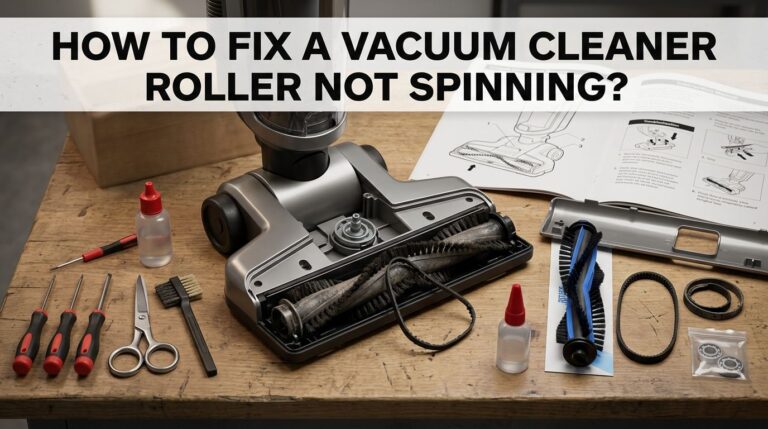
Lay the vacuum on a flat surface with good lighting so you can see clearly. Grab a few simple tools before you start, such as scissors, pliers, a screwdriver, and maybe a seam ripper for cutting hair. A small flashlight helps you spot debris hidden near the bearings.
Wear gloves if you handle pet hair or dusty rollers. These small habits prevent injury and keep dirt off your hands. Once your vacuum is unplugged and your tools are ready, you can safely move on to inspection without any risk.
Check Your Vacuum Settings First
Before you open anything, check the settings. This step takes one minute and solves the problem surprisingly often.
Many vacuums have a hard floor mode that shuts off the brush roll on purpose. This protects bare floors from scratches. If this mode is on while you clean carpet, the brush will not spin at all. Switch it off and test again.
Look for a dedicated brush roll switch too. Some models place a button near the handle or on the head. Make sure it sits in the on position. Also check that your vacuum is not locked in the upright resting position, since many uprights pause the brush when standing straight.
Pros: This fix costs nothing and takes seconds. Cons: It only works if a setting caused the issue, so do not stop here if the brush stays still after checking.
Clean Out Tangled Hair And Debris
This is the fix that solves most cases. Hair wraps around the brush roll so tightly that the motor cannot turn it.
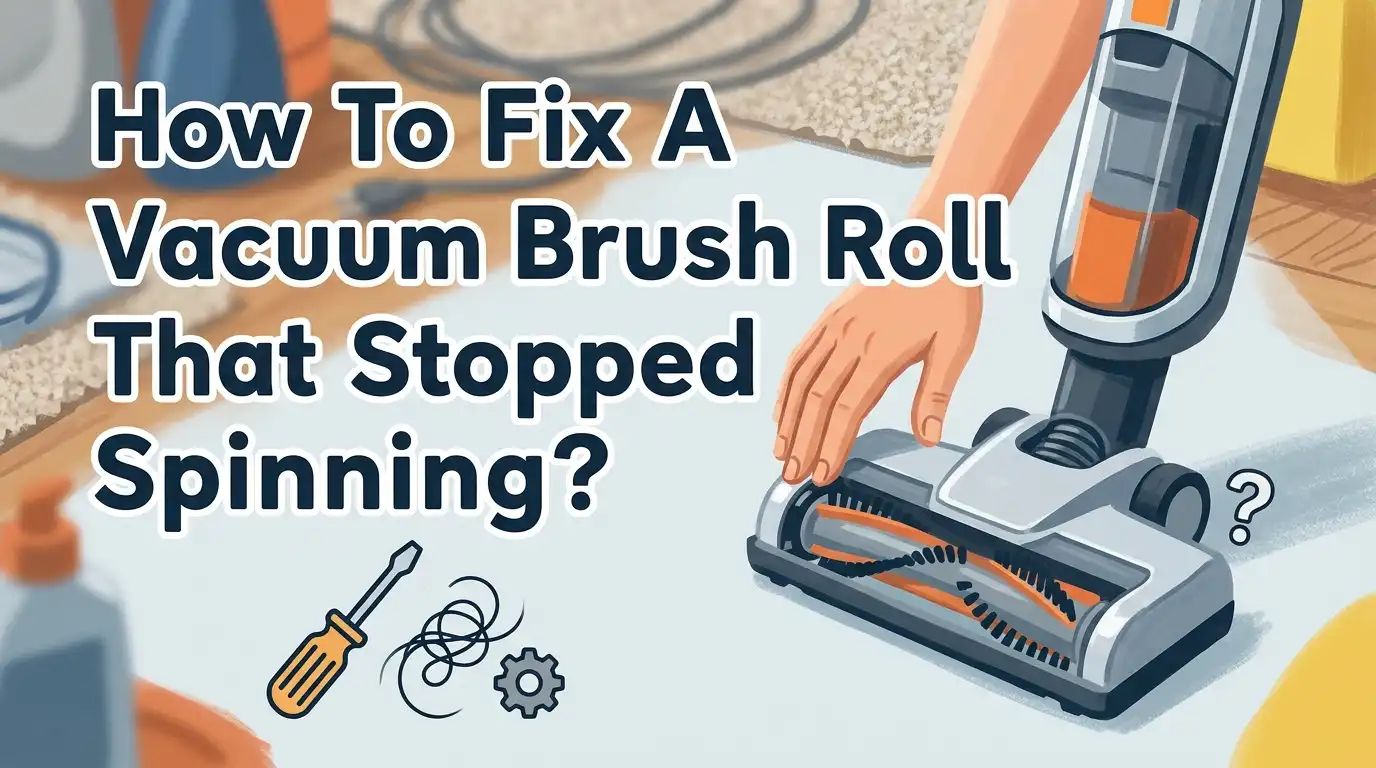
Flip the vacuum over and look at the brush roll. You will likely see a thick band of hair, string, or carpet fibers wound around the bar and packed into the end caps. Use scissors or a seam ripper to slice along the length of the roll.
Pull the cut strands away by hand or with pliers. Pay close attention to the end caps and bearings, since hair hides there and creates the most drag. Spin the roll by hand to check that it now turns freely.
Pros: This costs nothing and fixes the most common cause. Cons: It can take time with heavy buildup, and you may need to remove the roll for a deep clean. Clean the brush every two to four weeks to prevent repeat jams.
Inspect And Replace A Worn Drive Belt
The belt is the part that most often fails after hair buildup. It links the motor shaft to the brush roll and wears out over time.
Remove the cover plate to see the belt. Look for cracks, stretching, a glazed shiny surface, or a melted spot. A burning rubber smell almost always points to a slipping or broken belt. If the belt looks worn or sits loose, it needs replacing.
To replace it, loop the new belt over the motor shaft first, then stretch it onto the brush roll. Always match the belt type to your exact model, since the wrong size will slip off again. Check your manual for the correct part number.
Pros: Belts are cheap and easy to find for most brands. Cons: You must buy the right one, and some models need partial disassembly to reach the belt.
Reset The Brush Roll Safety Shutoff
Many modern vacuums include a safety feature that stops the brush when it jams or overheats. This protects the motor from burning out.
Look for a reset button, usually on the underside of the vacuum head or near the brush housing. This button pops or trips when the brush meets too much resistance. The brush will not spin again until you press it back in.
First, clear any jam that triggered the shutoff. Then let the vacuum cool for fifteen to thirty minutes if it ran hot. Press the reset button firmly until you feel or hear it click. Turn the vacuum back on and test the brush.
Pros: This fix is fast, free, and built right into your machine. Cons: If the brush keeps tripping the reset, a deeper problem like a jam or failing motor still needs your attention.
Make Sure The Brush Roll Is Seated Correctly
A brush roll that sits crooked or loose will not turn properly. This often happens after you remove and reinstall it for cleaning.
Check that both end caps click firmly into place. A roll seated at a slight angle rubs against the housing and stops spinning. It can also push the belt off track or cause it to wander and fall off.
Spin the brush by hand before you close the cover. It should turn smoothly without scraping any plastic. If it drags or catches, pull it out and reseat it. Make sure no debris blocks the slots where the end caps rest.
Confirm the brush turns in the right direction too, since some belts have a twist. Pros: This costs nothing and prevents future belt damage. Cons: It only helps if the roll was misaligned, so test thoroughly before assuming it solved the issue.
Adjust The Brush Roll Height Setting
The height setting controls how close the brush sits to your floor. The wrong height can stop the brush from spinning at all.
If the setting sits too low for thick carpet, the brush binds and stalls. The bristles press too hard and the motor cannot push through. If the setting sits too high for thin rugs, the brush loses contact and barely touches the surface.
Find the height adjustment dial or lever, usually on the vacuum head. Set it higher for plush or shag carpet and lower for low pile rugs and bare floors. Adjust until the head glides smoothly while the brush still reaches the dirt.
Pros: This is a simple dial turn that needs no tools. Cons: It only fixes height related stalls, and some budget vacuums lack adjustable settings, so this option may not apply to your model.
Empty The Dustbin And Clear Blockages
A full dustbin or clogged hose chokes airflow. On some vacuums, this slows or stops the brush roll along with the suction.
Empty the dustbin or change the bag whenever it reaches the fill line. A packed bin restricts air, and air turbine driven brushes need strong airflow to spin at all. Without it, those brushes stall easily.
Check the hose, nozzle, and air paths for clogs. Remove the hose and look through it toward a light. Push a broom handle or long object gently through to clear stuck debris. Clean or replace your filters too, since a dirty filter blocks airflow just like a full bin.
Pros: This restores both suction and brush power at once. Cons: It mainly helps turbine brushes and airflow driven models, so motor driven brushes may need a different fix even after you clear blockages.
Clean Or Replace Worn Brush Roll Bearings
When cleaning and belt swaps fail, worn bearings are often the hidden cause. The bearings let the roll spin smoothly inside the end caps.
Hair, dirt, and rubber bands pack into the bearings and stop them from turning. Over time, the bearings wear out and the roll loses its smooth spin. A worn bearing also loosens belt tension, which makes the belt slip and fall off.
Pull the brush roll out and remove the end caps. Clean out all debris packed around the bearings. Add a small amount of appropriate grease if the bearings are sealed and serviceable. If they feel rough, gritty, or stuck, replace the brush roll entirely.
Pros: Cleaning bearings can save a roll for free. Cons: Many brush rolls have sealed bearings you cannot service, so a full roll replacement may be the only path. This takes more effort than other fixes.
Test And Fix The Brush Roll Motor
Some vacuums use a separate motor just for the brush roll. When everything else checks out, this motor may have failed.
Unplug the vacuum, clear all hair, then reinstall the roll and test on carpet. Watch and listen closely. If the brush stops under light load, grinds loudly, smells burnt, or the head gets hot fast, the motor is likely failing.
On stick and canister models, check the cord and wires running to the brush head. A loose plug, dirty pins, or bent connectors cut power before it reaches the motor. Clean the pins and straighten any bent ones.
If the motor truly failed, you can replace it on many models, though the part costs more. Pros: A motor swap brings the vacuum fully back to life. Cons: It is the priciest fix, needs more disassembly, and sometimes a new vacuum makes more sense for older or cheaper machines.
Know When To Repair Versus Replace
Sometimes the smart move is buying a new vacuum instead of fixing the old one. Knowing the difference saves you money and frustration.
Repair makes sense when the fix is cheap and simple, like clearing hair, swapping a belt, or pressing a reset. These cost little and take minutes. A quality vacuum is worth saving when only a small part has failed.
Replacement makes more sense when the motor dies on an old or budget machine. If the repair cost reaches half the price of a new vacuum, replacing it often wins. Cracked housings, repeated failures, and outdated models also point toward buying new.
Pros of repair: It saves money and reduces waste. Cons of repair: Time and part costs can add up on stubborn problems. Weigh the age, brand quality, and repair price together before you decide. A well built vacuum usually deserves a repair, while a worn out cheap one may not.
How To Keep Your Brush Roll Spinning Long Term
Prevention beats repair every time. A few simple habits keep your brush roll turning smoothly for years.
Clean the brush roll every two to four weeks, more often if you have pets or long hair. Cut away wrapped hair before it packs into the bearings. This single habit prevents most brush roll failures.
Empty the dustbin or change the bag before it overfills. Clean or replace filters on schedule to protect airflow. Check the belt now and then for wear, and replace it at the first sign of cracking or slipping.
Use the right floor setting and height for each surface to avoid strain. Listen for new noises, since grinding or thumping warns you early. Pros: Regular care costs almost nothing and extends vacuum life. Cons: It takes a few minutes of your time each month, but that small effort saves you bigger repairs down the road.
Frequently Asked Questions
Why is my vacuum brush not spinning but suction still works?
This means your airflow is fine, but the brush drive system is not. Common causes include a broken or stretched belt, hair jamming the roll or end caps, the brush switch turned off, hard floor mode enabled, or a tripped safety shutoff. Check these one by one starting with the settings.
How do I know if my vacuum belt is broken?
Look at the belt directly after removing the cover plate. A broken belt may be snapped, stretched loose, or show a melted or glazed spot. A strong burning rubber smell is a clear warning sign. If the brush stops under load while the motor keeps running, the belt has likely failed.
How often should I clean my vacuum brush roll?
Clean it every two to four weeks for most homes. Clean more often if you have pets, long hair, or shed a lot. Do a quick check any time you notice strange noises, dragging on carpet, or weaker pickup. Regular cleaning prevents hair from packing into the bearings and stopping the roll.
Can I run my vacuum if the brush roll does not spin?
You can run it for suction on bare floors, but it will clean carpets poorly. A jammed brush also strains the motor and can burn the belt or cause overheating. It is better to fix the brush roll promptly rather than keep using a vacuum that struggles against the resistance.
Why does my vacuum smell like burning rubber?
This smell almost always points to a belt problem. The belt is slipping against a jammed brush roll, creating heat that melts the rubber. Stop using the vacuum right away, unplug it, clear any jam, and inspect the belt. Replace the belt if it shows any melting, glazing, or cracks.
Is it worth fixing a vacuum brush roll myself?
Yes, in most cases. Clearing hair, swapping a belt, and pressing a reset are easy, cheap fixes anyone can do at home. Only motor failures and major part replacements get tricky. For those, weigh the repair cost against the price of a new vacuum before you decide which path makes more sense.

Hi, I’m Grace Bell, the founder of CleanFloorVault.com, where I personally test and review vacuum cleaners to help you find the perfect tool for a spotless home.