How To Fix A Broken Cord Rewind Spring In A Vacuum Cleaner?
Your vacuum cleaner cord refuses to pull back inside. You tap the button, you tug the cord, but nothing happens. The cord just dangles there like a stubborn noodle.
This is one of the most common vacuum problems, and the culprit is almost always a broken or jammed cord rewind spring.
The good news is simple. You can often fix this at home without a technician. A new vacuum costs a lot of money. A spring repair costs almost nothing. With basic tools and a little patience, you can bring your cord reel back to life in under an hour.
In a Nutshell:
- Always unplug the vacuum first. Safety comes before everything else. Electricity and curious hands do not mix well.
- Most rewind failures come from three causes: a tangled cord, a dirt jammed reel, or a snapped spring. You should rule out the easy fixes before opening the machine.
- A flat spiral spring powers the rewind. It works like the spring inside a tape measure or a lawnmower pull cord. Over pulling the cord is the number one reason it breaks.
- Take photos as you work. Snap pictures of every wire and screw before you remove anything. These photos save you during reassembly.
- Re tensioning the spring is the trickiest part. You must leave at least one full wrap of spring on the reel when the cord is fully out. Too little tension means no rewind. Too much means a snapped spring.
- Replacement is sometimes smarter than repair. If the spring metal is cracked or rusted badly, a new cord reel assembly is the safer choice.
How The Cord Rewind Spring Actually Works
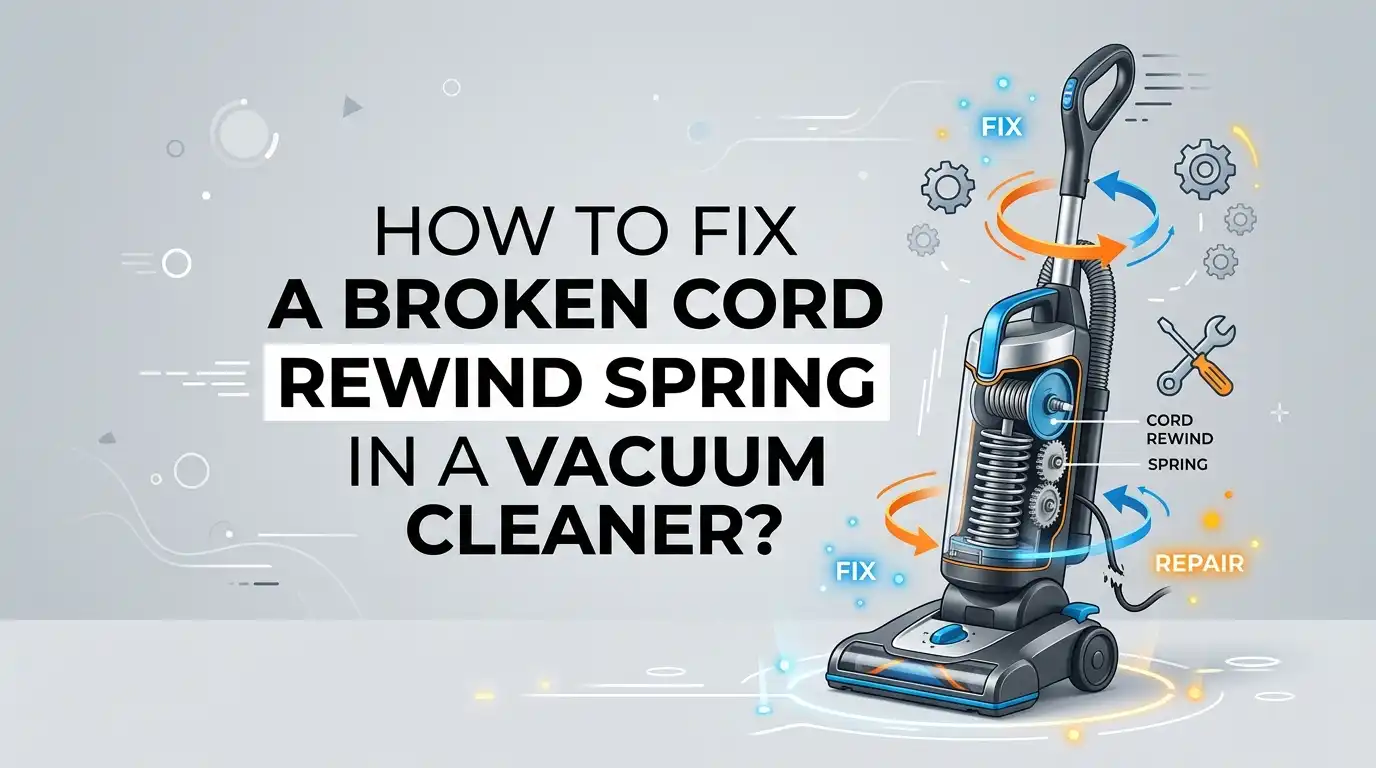
Understanding the part helps you fix it faster. The rewind system uses a flat spiral spring, also called a clock spring or recoil spring. This same spring type sits inside tape measures and lawnmower pull starters. It coils tighter as you pull the cord out.
When you pull the cord, the reel turns and winds the spring. The spring stores that energy like a tiny battery. When you press the rewind button, a latch releases. The spring unwinds and spins the reel backward. The cord then zips back inside.
A small ratchet or latch holds the cord in place during use. If any of these parts wear out, the rewind fails. Knowing this flow tells you exactly what to inspect when things go wrong.
Common Signs Your Rewind Spring Is Broken
Before you grab a screwdriver, confirm the problem. A broken spring shows clear symptoms. The most obvious sign is a cord that will not retract at all. You press the button and hear nothing. No spin, no movement, no life.
Sometimes the cord retracts only partway. It pulls in a few inches, then stops dead. This often means the spring lost most of its tension or partly unhooked. Another sign is a cord that comes out but feels loose, with no resistance when you pull it.
You might also hear a loud snap during use. That snap is often the spring breaking inside the housing. In some cases, the cord retracts in jerky, uneven bursts. Each of these signs points to a spring or reel issue worth investigating.
Tools And Materials You Will Need
Gathering your tools first makes the job smooth. You do not need a fancy workshop. Most of these items already sit in your drawer at home. Good preparation prevents frustration halfway through the repair.
Here is what you should have ready:
- A screwdriver set. Phillips and flathead drivers cover most vacuum screws. Some models use star shaped Torx screws, so keep a Torx set handy too.
- Needle nose pliers. These help you grip the small spring end and tiny clips. Your fingers alone rarely reach these spots.
- A camera or phone. You will photograph wiring before disconnecting anything.
- Work gloves and safety glasses. A spring can snap loose suddenly. Protect your eyes and hands.
- A clean cloth and a soft brush. Dust clogs the reel often, so cleaning tools matter.
- White grease or dielectric grease. This lubricates the spring and the electrical contacts.
A small container for screws also helps. It keeps tiny parts from rolling away and getting lost.
Step One: Unplug And Try The Easy Fixes First
Never open the machine before testing the simple solutions. Unplug the vacuum from the wall. This single step protects you from shock. Wait a moment, then begin the easy checks.
First, pull the cord all the way out slowly. Then release it gently while guiding it with your hand. Sometimes the cord just tangled inside and needs a clean pull to reset. A twisted cord blocks the reel and mimics a broken spring.
Next, look at the cord lock button. Press it firmly a few times. The latch may have stuck in the locked position. Also check that you did not pull the cord past its red warning line. Over extension jams many reels without breaking the spring. If these tricks fail, then you move on to opening the machine.
Step Two: Open The Vacuum Cleaner Casing Safely
Now you access the inside. Lay the vacuum on a flat table with good light. Confirm the plug is out of the wall one more time. Repetition here is worth it.
Remove the dust bag, canister, or filter first. This clears your workspace and stops dust from spreading. Then find the screws. Most screws hide under the bag, near the wheels, or on the bottom. Some models clip together instead of using screws.
Unscrew each one and place it in your container. If the casing clips shut, pry it apart gently with a flathead driver. Never force the plastic, because cracked housing is hard to repair. Lift the top half slowly. Watch for wires connected to buttons on the lid. Take a photo before you separate anything further.
Step Three: Locate And Inspect The Cord Reel
With the casing open, find the cord reel. It sits as a round drum with the power cord wrapped around it. The flat spring usually hides on one side of this drum. Look closely before you touch anything.
Check the spring first. A healthy spring sits coiled neatly. A broken one shows a snapped end, a loose curl, or a piece that slipped off its hook. Rust and cracks are clear signs of failure.
Now inspect for dirt. Dust and hair often pack into the reel and block movement. Clean this out with your brush and cloth. Sometimes cleaning alone fixes the rewind.
Also check the small latch and the metal contacts. Worn contacts cause power loss, while a bent latch stops the cord from locking or releasing properly.
Step Four: How To Re Tension A Loose Or Slipped Spring
Often the spring did not break. It simply lost tension or slipped off its anchor. This is the most satisfying fix because it costs nothing. Start by pulling all the cord off the reel.
Find the inner end of the spring. It should hook onto a post on the reel hub. If it slipped off, slide it back onto the post with your needle nose pliers. Make sure it sits firmly so it will not pop off again.
To add tension, turn the empty reel by hand in the winding direction. Leave at least one full wrap of spring on the small inner reel even when the cord is fully out. Wind it a few extra turns, then hold it while you feed the cord back. Test the rewind gently. Add or remove a turn until the cord pulls in smoothly.
Pros: This method is free, fast, and needs no new parts. Cons: It only works if the spring is intact, and getting the tension exactly right takes a few tries.
Step Five: Repairing A Spring With A Broken End
Sometimes only the very end of the spring breaks. The small hook that grabs the post snaps off. You can repair this without buying a whole new reel. This trick has saved many old vacuums.
Look at the broken end. If the spring metal is otherwise healthy, you can shape a new hook. Use a rotary tool or a small file to cut a fresh notch or hole in the spring end. Copy the shape of the original hook exactly.
Losing an inch of spring length rarely hurts performance. The mechanism still works fine with a slightly shorter spring. Once you cut the new end, slide it onto the post and re tension as in the previous step.
Pros: This saves money and reuses a good spring. Cons: It needs a rotary tool and steady hands. Sharp spring metal can cut you, so wear gloves.
Step Six: Replacing The Entire Cord Reel Assembly
When the spring is badly cracked, rusted, or the reel is cooked, replacement wins. A new cord reel assembly removes all the guesswork. This is the most reliable long term fix.
Order the correct part using your vacuum model number. Find this number on the bottom or back of the machine. The wrong part will not fit, so match it carefully.
Disconnect the wiring from the old reel. Use your earlier photos to remember where each wire goes. Lift out the old reel and set it aside. Place the new reel in the same spot. Reconnect each wire exactly as before, then test the rewind before closing the case.
Pros: This gives a fresh spring, clean contacts, and reliable performance for years. Cons: Parts cost more than a free repair, and some models discontinue parts, making the right reel hard to find.
Step Seven: Cleaning And Lubricating The Mechanism
A clean, greased mechanism lasts much longer. Never skip this step, even after a successful fix. Dirt and friction kill cord reels over time.
Brush away all dust, hair, and debris from the reel and spring. Wipe the shafts and the spring channel until they shine. A clean path lets the spring move freely and rewind fast.
Now apply a thin layer of white grease to the spring coils. Use dielectric grease on the metal electrical contacts. This grease protects against corrosion and keeps power flowing. Avoid using too much, because excess grease attracts more dust.
Spin the reel a few times to spread the lubricant. Smooth, quiet movement tells you the job is done right. This small effort doubles the life of your repair and keeps the cord zipping in smoothly.
Step Eight: Reassembling Your Vacuum Cleaner Correctly
Now you put everything back together. Patience here prevents new problems. Rushing the reassembly often traps wires or cracks the casing.
Guide the cord through its exit slot in the housing. Make sure no wire gets pinched between the two halves. A pinched wire creates a fire risk and a short circuit. Line up the top and bottom casing carefully.
Reconnect any button wires you removed from the lid. Use your photos to confirm each connection. Press the casing together until the clips snap or the screw holes line up. Drive each screw back in, but do not overtighten and strip the plastic. Replace the filter and bag last. Give the machine one final visual check before you plug it in.
Step Nine: Testing The Repair Before Full Use
Testing confirms your hard work paid off. Plug the vacuum back in only after the case is fully closed. Loose parts during testing are dangerous.
Pull the cord out slowly to a medium length. Watch how it feeds. It should glide out with light, steady resistance. Now press the rewind button. The cord should pull back in smoothly and fully.
If the cord retracts all the way, you nailed it. If it stalls or feels weak, the spring needs a little more tension. Open the case again and add one or two extra winds. Repeat the test until the cord rewinds completely every time. A clean, full rewind means your repair is solid and ready for daily use.
How To Prevent Future Cord Spring Damage
Prevention beats repair every time. A few simple habits keep your spring healthy for years. Most spring breaks come from one bad habit, and that is over pulling the cord.
Never pull the cord past its red warning line. That line marks the safe limit for the spring. Pulling beyond it stretches and snaps the spring fast. Use the length you need and no more.
Also, guide the cord back in by hand. Letting it snap back at full speed shocks the spring and the reel. Slow, controlled rewinding adds years of life. Clean the inside of your vacuum now and then to stop dust from clogging the mechanism. A little care today saves you a repair tomorrow.
When To Call A Professional Instead
DIY repair works for most people, but some cases need a pro. Know your limits so you do not turn a small fix into a big mess. Honesty here protects your wallet and your safety.
Call a technician if you see damaged wiring, burnt contacts, or melted plastic. Electrical faults carry real risk and need expert hands. Also call one if the spring keeps breaking after repairs, since a deeper fault may exist.
Consider professional help for high end or sealed models. Some premium vacuums hide the reel behind complex assemblies. A wrong move could damage costly internal parts. Weigh the repair cost against the price of a new machine too. If repair costs near half the price of a new vacuum, replacement may make more sense.
Frequently Asked Questions
Why does my vacuum cord not retract anymore?
Your cord likely faces one of three issues. The spring may have lost tension or snapped. Dust may have jammed the reel. Or the cord tangled inside the housing. Start with the easy fixes, then open the machine if needed.
Can I fix a vacuum cord spring myself?
Yes, most people can. A slipped or loose spring needs only re tensioning, which costs nothing. A broken end can be reshaped with a rotary tool. Only badly rusted or cracked springs require a full reel replacement.
How much does it cost to replace a cord reel?
A replacement cord reel assembly usually costs far less than a new vacuum. Prices vary by brand and model. Repairing the existing spring often costs nothing at all, since you reuse the original parts.
What causes a vacuum rewind spring to break?
Over pulling the cord past its safe limit is the top cause. Letting the cord snap back too fast also damages it. Rust, age, and trapped dirt add extra stress that leads to breakage over time.
Is it safe to open my vacuum cleaner?
Yes, when you unplug it first. Electricity is the only real danger, and unplugging removes it. Wear safety glasses because the spring can snap loose. Take photos so you reassemble everything correctly and safely.
How do I know how tight to wind the spring?
Leave at least one full wrap of spring on the inner reel when the cord is fully out. Then add a few extra winds for retraction power. Test the rewind and adjust by one turn at a time until it pulls in smoothly.

Hi, I’m Grace Bell, the founder of CleanFloorVault.com, where I personally test and review vacuum cleaners to help you find the perfect tool for a spotless home.