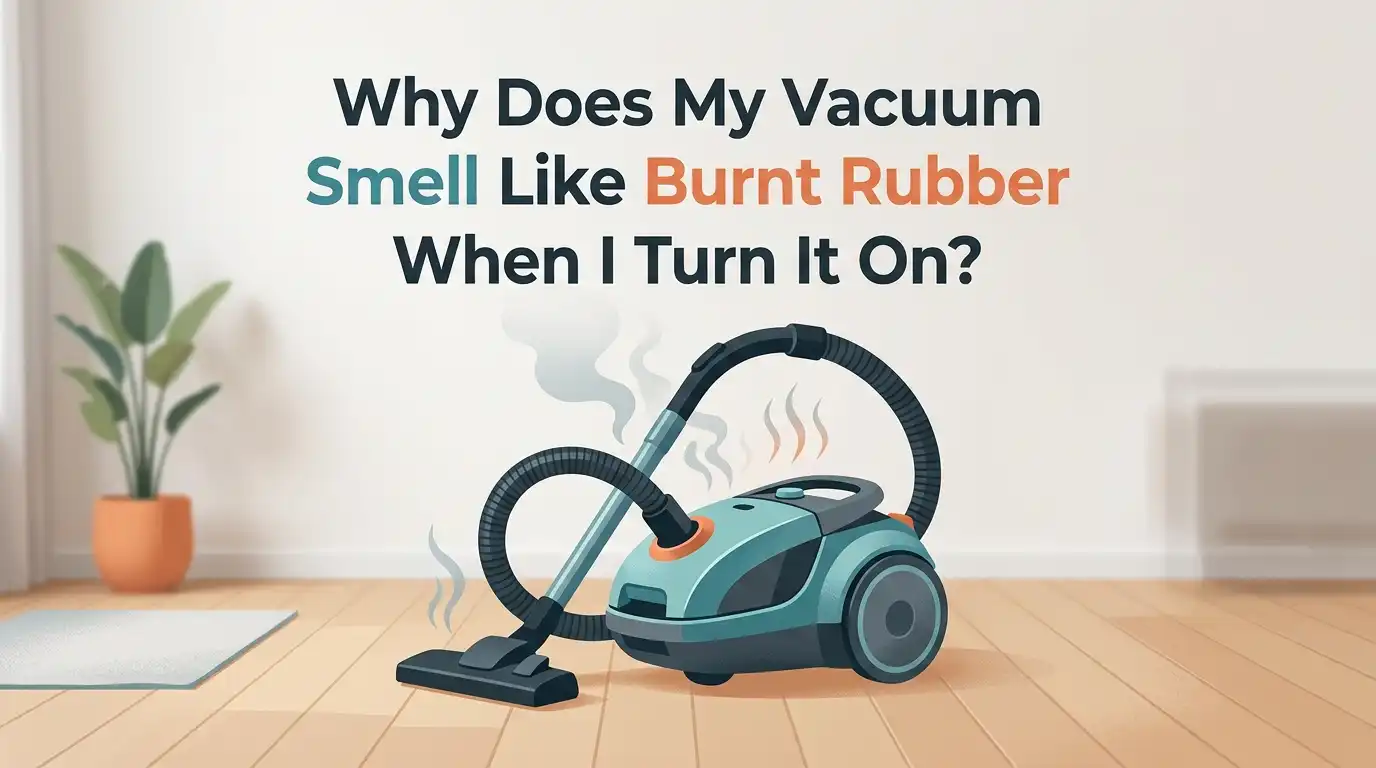
Why Does My Vacuum Smell Like Burnt Rubber When I Turn It On?
You flip the switch on your vacuum, and a sharp burnt rubber smell fills the room. Your stomach drops. Is the machine about to die? Is it a fire risk?
Take a deep breath, because that smell is one of the most common vacuum problems out there, and most of the time the fix is simple.
That rubbery odor is almost always a warning sign, not a death sentence. It tells you that something inside is rubbing, blocking, or overheating. The good news is that you can usually find the cause in a few minutes and fix it without a repair shop.
In a Nutshell:
- A worn or stuck belt is the top cause. That burnt rubber smell usually comes from a stretched, slipping, or snapped drive belt rubbing against a stalled brush roll. Replacing it costs a few dollars.
- Hair and string wrap the brush roll and stop it from spinning. The belt keeps trying to turn it, and the friction creates heat and that rubbery odor. Cleaning the brush roll often fixes the problem instantly.
- Blocked airflow overheats the motor. A full bag, a dirty filter, or a clogged hose forces the motor to strain. The smell becomes hot plastic or burning dust mixed with rubber.
- Worn motor brushes or electrical faults cause a sharper, chemical smell. This is the most serious cause and may need a professional.
- Stop immediately if you see smoke or sparks. A faint smell on a brand new vacuum can be normal break in odor, but smoke is never normal. Unplug it.
- Regular cleaning prevents most cases. Empty the bag, wash the filter, and clear the brush roll often. Prevention beats repair every time.
What That Burnt Rubber Smell Actually Means
The burnt rubber smell is your vacuum telling you that something is creating heat where heat should not be. Rubber parts inside your machine are melting, scorching, or rubbing too hard. The most common culprit is the rubber drive belt, which is why the odor smells so distinctly like burning tires.
Heat builds up in two main ways. First, friction happens when a moving part gets stuck and another part keeps pushing against it. Second, strain happens when the motor works too hard because air cannot flow freely. Both raise the temperature fast.
Think of it like spinning your bike tire against a curb. The rubber heats up and smells. Your vacuum belt does the same thing when the brush roll stops turning. Identifying the source is your first job.
Cause Number One: A Worn or Slipping Drive Belt
The drive belt is the number one reason your vacuum smells like burnt rubber. This thin rubber loop connects the motor to the brush roll. Over time, it stretches, cracks, or loses its grip. When it slips, it rubs against the spinning motor shaft and scorches.
You will often notice the brush roll spins slowly or not at all. The vacuum may still suck air, but it stops picking up dirt from carpets. The smell appears within seconds of turning it on.
To check it, unplug the vacuum first. Flip it over and remove the bottom plate or brush cover. Look at the belt. A healthy belt is tight, smooth, and round. A bad belt looks flat, frayed, glazed, or melted on one side.
Pros of replacing the belt yourself: It is cheap, fast, and needs no special skills.
Cons: You must match the exact belt model, and some vacuums hide the belt under tricky covers.
How to Replace a Vacuum Belt Step by Step
Replacing a belt is one of the easiest home repairs you can do. Most people finish it in under ten minutes. Always unplug the vacuum before you start, because a brush roll can spin on if the switch flips.
Follow these steps:
- Unplug the vacuum and lay it face down on a towel.
- Remove the bottom plate using a screwdriver or release clips.
- Lift out the brush roll and slide the old belt off both the roll and the motor shaft.
- Clean the area of dust, hair, and old rubber bits.
- Loop the new belt around the motor shaft first, then stretch it over the brush roll.
- Reseat the brush roll so it spins freely by hand.
- Replace the plate and test the vacuum briefly.
Find your model number on the base or in the manual. Ordering the wrong belt size is the most common mistake. A correctly fitted belt should feel snug but not overstretched.
Cause Number Two: Hair and Debris Wrapped Around the Brush Roll
Long hair, carpet fibers, and string love to wrap around the brush roll. When enough builds up, the roll stops spinning completely. The belt keeps trying to turn it, and the trapped, stalled roll creates intense friction and that burnt rubber smell.
This is extremely common in homes with pets or people with long hair. You may even smell burnt hair mixed with the rubber odor. The brush roll often becomes hard to turn by hand.
To fix it, unplug the vacuum and turn it over. Remove the brush cover and lift out the roll. Use scissors or a seam ripper to cut through the wrapped hair. Pull the strands free, then clear the end caps where hair hides near the bearings.
Pros of cleaning the brush roll: It is free, quick, and often solves the smell instantly.
Cons: Tightly wrapped hair takes patience, and you may need tweezers or a hook tool for stubborn knots.
Cause Number Three: A Full Bag or Dirty Dust Bin
A full bag or packed dust bin blocks airflow like a clogged pipe. Your vacuum motor relies on a steady stream of air to stay cool. When that air cannot move, the motor strains, heats up, and produces a hot, burning smell that can carry a rubbery edge.
Bagged vacuums lose suction long before the bag looks full. Bagless models clog when dust packs tightly around the cyclone or bin filter. Either way, the warning sign is the same: weak suction plus a rising smell.
Empty the bin or replace the bag when it reaches about two thirds full. Do not wait until it is completely stuffed. For bagless units, tap out loose dust and wipe the bin clean.
Pros of this fix: It takes seconds and prevents motor damage.
Cons: Bags cost money over time, and dust can puff out during emptying, so do it near a trash can or outdoors.
Cause Number Four: A Clogged Filter Choking the Motor
Filters trap fine dust so it does not reach the motor. Over time, that trapped dust packs into a solid layer and chokes off airflow. A clogged filter forces the motor to work harder, raising heat and creating a burnt smell that mixes hot plastic with rubber notes.
Most vacuums have at least two filters. One sits before the motor, and one sits after it as a HEPA filter. Check your manual to find them, because hidden filters get neglected for months.
To clean a foam or felt filter, tap it gently, then rinse it under cool water if your model allows. Let it dry completely for twenty four hours before reinstalling it. A damp filter can damage the motor.
Pros of filter cleaning: It restores suction and lowers motor temperature for free.
Cons: Some HEPA filters cannot be washed and must be replaced, and a wet filter installed too early causes new problems.
Cause Number Five: A Blocked Hose or Air Pathway
A clog deep inside the hose or air channel traps everything behind it. The motor pulls hard against the blockage, overheats, and starts to smell. Common offenders include socks, large paper wads, clumps of pet hair, and small toys.
You will notice almost no suction at the nozzle. The vacuum sounds higher pitched because it is starved for air. The smell follows quickly as the motor strains.
To find the clog, unplug the machine and detach the hose. Look through it toward a light. Drop a coin through to see if it falls out the other end. Use a broom handle or a long flexible brush to push the blockage free.
Pros of clearing a hose: It is free and fully restores performance.
Cons: Reaching deep clogs can be awkward, and rigid tools can puncture a soft hose if you push too hard.
Cause Number Six: Worn Motor Brushes or Carbon Dust
Inside the motor sit small carbon blocks called motor brushes. They press against the spinning shaft to deliver power. As they wear down, they spark and release a sharp burning odor, sometimes with a hint of rubber or hot metal.
This cause is more serious than a belt or clog. You may see fine black carbon dust near the motor vents, hear unusual whining, or notice the vacuum losing power. Sparking is a clear sign the brushes are near the end.
Replacing motor brushes is possible on some models, but it requires opening the motor housing. This is harder than a belt swap and not safe for every user.
Pros of replacing brushes: It can extend a good vacuum’s life for years.
Cons: It needs more skill, the right parts, and care with electrical components. Many people prefer a repair shop for this job.
Cause Number Seven: Electrical Faults and Melting Wires
Sometimes the smell is not rubber at all but burning plastic from the wiring. A frayed cord, a loose connection, or a short circuit produces an acrid, chemical odor. This is the most dangerous cause on this list and demands immediate action.
Warning signs include a smell that gets worse fast, flickering power, a hot plug, or visible damage on the cord. You may notice the vacuum cutting out and restarting on its own.
Stop using the vacuum right away. Unplug it and inspect the cord for cracks, melted spots, or exposed wires. Do not tape over damaged cords and keep using the machine. Burning insulation can release toxic fumes and start a fire.
Pros of professional repair: A technician can fix wiring safely and test for hidden faults.
Cons: Repair may cost more than the vacuum is worth, so weigh replacement against repair for older units.
Is a Burnt Rubber Smell Ever Normal?
Sometimes a faint burnt smell is harmless. A brand new vacuum may release a mild odor during its first few uses. This break in smell comes from manufacturing oils and dust burning off the motor. It should fade within a few cleaning sessions.
A brief smell after sucking up a large clump of debris can also be normal, as long as it disappears once you clear the blockage. The key is whether the smell goes away or keeps returning.
You should worry when the smell is strong, persistent, or paired with smoke, sparks, or a hot housing. A constant burnt rubber odor means a part is actively wearing out. Trust your nose. If it smells alarming and will not stop, treat it as a real problem and investigate.
When to Stop Using Your Vacuum Immediately
Some signs mean you must power down and unplug at once. Your safety matters more than finishing the floor. Do not push through a serious warning to save a few minutes.
Stop using your vacuum right away if you notice any of these:
- Smoke of any color coming from the body or vents.
- Sparks visible near the motor, switch, or plug.
- A hot or melting cord or a plug that is too hot to touch.
- A sharp chemical smell that grows stronger fast.
- The vacuum cutting out and restarting on its own.
Once you unplug it, let the machine cool for at least thirty to sixty minutes in a ventilated spot. Never leave a smoking appliance plugged in. If the danger signs return after cooling, retire that vacuum or take it to a professional. A working floor is not worth a house fire.
How to Prevent the Burnt Rubber Smell for Good
Prevention is far easier than repair. Most burnt rubber smells come from neglect, not bad luck. A short maintenance routine keeps your vacuum cool, quiet, and odor free for years.
Build these simple habits:
- Clear the brush roll of hair every few uses, especially with pets in the home.
- Empty the bin or change the bag at two thirds full, not when it overflows.
- Wash or replace filters on the schedule in your manual, often every one to three months.
- Check the belt every few months and replace it before it stretches or snaps.
- Avoid vacuuming large objects, cords, or wet material that cause clogs.
Set a calendar reminder for filter and belt checks. Five minutes of care prevents most overheating and friction problems. A clean vacuum runs cooler, lasts longer, and never surprises you with that nasty smell.
Should You Repair or Replace Your Vacuum?
At some point you must decide whether a vacuum is worth saving. A simple rule helps: if the repair costs more than half the price of a new comparable machine, consider replacing it. Belts, filters, and brush rolls are cheap and always worth fixing.
Motor and wiring problems change the math. A new motor can cost as much as a mid range vacuum. For an older, well used machine, replacement often makes more sense than a costly repair.
Consider the vacuum’s age, brand quality, and how well it cleaned before the smell started. A high quality machine with one bad part deserves a repair. A cheap, aging unit with a failing motor may not.
Pros of repairing: It saves money and reduces waste when the fix is small.
Cons: Repeated repairs on an old vacuum add up, and you may keep chasing new failures instead of enjoying a reliable machine.
Frequently Asked Questions
Is it safe to keep using my vacuum if it smells like burnt rubber?
No, you should stop and find the cause first. A burnt rubber smell means a part is overheating or wearing out. Using it more can damage the motor or, in rare cases, start a fire. Unplug it, inspect the belt and brush roll, and only resume once you fix the problem.
How much does a vacuum belt cost to replace?
Vacuum belts are very affordable and usually one of the cheapest parts on the machine. Most cost just a few dollars each. You can replace one yourself in under ten minutes with a screwdriver. Just make sure you order the exact belt that matches your vacuum model number.
Why does my new vacuum smell burnt even though it is clean?
A new vacuum often releases a mild burnt odor during its first few uses. This comes from factory oils and dust burning off the motor. The smell should fade quickly. If it is strong, smells like rubber, or comes with smoke, stop using it and check for a stuck belt or defect.
Can a dirty filter really cause a burning smell?
Yes, a clogged filter is a common hidden cause. When the filter packs with dust, air cannot flow, so the motor strains and overheats. This produces a hot, burning odor. Clean or replace your filter regularly, and always let washed filters dry fully before you put them back.
My brush roll will not spin. What does that mean?
A brush roll that will not spin usually points to a broken belt or hair wrapped tightly around the roll. Both create friction and the burnt rubber smell. Unplug the vacuum, remove the brush cover, cut away any tangled hair, and check the belt. Replace the belt if it looks stretched, glazed, or snapped.
When should I take my vacuum to a professional?
Call a professional when the smell is sharp and chemical, when you see sparks or smoke, or when you suspect motor or wiring faults. These problems involve electrical safety and are harder to fix at home. Simple jobs like belts, filters, and clogs you can handle yourself, but trust an expert with motor and wiring repairs.

Hi, I’m Grace Bell, the founder of CleanFloorVault.com, where I personally test and review vacuum cleaners to help you find the perfect tool for a spotless home.