
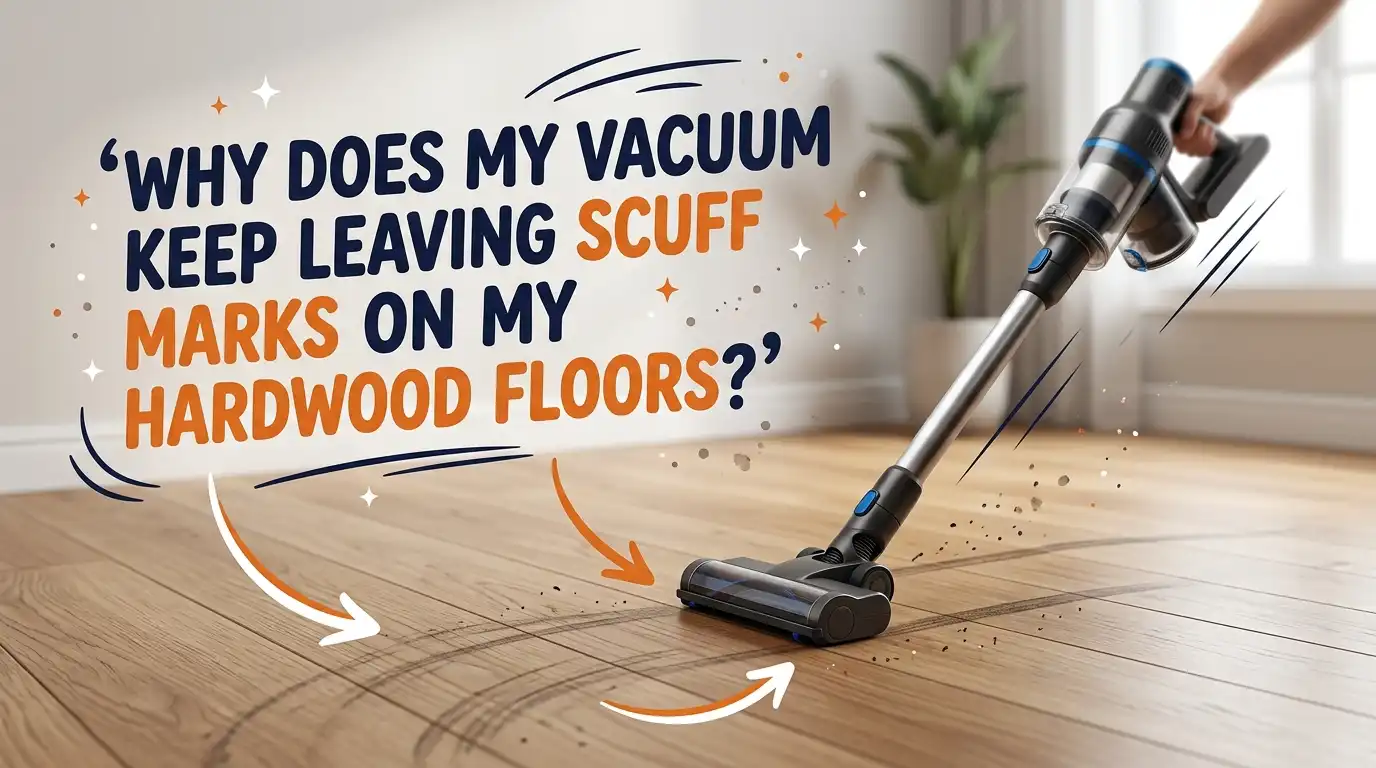
Why Does My Vacuum Keep Leaving Scuff Marks On My Hardwood Floors?
You clean your hardwood floors to make them shine. But then you spot ugly black marks left behind by your own vacuum. It feels frustrating and confusing. Your cleaning tool is now the thing making a mess.
The good news is that this problem is common and fixable. Most scuff marks come from dirty wheels, hard brush rolls, or trapped debris. You do not need new floors or an expensive vacuum to solve it.
This post breaks down every cause in plain language. You will learn simple steps to stop the marks and remove the ones already there. Let us help you protect your beautiful floors today.
In a Nutshell:
- Dirty vacuum wheels are the top cause. Grime and rubber build up on the wheels and rub off as dark streaks on your wood.
- Hard plastic wheels and brush rolls scratch and scuff. Vacuums built for carpet often have stiff parts that drag against bare wood.
- Felt pads and soft brush heads fix most problems. Adding felt tape to wheels and switching to a soft roller setting protects the finish instantly.
- Trapped debris is a hidden troublemaker. A small stone or grit stuck in the wheel or brush turns your vacuum into sandpaper.
- Most existing scuffs come off with gentle methods. A tennis ball, baking soda paste, or a soft eraser lifts marks without harming the wood.
- Prevention is easier than repair. Regular cleaning of your vacuum and the right settings keep your floors safe long term.
What Actually Causes Vacuum Scuff Marks On Hardwood
Scuff marks happen when something on your vacuum rubs against the wood finish. The mark is usually transferred material, not deep damage. Dirty wheels are the number one reason.
Dirt, oil, and tiny rubber bits stick to the wheels and smear onto the floor. Hard plastic wheels are the second cause. They drag instead of rolling smoothly. A spinning brush roll on bare wood is a third culprit.
It beats against the surface and can leave streaks. Trapped grit, like sand or small stones, acts like sandpaper. Even a wet or damp floor can react with vacuum parts and leave dark spots. Knowing the cause helps you pick the right fix.
How To Inspect Your Vacuum Wheels For Build Up
Start with the wheels because they cause most marks. Flip your vacuum over and look closely at each wheel. Run your finger across the surface and check for black residue. You will often see caked dirt or a sticky film.
This grime is what transfers to your floor. Spin each wheel by hand. A wheel that does not turn freely drags and scuffs. Look for hair, thread, or grit wrapped around the axle. Use a flashlight to spot hidden debris in tight gaps.
Pros: This check takes two minutes and costs nothing. It often solves the problem on the spot.
Cons: You may need a screwdriver to reach some wheels, and stubborn build up can take effort to remove.
Cleaning Your Vacuum Wheels The Right Way
Once you find dirty wheels, clean them well. Unplug the vacuum first or remove the battery for safety. Use a damp cloth with mild dish soap to wipe each wheel. Scrub away the black film and any sticky residue.
For tough build up, use an old toothbrush to get into the grooves. Remove tangled hair with scissors or a seam ripper. Dry the wheels fully before you vacuum again. A wet wheel can leave new marks on the wood.
Pros: Cleaning is free, fast, and stops the marks at the source. It also helps the wheels roll smoothly.
Cons: You must repeat this every few weeks. Heavily worn wheels may keep marking even after cleaning, so they may need replacing.
Adding Felt Pads Or Tape To Protect Wheels
If clean wheels still scuff, add a soft barrier. Felt tape with a sticky back is a cheap and proven fix. You can find it at any hardware store.
Cut small strips and wrap them around the contact surface of each wheel. The felt glides over wood and never leaves marks. Some people also use thin strips of soft cloth or moleskin. Replace the felt when it wears down or peels off.
Pros: Felt creates a gentle layer between the wheel and the floor. It works on almost any vacuum and costs very little.
Cons: The tape wears out over time and needs replacing. It can also collect dirt, so you must keep it clean. On very heavy vacuums, felt may compress quickly.
Why Your Brush Roll May Be The Problem
The brush roll is the spinning bar with bristles inside the cleaning head. It works great on carpet. On bare wood, it can beat the surface and fling debris. Hard or worn bristles drag across the finish and leave streaks.
A brush roll set for carpet should never run on hardwood at full speed. Check the bristles for wear, flat spots, or trapped grit. Pull out any hair or string wrapped around the bar. A damaged brush roll needs replacement.
Pros: Fixing or adjusting the brush roll removes a major scuff source. Many vacuums let you do this in seconds.
Cons: Some older vacuums have no way to stop the brush roll. In that case, you may need a different cleaning head or vacuum for wood.
Turning Off Or Adjusting The Brush Roll Setting
Many modern vacuums have a hard floor or bare floor mode. This setting turns off the brush roll or slows it down. Look for a switch on the body or the cleaning head.
Always use this mode on hardwood. If your vacuum has no setting, you can often disengage the belt by hand. Some uprights have a height adjustment, so raise the head to the highest level for wood. This lifts the brush away from the surface.
Pros: Switching modes is the easiest fix of all. It protects the wood and still picks up dust well.
Cons: Cleaning power drops slightly with the brush off, so deep dirt in floor gaps may need a second pass. Not every vacuum offers this option.
Choosing The Right Vacuum Head For Wood Floors
The cleaning head matters more than the vacuum itself. A soft roller head is the best choice for hardwood. It uses a plush fabric roller instead of stiff bristles. This design lifts dust and fine grit without scratching.
Many stick vacuums sell a separate hard floor head. A bare floor attachment with soft bristles also works well. Avoid heads with only hard plastic edges or aggressive brushes.
Pros: A soft roller cleans wood gently and picks up both large debris and fine dust. It glides smoothly and rarely marks the floor.
Cons: A separate head adds cost if your vacuum does not include one. Soft rollers can get matted with pet hair and need regular cleaning to stay effective.
Dealing With Trapped Grit And Small Debris
Sometimes the vacuum picks up a tiny stone or piece of grit. It lodges in the wheel or brush and scratches as you move. This turns your vacuum into a sanding tool.
Always check the cleaning path after vacuuming sandy or gritty areas. Sweep or dust mop heavy debris before you vacuum. Place a doormat at every entry to catch outdoor grit. Keep shoes off the wood floor when possible.
Pros: Removing grit prevents deep scratches, not just surface scuffs. A doormat and a quick check are simple habits.
Cons: You cannot always see tiny grit, so some risk remains. This step adds a small amount of time to each cleaning session.
Are Robot Vacuums Safe For Hardwood Floors
Robot vacuums are popular, but they can leave marks too. Their wheels collect dirt and can stain wood, especially if the floor is damp. The same rules apply.
Clean the robot wheels and brushes often. Robot vacuums are light, so they usually scratch less than heavy uprights. Still, a stuck wheel or wet pad can leave dark streaks. Empty the bin and wipe the wheels weekly.
Pros: Robots are lightweight and gentle, and they clean daily without effort. They reduce grit build up by running often.
Cons: Dirty robot wheels can stain wood, and the marks may set if ignored. Robots also miss edges and corners, so you still need a manual vacuum sometimes.
How To Remove Scuff Marks Already On Your Floor
Now let us erase the marks already there. Start with the gentlest method first. Rub the scuff with the flat side of a plain tennis ball. The fuzzy surface lifts marks without harming the finish.
For tougher marks, make a paste of baking soda and a little water. Apply it to a soft damp cloth and rub in a circular motion. Wipe clean and dry the area right away. A drop of dish soap in warm water also works on light marks.
Pros: These methods use items you already own and are safe for most finishes. They cost almost nothing.
Cons: Heavy or old scuffs may need several tries. Always test in a hidden spot first, since some finishes react differently.
Safe Cleaning Products And Methods To Avoid
Choosing the right cleaner protects your floor and your results. Never use steel wool, harsh scrubbers, or strong solvents on wood. They strip the finish and create permanent damage. Avoid soaking the floor with water, since moisture warps wood and causes dark stains.
Skip wax build up cleaners unless your floor needs them. A soft microfiber cloth and a wood safe cleaner are your best tools. For stubborn marks, a small amount of a melamine foam eraser can help, but use it lightly.
Pros: Gentle products keep the finish intact and prevent new damage. Microfiber lifts dirt without scratching.
Cons: Melamine foam can dull the finish if you scrub hard, so use light pressure. Some store cleaners leave residue, so always wipe with a damp cloth after.
Long Term Habits To Keep Floors Scuff Free
Prevention saves you the most time. Clean your vacuum wheels and brush roll every few weeks. Keep felt pads fresh and check for trapped grit. Use the hard floor setting every single time you vacuum wood.
Place doormats at entrances and ask guests to remove shoes. Dust mop between vacuum sessions to cut down on grit. Store your vacuum off the wood floor to avoid wheel marks while it sits.
Pros: These habits stop scuffs before they start and extend the life of your floors. They take only a few minutes each week.
Cons: Building a routine takes discipline at first. You also need to remind family members to follow the same steps.
When To Replace Vacuum Parts Or The Whole Vacuum
Sometimes cleaning is not enough. Worn wheels, cracked rollers, and old brush bars keep marking no matter what. Check if your vacuum brand sells replacement wheels or heads.
Swapping a single part is far cheaper than a new machine. If your vacuum is built only for carpet and has no wood mode, a different model may serve you better. Look for a vacuum with soft wheels, a soft roller head, and adjustable suction.
Pros: Replacing parts restores safe cleaning at low cost. A wood friendly vacuum solves the problem for good.
Cons: Some brands do not sell separate parts, forcing a full replacement. A new vacuum is a bigger upfront cost, though it pays off in floor protection.
Frequently Asked Questions
Why does my vacuum leave black marks but no scratches?
Black marks without scratches usually come from dirty wheels or a worn brush roll. The dark color is transferred grime or rubber, not damage to the wood. Clean the wheels and brush bar well, and the marks should stop. Adding felt tape gives extra protection.
Can a vacuum permanently damage hardwood floors?
Yes, but it is rare with care. Trapped grit and hard brush rolls can cause real scratches over time. Most marks are surface scuffs that wipe off. Use the right head, keep parts clean, and check for debris to avoid lasting harm.
Is it safe to vacuum hardwood floors at all?
Vacuuming is safe and often better than sweeping. A vacuum lifts fine dust that a broom pushes around. The key is using a soft roller or bare floor setting and keeping the wheels clean. This combination protects the finish.
What is the best way to remove old scuff marks?
Start gentle with a tennis ball rubbed over the mark. If that fails, try a baking soda paste on a damp cloth. Work in circles, then wipe and dry the spot. Test any method in a hidden area first to be safe.
How often should I clean my vacuum wheels?
Clean them every two to four weeks for normal use. Clean more often if you have pets or track in outdoor grit. A quick wipe with soapy water removes the film that causes marks. Regular checks keep your floors clear of streaks.
Do felt pads on wheels really work?
Yes, felt pads work very well. They create a soft barrier between the hard wheel and the wood. The felt glides smoothly and never transfers grime. Just replace it when it wears down or starts collecting dirt.

Hi, I’m Grace Bell, the founder of CleanFloorVault.com, where I personally test and review vacuum cleaners to help you find the perfect tool for a spotless home.