How To Fix A Vacuum Hose That Is Completely Clogged?
Your vacuum suddenly stops picking up dirt. The motor still hums, but the floor stays dirty. You check the bag, swap the filter, and nothing changes.
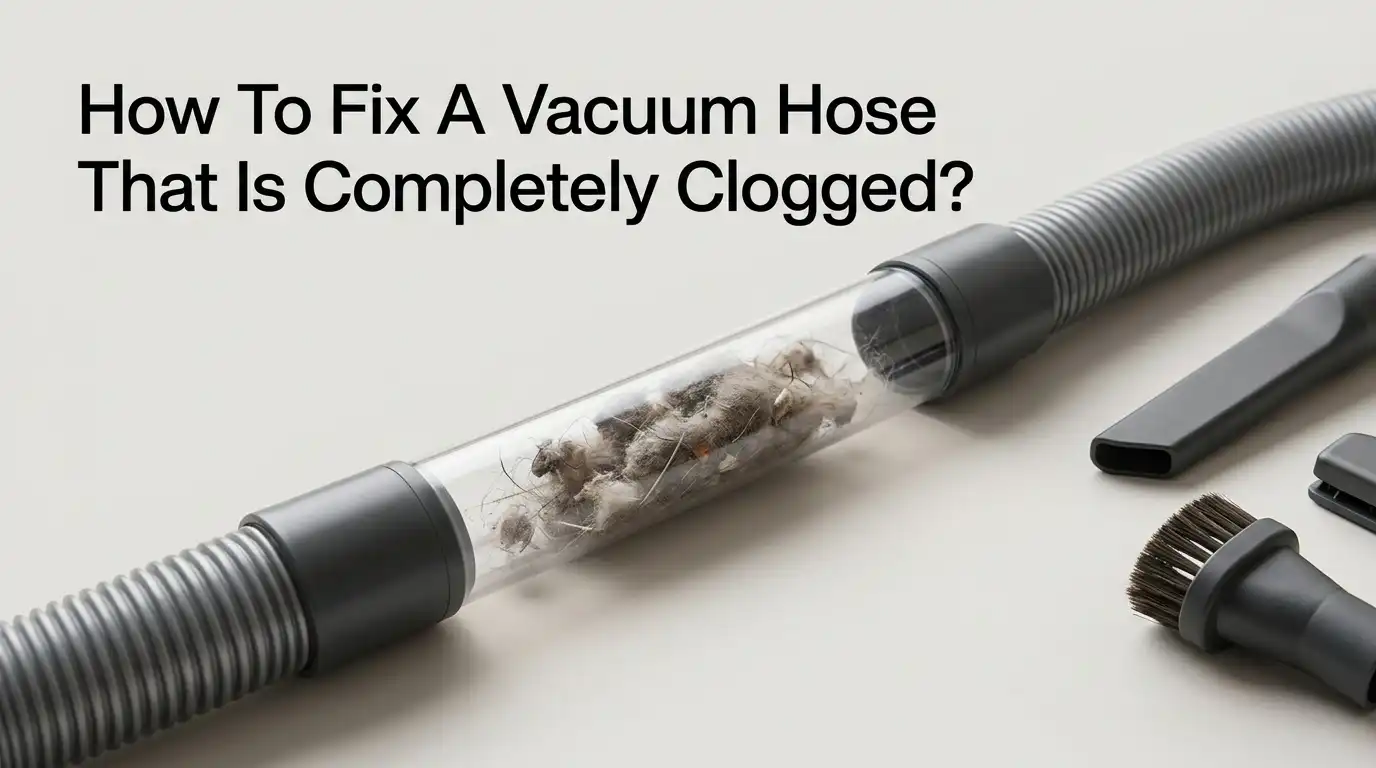
The real problem is hiding inside the hose. A completely clogged vacuum hose blocks airflow and kills suction fast. Pet hair, socks, coins, and clumps of dust love to get stuck in the bends.
The good news is that you can fix this at home in minutes. You do not need a repair shop or expensive tools. Most clogs come loose with items you already own.
In a Nutshell
- Detach the hose first. A clog inside a connected hose is hard to reach. Always unplug the vacuum and remove the hose from both ends before you start poking around.
- Use the broomstick trick for stubborn clogs. Push a long, straight object gently through the hose. This pops out most jams like socks, paper, and packed dust balls with little effort.
- A garden hose flushes hidden debris. Running water clears the gunk a stick cannot reach. Water pressure breaks apart soft clogs and rinses the inside clean.
- Vinegar and baking soda kill odor and loosen grime. This combo deodorizes the hose and helps shift sticky buildup. It works best after the main clog is gone.
- Dry the hose fully before reattaching it. A wet hose grows mold and mildew. Let it air dry for several hours or hang it overnight.
- Prevention beats repair. Empty the bin often, check filters, and watch for large objects. Simple habits stop most clogs before they form.
How To Know If Your Vacuum Hose Is Actually Clogged
You should confirm the clog before you take anything apart. A clogged hose shows clear signs. The vacuum loses suction even though the motor runs loud and strong. You may hear a higher pitched whine because the motor pulls air against a blockage.
Sometimes the brush roll spins fine, but the floor stays dirty. That points straight to the hose.
Try this quick test. Turn on the vacuum and hold your hand near the hose opening. Weak or no airflow means a blockage is trapped inside. You might also feel the hose get warm as the motor strains.
A burning smell is a warning sign. Stop the vacuum right away if you smell hot plastic. Running it with a full clog can overheat the motor and cause real damage.
Why Vacuum Hoses Get Completely Clogged
Knowing the cause helps you prevent future clogs. Vacuum hoses are ribbed inside, so debris snags on the ridges easily. Pet hair wraps around these ridges and slowly builds a thick plug.
Large items are the most common culprits. Socks, small toys, bottle caps, and crumpled paper get sucked in and wedge tight in a bend.
Damp dirt is another problem. Wet debris sticks to the hose walls and traps more dust on top. Over time this forms a hard, packed clog that air cannot pass.
A full dustbin or bag makes things worse. When the bin fills up, debris backs into the hose and settles there.
Skipping regular cleaning lets fine dust collect along the entire length. Eventually the buildup narrows the path until suction drops to almost nothing.
Safety Steps To Take Before You Start
Safety comes first with any appliance repair. Always unplug the vacuum from the wall outlet before you touch the hose. This removes any risk of the motor starting while your hands are near moving parts.
Let the machine cool down if you ran it for a while. A hot motor and warm hose need a few minutes to drop to a safe temperature.
Work in a well lit area like a kitchen counter, garage, or bathroom. Good light helps you spot the clog quickly.
Lay down a towel or old newspaper. Clogs release dust, hair, and grime when they pop free, and you do not want that mess on your floor.
Wear gloves if you suspect the clog holds sharp objects like glass, pins, or staples. A little caution protects your hands from cuts.
How To Remove The Hose From Your Vacuum
You need to detach the hose to clear it properly. Most hoses connect at two points, the main body and the wand. Look for a release button, clip, or twist lock collar near each end.
Press the button or twist the collar, then pull the hose free. Some models need a gentle wiggle to release the fitting.
Check your vacuum manual if you cannot find the release. Different brands use different connectors, and forcing the wrong part can crack the plastic.
Once the hose is off, hold it up to a light source. Look through one end toward the light. A dark spot in the middle shows exactly where the clog sits. This trick saves time because you know which side to attack first. Set the hose on your towel and get ready to clear it.
Method 1: The Broomstick Or Long Pole Trick
This is the fastest fix for a solid clog. You push the blockage straight out with a long, rigid object. A broom handle, mop handle, or a length of PVC pipe works perfectly.
Pick something slightly thinner than the hose so it slides in without scratching. Avoid sharp tools that can tear the inner lining.
Slide the pole in from the wider end. Push gently and steadily until you feel resistance, then keep firm pressure to ease the clog out the other side.
Pros: It is quick, free, and needs no water or drying time. It works great on socks, toys, and packed hair.
Cons: It can damage thin hoses if you push too hard. It also fails on clogs stuck in tight curves where a straight pole cannot reach. Go slow and stop if you feel the hose stretching.
Method 2: Flushing The Hose With A Garden Hose
Water clears soft and sticky clogs that a pole cannot move. Take the vacuum hose outside or to a bathtub for this method.
Hold one end of the vacuum hose and insert your garden hose nozzle into it. Run a strong stream of water straight through. The pressure breaks apart packed dust and flushes loose debris out the far end.
Stretch and compress the ribbed sections while the water runs. This shakes loose anything clinging to the ridges.
Pros: It removes grime, fine dust, and odor all at once. It reaches clogs that sit deep inside the bends.
Cons: The hose stays wet and needs hours to dry fully. You cannot use this on hoses with built in electrical wiring, since water ruins the connections. Always check your model before you soak it.
Method 3: Using A Plumber’s Snake Or Drain Auger
A drain snake reaches clogs that hide in sharp bends. This flexible metal coil bends around corners that a straight pole cannot handle. Plumbers use it for pipes, and it works just as well on vacuum hoses.
Feed the snake slowly into the hose. Turn the handle as you push so the tip grabs and pulls the clog free. Work it back and forth gently to break the blockage apart.
An electrician’s fishing tape works the same way for tighter hoses.
Pros: It clears deep, stubborn clogs in curved sections. It gives you control and reach that a broomstick cannot match.
Cons: The metal tip can scratch or puncture the inner lining if you force it. You may need to buy one if you do not own it already. Use a light touch and never jam it hard against a tight clog.
Method 4: The Vinegar And Baking Soda Soak
This method cleans and deodorizes after you clear the main clog. The fizzing reaction loosens sticky grime stuck to the inner walls. It also kills the musty smell that builds up over time.
Mix half a cup of baking soda with two cups of vinegar and some warm water. Pour the mixture slowly through the hose and let it fizz inside.
Plug both ends or hold the hose upright so the solution sits and works. Wait about fifteen minutes, then rinse with clean water.
Pros: It removes odor, softens grease, and uses cheap kitchen items. It leaves the hose fresh and clean.
Cons: It will not move a solid object like a sock or toy. The hose needs full drying time afterward. Think of this as a finishing step, not a clog buster on its own.
Method 5: Compressed Air Or Blowing The Clog Out
Compressed air pushes light clogs out with a strong blast. A can of compressed air or an air compressor on low pressure both work.
Point the nozzle into one end of the hose and aim the blockage toward the open end. Use short bursts rather than one long blast to avoid pushing the clog tighter.
You can also reverse your vacuum if your model allows it. Some vacuums have a blower port that pushes air out instead of pulling it in.
Pros: It clears dry, loose clogs fast and keeps the hose dry. There is no mess and no waiting.
Cons: High pressure can wedge a stubborn clog deeper if you aim it wrong. It struggles with damp or heavy blockages. Keep the pressure low and watch which way the debris moves.
How To Clean The Rest Of Your Vacuum
A clear hose is only half the job. Other parts often hold debris that lowers suction too. Check the bin, the wand, and the brush head while the hose is off.
Empty the dustbin or replace the bag if it sits more than two thirds full. A packed bin pushes debris back into the hose and causes repeat clogs.
Pull hair and string off the brush roll with scissors. Tangled fibers slow the brush and trap dirt.
Wash or replace the filters. Clogged filters choke airflow just like a blocked hose does. Most foam filters rinse clean under tap water.
Wipe the hose connectors and ports. A clean fit seals better and keeps your suction strong across the whole machine.
How To Dry Your Vacuum Hose Properly
Drying matters more than people think. A damp hose grows mold and mildew inside the ribbed grooves. That leads to bad smells and even health risks for your home.
Shake out as much water as you can right after rinsing. Then hang the hose in a straight line so water drips down and out.
Hang it over a shower rail, a railing, or a hook in the garage. Let air move through it freely.
Give it at least four to six hours, or leave it overnight to be safe. Warm, dry air speeds the process.
Never reattach a wet hose to the vacuum. Moisture inside the machine can damage the motor and electrical parts. A fully dry hose keeps your vacuum safe and odor free.
How To Prevent Vacuum Hose Clogs In The Future
Prevention saves you from repeating this whole job. Small daily habits keep your hose clear for years. Start by scanning the floor before you vacuum.
Pick up large items first like socks, coins, paper, and toys. These cause most serious clogs.
Empty the dustbin or bag often. A bin that stays below half full lets air flow freely and stops backups.
Clean or change your filters on schedule. Fresh filters protect both the hose and the motor.
Run a quick light check through the hose once a month. Hold it to the light and look for early buildup. Catching a small clog early is far easier than clearing a packed one. These simple steps keep your vacuum strong and your floors clean.
When To Call A Professional Or Replace The Hose
Sometimes the hose itself is the problem. If you clear the clog but suction stays weak, the hose may have a crack or hole. Air leaks through the gap and kills the pull.
Check the whole length for splits, especially near the ends where hoses bend most. A cracked hose cannot be fixed reliably and usually needs replacement.
Call a repair shop if you smell burning even after clearing the clog. That points to a motor issue, not a hose problem.
Replacement is the smart choice when a hose is old, brittle, or torn in several spots. New hoses are far cheaper than a new vacuum.
For high end or central vacuum systems, a technician can clear deep duct clogs safely. Know your limits and protect your investment when the job goes beyond a simple clog.
Frequently Asked Questions
Can I use water inside any vacuum hose?
No, you cannot. Hoses with electrical wiring or built in power connectors must stay dry. Water ruins the wiring and creates a shock risk. Check your manual first. Plain hoses without wiring are safe to flush and rinse with water.
How often should I clean my vacuum hose?
Clean the hose deeply every two to three months for normal use. Homes with pets or heavy traffic need cleaning more often. Do a quick light check once a month to catch early buildup. Regular checks stop small clogs from turning into full blockages.
What objects clog vacuum hoses the most?
Pet hair, socks, paper, coins, and small toys are the top causes. Damp dirt also sticks to the walls and packs tight over time. Large items wedge in the bends and block airflow fast. Picking these up before you vacuum prevents most clogs.
Why does my hose still have weak suction after I cleared the clog?
A few things cause this. Check for a hidden second clog, a full dustbin, or dirty filters. A crack or hole in the hose also leaks air and weakens suction. Inspect the full hose length and clean every part to restore power.
Is it safe to push a sharp tool through the hose?
You should avoid sharp tools. They can tear or puncture the inner lining and ruin the hose. Use a smooth broom handle, a plumber’s snake, or compressed air instead. If you must use a tool, move it gently and never force it against a tight clog.
Can a clogged hose damage my vacuum motor?
Yes, it can. A blocked hose makes the motor work harder and overheat. This shortens its life and may cause a burning smell. Stop the vacuum at the first sign of strain or odor, then clear the clog before you use it again.

Hi, I’m Grace Bell, the founder of CleanFloorVault.com, where I personally test and review vacuum cleaners to help you find the perfect tool for a spotless home.