
Why Does My Vacuum Push Large Debris Around Instead of Sucking It Up?
You push your vacuum forward, expecting it to grab that piece of cereal or chunk of dirt. Instead, the debris rolls away like a tiny escape artist. Frustrating, right?
This problem happens to almost every vacuum owner at some point. The good news is that it rarely means your machine is broken.
Most of the time, a small fix or quick adjustment solves the issue in minutes. This guide walks you through every reason your vacuum pushes large debris around and shows you exactly how to fix each one. Keep reading to stop chasing crumbs across your floor.
Key Takeaways
- Height settings matter most. A vacuum set too high creates a gap that lets large debris slip under the nozzle. Lowering the height usually solves the issue instantly.
- Brush rolls flick debris forward. When the brush roll spins fast on hard floors, it can throw chunks of dirt ahead of the vacuum instead of pulling them in. Turning off the brush roll on hard surfaces stops this.
- Clogs kill suction power. A blocked hose, full bin, or dirty filter cuts airflow. Your vacuum then pushes debris instead of lifting it.
- The nozzle opening is often too small. Many uprights have narrow front openings. Large items like popcorn or pet food physically cannot fit through. A hose attachment fixes this fast.
- Worn parts reduce performance. Old belts, flattened brush bristles, and torn seals all cause weak pickup. Replacing these brings your vacuum back to life.
- Floor type changes everything. Carpet, tile, and hardwood each need different settings. Matching your vacuum to the surface stops debris from rolling away.
Understanding Why Your Vacuum Pushes Debris
Your vacuum works by creating a pressure difference. The motor pulls air through the nozzle, and that moving air lifts dirt into the bag or bin. When something blocks this airflow or the nozzle sits too high, debris just rolls forward.
The vacuum acts more like a broom than a suction tool. Large items such as cereal, pebbles, and pet kibble are heavier than dust. They need strong, focused suction to lift off the floor.
If even one part of the system fails, these bigger pieces get pushed instead of pulled. Understanding this basic idea helps you spot the exact cause faster.
Check the Vacuum Height Setting First
The height setting is the number one reason vacuums push debris around. Most uprights have a dial or lever with numbers or floor type icons. If the setting sits too high, the nozzle floats above the floor.
Large debris simply rolls under the gap and away from the suction zone. Lower the setting one notch at a time. Test the vacuum after each change.
You want the nozzle close enough to grab debris but not so low that it stalls the brush roll. Hard floors usually need the lowest setting. Thick carpet needs a higher one. Getting this right fixes the problem in many homes.
Pros of adjusting height: free, takes ten seconds, works on most models. Cons: settings can drift loose over time and need rechecking.
Inspect the Brush Roll for Wear or Tangles
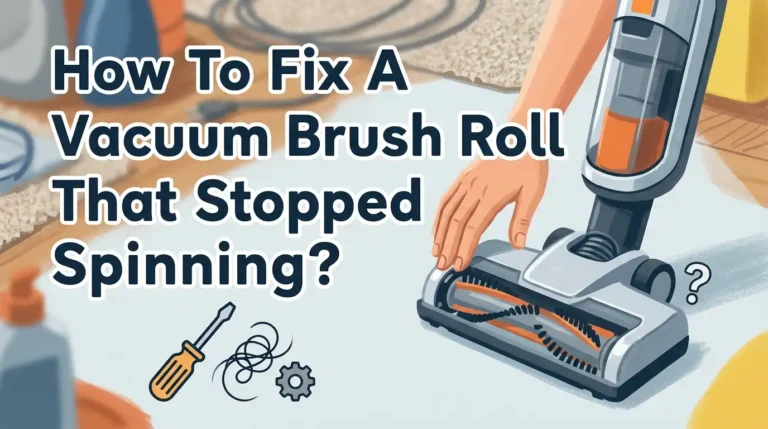
The brush roll spins fast and sweeps debris toward the suction opening. Over time, hair, string, and carpet fibers wrap around it. This stops the bristles from reaching the floor. Flattened or worn bristles also lose their grip on debris.
Flip your vacuum over and look at the roll. Use scissors or a seam ripper to cut away tangled hair. Pull off the loose strands by hand. Spin the brush roll with your fingers.
It should turn freely and smoothly. If the bristles look short or bent, the roll needs replacing. A fresh brush roll grabs large debris and pushes it into the suction stream instead of flicking it ahead.
Pros of cleaning the brush roll: cheap, easy, improves pickup right away. Cons: replacement rolls can cost twenty to forty dollars depending on the brand.
Turn Off the Brush Roll on Hard Floors
On hardwood, tile, or laminate, a spinning brush roll often makes things worse. The bristles slap large debris and send pieces flying across the room. Many newer vacuums have a switch or button that turns off the brush roll.
Look for a setting labeled “bare floor” or a hardwood icon. Switch the brush roll off before vacuuming smooth surfaces. This lets pure suction do the work without interference.
If your vacuum has no off switch, lift the front slightly as you pass over large debris. Better yet, use a hose attachment for chunky messes on hard floors. This single change fixes the issue for thousands of vacuum owners every day.
Pros: instant fix, no tools needed. Cons: not all vacuums have this feature, so older models may need a workaround.
Empty the Dustbin or Replace the Bag
A full bin or bag blocks airflow. Even if the motor sounds strong, suction drops dramatically when debris piles up inside. Most makers recommend emptying the bin when it reaches the two thirds mark.
Bagged vacuums need a fresh bag before the bag feels stiff or heavy. Check yours every few uses. A clean bin keeps air moving freely through the system. Air movement is what lifts heavy debris off the floor.
Without it, the vacuum just shoves dirt forward. This fix takes less than a minute and costs nothing. Make it a habit, and your vacuum will pick up large debris reliably every time.
Pros: free, fast, prevents long term damage. Cons: dust can fly out during emptying, so do it outside or near a trash can.
Clean or Replace Clogged Filters
Filters trap fine dust before air leaves the vacuum. Over weeks, they get coated with particles. A clogged filter chokes the motor and weakens suction. Most vacuums have two or three filters. Some are washable, and some need replacing.
Check your manual for the exact location and type. Rinse washable filters under cold water until the water runs clear. Let them air dry for at least 24 hours before putting them back.
Never use a damp filter, as moisture damages the motor. Replace HEPA filters every six to twelve months. A clean filter restores full airflow, and full airflow is what makes large debris vanish into the bin.
Pros: dramatic suction boost, low cost. Cons: drying time can leave you without a vacuum for a day.
Look for Hose and Wand Blockages
A clog inside the hose is a silent suction killer. Socks, large food chunks, or balls of pet hair often get stuck in the curved sections. You may not see them, but you can feel weak airflow at the nozzle.
Detach the hose and look through it toward a light source. If you cannot see light, something is blocking the path. Push a broom handle or long stick gently through to clear the clog.
You can also straighten the hose and drop a coin through it. If the coin gets stuck, that is your blockage. Removing it brings back full suction in seconds.
Pros: solves sudden suction loss, no parts needed. Cons: stubborn clogs may require taking the vacuum apart.
Match the Nozzle to the Debris Size
Some debris is just too big for the main nozzle. Pet food, popcorn, and large crumbs can be wider than the suction slot. The vacuum pushes them because they physically cannot enter the opening. Switch to a wider hose attachment or use a crevice tool for piles of large debris.
Many vacuum brands include a “pet hair” or “wide mouth” tool for this exact reason. Pick up bigger pieces by hand or with a broom first. Then run the vacuum to grab the smaller leftovers. This saves your machine from stress and saves you from chasing kibble around the kitchen.
Pros: protects the vacuum, handles tough messes. Cons: takes extra time, requires switching tools mid clean.
Check the Belt That Drives the Brush Roll
The belt connects the motor to the brush roll. When it stretches, slips, or breaks, the brush roll spins slowly or stops entirely. A weak brush roll cannot push debris into the suction zone. Flip the vacuum over and look at the belt. It should feel tight and look smooth.
A loose, cracked, or melted belt needs replacing right away. Most belts cost only a few dollars and snap on in about five minutes. Replace your belt every six to twelve months even if it looks fine. A fresh belt keeps the brush roll spinning at full speed, which means better grip on large debris.
Pros: cheap, easy DIY repair. Cons: finding the right belt model takes a quick search of your vacuum number.
Inspect Seals and Gaskets for Air Leaks
Vacuums depend on a sealed air path from nozzle to bin. If any rubber seal or gasket cracks, air leaks out. This drops suction even when the motor runs at full power. Check the rubber rings around the bin lid, hose connections, and wand joints. Look for cracks, gaps, or missing pieces.
Replace damaged seals with matching parts from the maker. A small leak can cut suction by half. Run your hand around the seams while the vacuum is on. If you feel air escaping, that spot needs attention. Fixing leaks restores the strong, focused suction that pulls large debris off the floor.
Pros: solves mystery suction loss. Cons: finding exact replacement seals can take effort.
Adjust Your Vacuuming Technique
How you push the vacuum matters more than people think. Fast, jerky strokes leave debris behind. Slow, steady passes give the suction time to work. Move the vacuum forward and back at a relaxed pace.
Make a second pass at a right angle for stubborn debris. Stop briefly over piles of large debris to let the airflow lift each piece. Avoid pushing the vacuum at full speed across a messy floor.
For thick rugs or shag carpet, lift slightly and lower again to break the seal that traps debris. Small changes in technique can solve pickup problems without any repairs at all.
Pros: free, immediate results. Cons: requires patience, especially on big floors.
Know When to Replace Your Vacuum
Sometimes the vacuum itself is the problem. Motors wear out, plastic parts crack, and older models lose power. If you have replaced belts, filters, and brush rolls but debris still rolls away, your vacuum may be at the end of its life.
Most home vacuums last about eight to ten years with good care. Loud rattling, burning smells, or overheating are warning signs. Compare repair costs to the price of a new machine.
If repairs cost more than half the price of a replacement, buying new makes more sense. A modern vacuum with strong suction handles large debris without any tricks or workarounds.
Pros of replacing: fresh performance, new features, warranty. Cons: bigger upfront cost, old vacuum needs proper disposal.
Prevent the Problem from Coming Back
Once you fix the issue, simple habits keep it from returning. Regular care extends vacuum life and keeps suction strong. Empty the bin after every use. Wash filters once a month. Check the brush roll for tangles weekly.
Store the vacuum in a dry, cool spot away from heat sources. Pick up large items like coins, paper clips, and toys before vacuuming. These objects damage brush rolls and clog hoses.
Keep cords neatly wound to avoid stress on the wires. A few minutes of care each week prevents most pickup problems. Your vacuum rewards good treatment with years of reliable cleaning.
Pros: prevents future issues, saves money on repairs. Cons: requires consistent attention, easy to forget.
Frequently Asked Questions
Why does my vacuum push cereal and large crumbs around?
Cereal pieces are bigger than the suction slot can handle, and the brush roll often flicks them forward. Lower the height setting, turn off the brush roll on hard floors, and use a hose attachment for piles of cereal. These three changes solve the problem in most homes.
Can a dirty filter really stop my vacuum from picking up debris?
Yes, a clogged filter is one of the top reasons for weak suction. Dust builds up and blocks airflow, which means heavy debris stays on the floor. Clean washable filters monthly and replace HEPA filters every six to twelve months for best results.
How do I know if my brush roll needs replacing?
Look at the bristles. If they appear flat, short, or uneven, the roll has worn out. Spin it with your fingers. It should turn smoothly without grinding or wobbling. Replace the brush roll every twelve to eighteen months for steady performance.
Should I turn off the brush roll on hardwood floors?
Yes, in most cases. A spinning brush roll on hardwood throws large debris around and can scratch the finish. Switch it off using the button or lever on your vacuum. Pure suction picks up dirt and dust on smooth surfaces much better.
Why does my vacuum work fine on carpet but not on tile?
Vacuums often have different height settings for each floor type. Tile needs the lowest setting to close the gap between the nozzle and the floor. Carpet needs a higher setting to avoid stalling. Adjust the dial when you switch surfaces.
How often should I clean my vacuum to prevent debris problems?
Empty the bin after every use and check the brush roll weekly. Wash filters monthly and inspect the hose for clogs every few weeks. This simple routine keeps suction strong and stops large debris pickup problems before they start.
Is it worth fixing an old vacuum or should I buy a new one?
If repairs cost less than half the price of a new vacuum, fixing makes sense. Vacuums older than ten years often have worn motors that cannot be repaired affordably. New models offer better suction, lighter weight, and improved features for handling large debris.

Hi, I’m Grace Bell, the founder of CleanFloorVault.com, where I personally test and review vacuum cleaners to help you find the perfect tool for a spotless home.