How to Clean Up Oil Spills on Floor? A Complete Guide
You just walked into your garage and stepped right into a slippery puddle of oil. Or maybe your kitchen floor has a greasy mess from a cooking oil accident. Either way, you need a fast and effective solution before someone slips and gets hurt.
Oil spills on floors are more than just an eyesore. They create dangerous slip hazards, stain surfaces permanently if left untreated, and can even damage certain flooring materials over time. The good news is that most oil spills can be cleaned up with common household items and a bit of know how.
This guide walks you through every proven method for cleaning oil spills on different floor types. Whether you are dealing with motor oil on concrete, cooking oil on tile, or hydraulic fluid on a workshop floor, you will find a practical solution here.
In a Nutshell
- Act fast for the best results. Fresh oil spills are dramatically easier to clean than dried or set in stains. The moment you notice a spill, begin the cleanup process by applying an absorbent material like cat litter, baking soda, or cornstarch to soak up the excess oil before it spreads further or penetrates the surface.
- Identify your floor type first. Concrete, tile, hardwood, and laminate floors each require different cleaning approaches. Using the wrong method can cause discoloration or permanent damage, especially on porous or sealed surfaces.
- Absorbents are your first line of defense. Materials such as cat litter, sawdust, and baking soda pull oil out of surfaces effectively. Spread them generously over the spill and allow them to sit for at least 15 to 30 minutes before sweeping them up.
- Dish soap is your best friend for oil cleanup. A strong solution of dish soap and warm water breaks down grease molecules. This simple mixture handles most light to moderate oil spills on almost any floor type.
- Stubborn stains may need stronger solutions. Trisodium phosphate (TSP), commercial degreasers, or a paste of baking soda and vinegar can tackle dried or deeply absorbed oil stains that basic cleaning cannot remove.
- Always finish with a thorough rinse. Leftover cleaning residue can leave floors slippery or sticky. Rinse the area with clean water and dry it completely to restore the floor’s original texture and prevent future slip hazards.
Why Oil Spills on Floors Are a Serious Problem
Oil spills create an immediate safety hazard in any home or workspace. A thin layer of oil on a hard surface reduces traction to almost zero, making slips and falls extremely likely. According to the National Floor Safety Institute, slip and fall accidents account for over one million emergency room visits each year in the United States.
Beyond safety, oil penetrates porous surfaces like concrete and wood very quickly. The longer a spill sits, the deeper it soaks in. This makes removal much harder and can lead to permanent staining or surface damage. Motor oil, cooking oil, and hydraulic fluid each have different viscosities, but all of them bond to floor materials and resist plain water.
Quick action saves time, money, and effort. A fresh oil spill can often be cleaned in minutes. A dried or old oil stain may require repeated treatments, heavy scrubbing, or even professional intervention.
Safety Precautions Before You Start Cleaning
Before you grab any cleaning supplies, take a moment to protect yourself and your space. Oil on a floor is a slip hazard, so move carefully around the spill area. Wear shoes with non slip soles and keep children and pets away from the affected zone until cleanup is complete.
Put on rubber gloves to protect your hands from both the oil and any cleaning chemicals you plan to use. If you are working with strong degreasers or trisodium phosphate (TSP), wear safety goggles and ensure the area has good ventilation. Open windows or turn on fans to keep air circulating.
Gather all your supplies before you begin. This prevents you from walking back and forth through the oily area. You will typically need absorbent material, a stiff bristle brush, dish soap or a degreaser, a bucket of warm water, and clean rags or paper towels. Preparation prevents accidents and speeds up the entire process.
Step 1: Contain the Spill Immediately
The first thing you should do is stop the oil from spreading. If the source is still leaking, such as an overturned bottle or a dripping vehicle, address that first. Place the container upright or put a pan under the drip.
Next, create a barrier around the spill using absorbent materials. Cat litter, sawdust, sand, or even paper towels work well for this purpose. Pour or place them in a ring around the outer edges of the spill. This keeps the oil confined to a smaller area and makes cleanup far easier.
For large spills on garage or workshop floors, you can also use old towels or rags as a temporary dam. The goal is simple: keep the oil where it is so it does not reach walls, baseboards, or other rooms. Once contained, you can focus on the absorption and cleaning stages with confidence.
Step 2: Absorb the Oil with the Right Materials
Once the spill is contained, your next job is to soak up as much oil as possible before washing. This step is critical because washing alone will just push liquid oil around the floor.
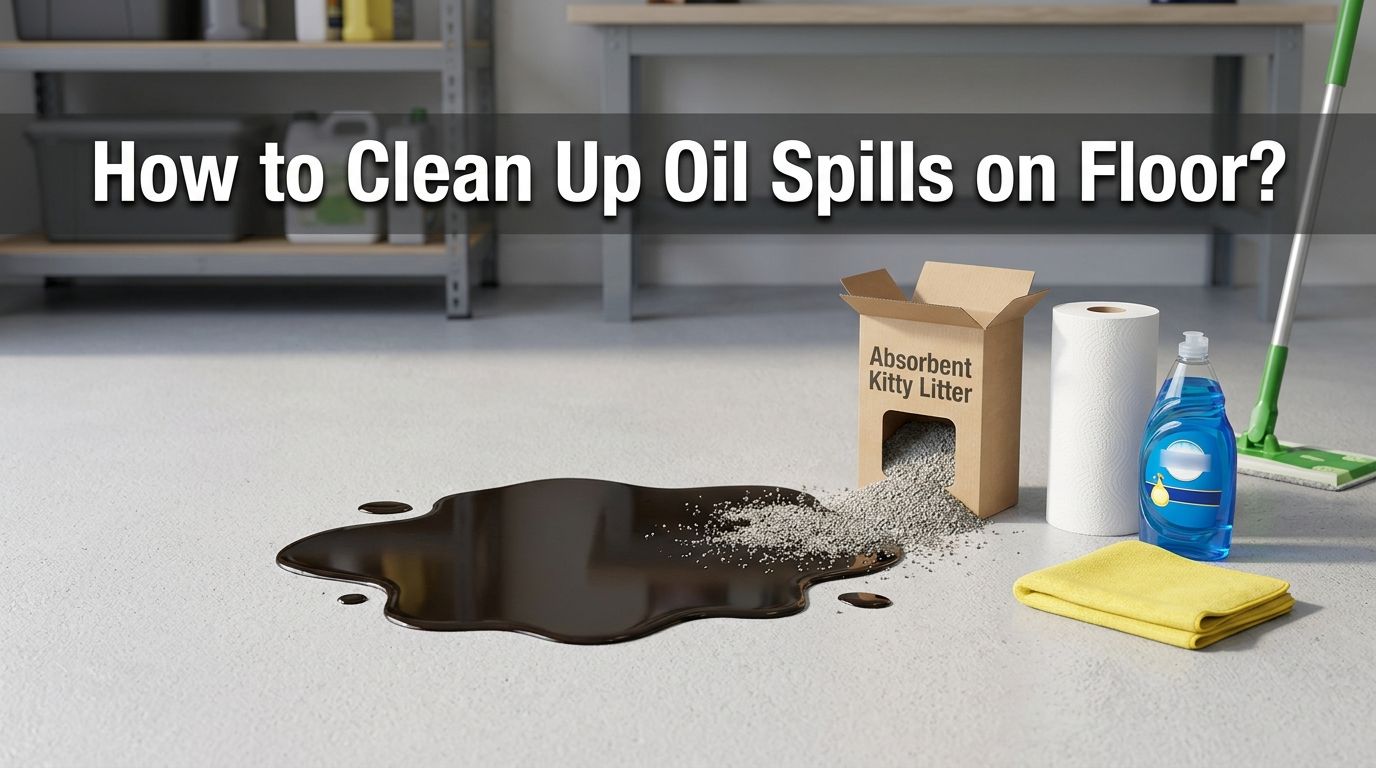
Spread your chosen absorbent material generously over the entire spill. The material should completely cover the oil with a thick layer. Here are your best options:
Cat litter is one of the most popular choices. Use the cheapest clay based variety for the best absorption. Grind it into the oil with your foot and let it sit for 30 minutes to several hours.
Baking soda or cornstarch works great on kitchen floors and lighter spills. These fine powders pull oil from surfaces effectively and are safe for all floor types.
Sawdust is an excellent option for workshops. It absorbs oil quickly and can be swept up easily.
Pros: These materials are cheap, widely available, and non toxic. Cons: They require sitting time and may need multiple applications for heavy spills. After the absorbent has done its work, sweep it all up and dispose of it in a sealed bag.
Step 3: Use Dish Soap and Warm Water for Basic Cleanup
After removing the absorbed oil, a greasy residue will usually remain on the floor. Dish soap is the most effective household cleaner for breaking down this residue. It contains surfactants that separate oil molecules from the floor surface.
Mix a generous squirt of dish soap into a bucket of warm to hot water. Hot water activates the soap and helps dissolve grease faster. Apply the soapy water to the stained area using a mop, sponge, or cloth.
Scrub the area with a stiff bristle brush using firm, circular motions. Let the soapy solution sit on the stain for five to ten minutes before scrubbing again. For kitchen tile floors, this method alone often removes the spill completely.
Pros: Dish soap is inexpensive, safe for most floor types, and available in every household. Cons: It may not remove deeply set or old oil stains from porous surfaces like unsealed concrete. You may need to repeat this process two or three times for heavier stains. Always rinse the floor with clean water afterward to remove soap residue.
The Baking Soda and Vinegar Method
This combination is a powerful natural cleaning solution that works well on moderate oil stains. It is especially useful on tile, sealed concrete, and laminate floors where you want to avoid harsh chemicals.
Start by sprinkling a thick layer of baking soda directly onto the oil stain. Then spray or pour white vinegar over the baking soda. The mixture will fizz and bubble, which helps lift the oil from the surface. Let the fizzing reaction work for 10 to 15 minutes.
After the reaction slows down, scrub the area with a stiff brush. The baking soda acts as a gentle abrasive while the vinegar cuts through grease. Wipe up the paste with a damp cloth and rinse with clean water.
Pros: This method uses non toxic, food safe ingredients. It is ideal for homes with children and pets. Cons: It is less effective on very old or deep stains. The vinegar smell can be strong, so keep the area ventilated. Do not use vinegar on natural stone floors like marble or granite, as the acid can etch the surface.
How to Clean Oil Spills on Concrete Floors
Concrete is one of the most common surfaces affected by oil spills, especially in garages and driveways. Because concrete is porous, oil seeps into it quickly and creates stubborn stains that resist simple cleaning.
For fresh spills, apply cat litter immediately and let it sit overnight if possible. Cover the litter with cardboard or plastic to press it into the oil. Sweep it up the next day and apply dish soap with hot water. Scrub hard with a stiff bristle brush.
For old or set in stains, make a thick paste of baking soda and water. Spread the paste over the stain and scrub it vigorously. Let it sit for 15 minutes, then rinse. You can also use trisodium phosphate (TSP) mixed at a ratio of half a cup per two gallons of hot water. Wet the stain, sprinkle TSP, wait 30 minutes, and scrub.
Pros: TSP is extremely effective on concrete. Cons: TSP is toxic, requires protective gear, and is restricted in some areas due to environmental concerns. A pressure washer combined with a degreaser is another excellent option for large concrete areas.
How to Clean Oil Spills on Hardwood Floors
Hardwood floors require extra care because oil can penetrate the wood grain and cause dark staining. Speed is essential here. The faster you act, the better your results will be.
Blot the spill immediately with clean, dry paper towels or a cloth. Press down firmly but do not rub. Rubbing pushes oil deeper into the wood. After blotting, sprinkle baking soda or cornstarch over the remaining residue. Let it sit for 30 to 45 minutes to draw oil out of the wood pores.
Sweep up the powder gently. Then clean the area with a wood safe cleaner or a mild solution of dish soap and warm water. Use a damp cloth, not a soaking wet mop, because excess water damages hardwood. Dry the area immediately with a clean towel.
Pros: Baking soda is gentle and safe for wood finishes. Cons: Deep or old oil stains on hardwood may require sanding and refinishing, which is costly. Avoid using vinegar on hardwood, as it can dull the finish over time. Always work along the wood grain to prevent surface scratching.
How to Clean Oil Spills on Tile and Laminate Floors
Tile and laminate floors are easier to clean than concrete or hardwood because their surfaces are less porous. However, oil can still settle into grout lines on tile floors and seep into the edges of laminate planks.
For tile floors, blot the excess oil first. Then apply a mixture of dish soap and hot water directly to the stain. Scrub the area, paying extra attention to grout lines where oil hides. A grout brush or old toothbrush works perfectly for this task.
For laminate floors, use a damp cloth with dish soap rather than pouring water on the surface. Laminate is sensitive to excess moisture, and standing water can cause the planks to swell or warp. Wipe in the direction of the plank pattern and dry the area completely when finished.
Pros: Both surfaces respond well to basic soap and water cleaning. Cons: Grout stains on tile may need a dedicated grout cleaner. Laminate edges can absorb moisture if water sits too long. For stubborn stains on tile, a paste of baking soda and water applied for 15 minutes works as an effective secondary treatment.
Using Commercial Degreasers for Tough Stains
Sometimes household methods are not enough. Commercial degreasers offer stronger cleaning power for heavy or old oil stains that have resisted basic treatments.
Look for a water based, biodegradable degreaser at your local hardware store. These products contain concentrated surfactants and solvents that break down oil at a molecular level. Follow the instructions on the label carefully, as each product has specific dilution ratios and contact times.
To use a degreaser on a floor, first wet the stained area with water. Apply the degreaser according to the product directions. Let it sit for the recommended time, usually 10 to 30 minutes. Then scrub with a stiff bristle brush and rinse thoroughly with clean water.
Pros: Commercial degreasers handle motor oil, hydraulic fluid, and other heavy petroleum products that dish soap cannot fully remove. Cons: Some products contain harsh chemicals that require gloves and ventilation. They may discolor or damage certain flooring types, so always test on a small hidden area first. These products cost more than household alternatives but deliver stronger results.
How to Prevent Future Oil Spills on Your Floor
Prevention is always easier than cleanup. A few simple habits and products can save you hours of scrubbing and protect your floors from oil damage.
In the garage, place a drip pan or oil absorbent mat under your vehicle’s engine. These mats catch leaks before they hit the floor. Check them regularly and replace them when saturated. Store oil containers upright and in secondary containment trays to prevent accidental spills.
In the kitchen, keep a roll of paper towels and a container of baking soda within easy reach of the stove. If oil splashes during cooking, address it immediately before it spreads. Use splatter screens on pans to reduce the amount of oil that escapes.
Sealing your concrete garage floor with an epoxy coating or concrete sealer creates a non porous barrier that prevents oil from soaking in. This makes future spills much easier to wipe up. For workshops, consider rubber floor mats in high risk areas. These small investments pay off significantly over time.
When to Call a Professional
Most oil spills can be handled at home with the methods described above. However, some situations require professional help to avoid making the problem worse.
Call a professional if the oil stain has been on your hardwood floor for days or weeks and has turned the wood dark. A flooring specialist can sand and refinish the affected area without damaging the surrounding floor. This is not a DIY friendly repair for most homeowners.
Large industrial oil spills in commercial spaces also need professional cleanup. These spills may involve hazardous materials, require special disposal procedures, and fall under environmental regulations. Environmental cleanup companies have the equipment and training to handle these situations safely and legally.
If you have tried multiple cleaning methods on a concrete stain and nothing works, a professional pressure washing service with commercial grade degreasers can often succeed. The cost is usually reasonable and saves you from repeated failed attempts.
Frequently Asked Questions
What is the fastest way to clean up an oil spill on a floor?
The fastest method is to immediately cover the spill with cat litter or baking soda to absorb the liquid oil. Let it sit for 15 to 30 minutes, sweep it up, and then scrub the area with dish soap and hot water. For small kitchen spills, paper towels followed by a soapy cloth can handle the job in under five minutes. Speed is the most important factor because fresh oil is far easier to remove than dried oil.
Can I use bleach to clean oil off a floor?
Bleach is not effective for removing oil stains. Bleach is a disinfectant and whitening agent, but it does not break down grease or oil. Using bleach on an oil stain may lighten the discoloration slightly on concrete but will not actually remove the oil. Stick with dish soap, baking soda, degreasers, or TSP for actual oil removal. Bleach can also damage hardwood and laminate floors.
Does WD 40 remove oil stains from concrete?
WD 40 can help loosen old oil stains on concrete because it acts as a solvent. Spray it on the stain, let it sit for a few minutes, and then scrub with soap and water. However, WD 40 itself is an oil based product, so you must clean it up thoroughly after use. It works best as a pre treatment for stubborn stains rather than a standalone cleaning solution.
How do I get old, dried oil stains out of a garage floor?
Old stains require more aggressive treatment. Make a paste of baking soda and water, apply it to the stain, and scrub with a stiff brush. For very stubborn stains, use trisodium phosphate (TSP) at half a cup per two gallons of hot water. Apply, wait 30 minutes, and scrub hard. A pressure washer combined with a concrete degreaser is the most effective option for large or deep set stains.
Is it safe to pour water on an oil spill?
Pouring water directly on a fresh oil spill is not recommended as a first step. Oil and water do not mix, so the water will spread the oil across a larger area. Always absorb the bulk of the oil first using cat litter, baking soda, or paper towels. Once most of the liquid oil is removed, you can safely use soapy water to clean the remaining residue.
How do I remove cooking oil from grout lines?
Grout is porous and absorbs oil easily. Apply baking soda directly to the grout lines, spray with vinegar, and scrub with an old toothbrush. Let the paste sit for 10 minutes before rinsing. For deeper stains, use a paste of baking soda and hydrogen peroxide. Apply it, cover with plastic wrap, and leave it overnight. Scrub and rinse the next morning for the best results.

Hi, I’m Grace Bell, the founder of CleanFloorVault.com, where I personally test and review vacuum cleaners to help you find the perfect tool for a spotless home.