
Narwal Flow Robot Vacuum Mop Review 2026: Worth Buying?
The Narwal Flow landed in my living room with a lot of hype attached to it. Narwal called it a flagship. Reviewers called it one of the best mopping robots ever tested. I wanted to know if a robot vacuum can really justify a four figure price tag in 2026.
So I used it for weeks on hardwood, tile, and a shaggy area rug. I spilled coffee. I tracked in dog hair. I let dried juice sit overnight on purpose. This review covers what the Narwal Flow does brilliantly, what it fumbles, and whether your money belongs here or somewhere else.
In A Nutshell:
- The mopping is the main event. The FlowWash track mop rinses itself about 110 times per minute using clean water and a scraper. Dirty water never touches your floor twice. Independent testing placed its combined mopping score in the all time top seven, well above the category average.
- Suction is genuinely strong. The 22,000Pa rating translates into measured suction roughly double the average robot vacuum. Carpet deep clean results hit around 83 percent versus a 76 percent average.
- Pet owners get the biggest win. The Flow scored a perfect zero percent tangle rate in a seven inch hair wrap test. Most robots choke on long hair. This one does not.
- Battery efficiency is the best I have seen. Roughly 2,068 square feet per charge, which is nearly double the average.
- It is not flawless. Fine debris like coffee grounds needs multiple passes. There is no automatic detergent dispenser in the dock. The cameras sometimes mistake floor stains for obstacles and dodge them.
- Price is the real barrier. It launched at $1,499.99 and frequently drops during sale events. At full price it is a luxury. On discount it is a strong buy.
Narwal Flow Robot Vacuum and Mop Combo

Last update on 2026-10-16 / Affiliate links / Images from Amazon Product Advertising API
The Narwal Flow is a premium robot vacuum and mop combo built around one big idea. Instead of spinning pads that smear grime around, it uses a flat track style roller that washes itself constantly while cleaning.
Two onboard water tanks make this possible. One holds clean water. One collects the dirty water that the scraper squeezes out. The mop stays fresh from the first tile to the last one.
Core specs include 22,000Pa suction, a 6,400mAh battery, dual RGB AI cameras, a semi internal LiDAR turret, and a 2.5L dust bag good for roughly 120 days. The robot stands about 3.7 inches tall, so it slides under most sofas and beds without complaint.
Unboxing Experience: What You Actually Get
The box is heavy and tightly packed, which is always a good sign. Narwal uses molded cardboard inserts rather than loose foam, so nothing rattles around in transit.
Inside you find the robot itself, the base station, a power cable, two anti tangling side brushes, extra dust bags, a spare filter, a bottle of floor detergent, and a second swappable dust bin module. That spare bin is an unusual touch and it is useful when the first one needs a deep rinse.
Setup took me about twelve minutes. You peel protective film, clip the side brushes in place, fill the clean water tank, and press start. The app pairing worked on the first try.
One small warning. Prime the water system properly before the first mop run. A few early units had pump issues that needed a syringe of water to clear.
Design and Build Quality
The Flow looks calm rather than flashy. The ivory white shell has a soft matte finish that hides dust better than gloss plastic does.
Narwal moved the spinning LiDAR into a semi recessed turret on the back of the robot. This is a smart trade. The robot gets slimmer and fits under low furniture, but the sensor only sees about 180 degrees instead of a full 360.
In practice I never noticed the limitation. The robot mapped my downstairs in 51 minutes without a single rescue mission.
The dock is compact by flagship standards and the water tanks lift out from the top, so you do not need to drag the whole station to a sink. Build quality feels solid everywhere except the dust bin lid, which has a slightly cheap click to it.
Top 3 Alternative for Narwal Flow

Last update on 2026-10-16 / Affiliate links / Images from Amazon Product Advertising API
Roborock Saros 10R

Last update on 2026-10-16 / Affiliate links / Images from Amazon Product Advertising API
Dreame X50 Ultra

Last update on 2026-10-16 / Affiliate links / Images from Amazon Product Advertising API
Narwal Freo Z Ultra
FlowWash Track Mop Explained Simply
This is the feature that sells the machine, so it deserves a clear explanation.
A normal robot mop drags a damp pad across your floor. The pad collects dirt. The pad keeps dragging that dirt until the robot returns to its dock. You are essentially painting your floor with yesterday’s grime.
The Flow works differently. Water jets wet the roller. A fixed scraper presses against the roller and strips the dirty water off continuously. That waste water goes into a separate onboard tank.
The roller rinses itself roughly 110 times every minute. The dock uses hot water near 176 degrees Fahrenheit for the deep wash between runs.
A second benefit surprised me. Because the roller extracts liquid, it can clean up small wet spills. Spinning pads just spread those around.
Mopping Performance on Real Floors
Numbers back up the marketing here. In standardized dried stain testing the Flow scored about 125 points against a 110 point average. It left only 0.4 grams of water behind compared with a 1.02 gram average.
My own results matched. Dried orange juice vanished in one pass. Dried coffee rings needed two passes but came up clean. Greasy kitchen splatter near the stove was the hardest job and took a targeted spot clean.
Floors dry fast because so little water stays behind. I could walk across tile barefoot within a couple of minutes.
The mop roller also extends sideways to reach baseboards and lifts almost 11 millimeters to stay off carpet. You can also set it to vacuum all carpets first, then mop hard floors afterward. That keeps rugs completely dry.
Vacuum Suction and Carpet Results
Mopping gets the headlines but the vacuum side holds its own. Measured suction came in near 1.88 kPa against a 0.96 kPa average, so the 22,000Pa claim is not empty.
Carpet deep clean results reached roughly 83 percent, above the 76 percent average. Flattened pet hair pickup hit about 89 percent versus an 81 percent average. Those are strong scores for a combo machine.
Airflow is the one odd data point. It measured around 16 cfm, which sits slightly below average. High suction with modest airflow means the Flow excels at pulling embedded debris from carpet fibers but is less impressive at sweeping loose surface dust.
CarpetFocus automatically boosts power when the robot detects rugs. You can feel the motor ramp up as it crosses from tile to carpet.
Pet Hair and Tangle Free Performance
If you own a long haired dog or cat, read this section twice.
The Flow uses a main brush roll that stays unattached at one end. Hair slides along the bristles and feeds straight into the suction channel instead of wrapping into a knot.
In a seven inch hair tangle test the Flow recorded zero percent tangling. The average robot wraps around 28 percent of that hair around its brush. I have not cut hair off this brush once.
The two side brushes also change shape automatically as they rotate, which reduces the hair bird nests that normally form around side brush hubs.
Pet owners get extras too. Live video monitoring lets you check on animals remotely, and a pet checkup mode sends the robot looking for your dog. The Flow earned a 4.49 pet score against a 3.42 average.
Obstacle Avoidance and AI Cameras
Two RGB cameras plus structured light plus an LED fill light handle obstacle detection. The onboard AI chip recognizes over 200 object types.
In controlled testing the Flow dodged 18 of 24 objects. That beats the 17 object average but trails the Narwal Freo Z Ultra, which managed 23.
Real world behavior impressed me more than the score suggests. It avoided charging cables, socks, a dog bowl, and a wandering cat without hesitation. It did run over a thin ribbon and a small LEGO brick.
Here is the strange flaw. The cameras sometimes read dark floor stains as physical objects and steer around them. So the robot occasionally refuses to mop the exact spot you wanted mopped. Narwal gives you very little control over avoidance sensitivity, so you cannot dial this behavior down.
Base Station and Self Cleaning Routine
The dock handles almost everything. It empties the dust bin into a 2.5L bag, washes the mop roller with hot water jets, then dries the roller and internal components with heated air.
Hot air drying matters more than people expect. A damp roller sitting in a plastic dock grows bacteria fast and starts smelling within days. The Flow avoids that entirely.
A dirty water sensor decides when the roller needs extra washing instead of running a fixed cycle every time. That saves water and shortens dock time.
The 2.5L bag lasted me close to two months with a shedding dog, so the 120 day claim is realistic for smaller homes. Emptying the dirty water tank is the one manual chore you cannot escape, and it is genuinely unpleasant the first time you see what comes out.
Battery Life and Cleaning Coverage
Battery is a quiet strength. The official rating is 190 minutes on low power, which beats the 149 minute average.
The real story is efficiency. The Flow managed about 3.00 minutes of cleaning per battery percent against a 1.31 minute average. That works out to roughly 2,068 estimated square feet per charge compared with a 1,098 square foot average.
My full downstairs, about 900 square feet with mixed flooring, finished on a single charge with battery left over. Larger homes should still expect one recharge break on a full vacuum and mop pass.
Navigation efficiency measured slightly below average at 0.63 square meters per minute. The robot takes its time. The excellent battery efficiency more than compensates for the slower pace.
Narwal App and Smart Controls
The app covers every expected flagship function. You get multi level maps, virtual barriers, no go zones, room specific water and suction levels, cleaning schedules, and a live map view.
Voice control works through the onboard Hey Nawa assistant and through Alexa or Google Assistant.
Two annoyances stand out. My unit shipped with carpet avoidance enabled by default. I had to dig into map management and manually tell the robot that yes, I do want my carpets cleaned.
Second, the app hides some settings behind layers of menus and offers fewer granular controls than Roborock or Dreame apps. Casual users will never notice. Tinkerers will feel limited.
Map editing itself is accurate and quick. Room splitting worked correctly on the first attempt, which is rarer than it should be.
What The Narwal Flow Does Not Do Well
Honest reviews list the failures, so here they are plainly.
Fine debris on hard floors is the clearest weakness. Spilled coffee grounds and flour needed two or three passes before the floor looked right. One pass left a visible dusting.
There is no automatic detergent dispenser in the dock. You pour cleaning solution into the water tank by hand every time you refill. Earlier Narwal models actually did this automatically, so this is a step backward.
Obstacle avoidance cannot be fine tuned, and the stain avoidance quirk is real.
Early units showed water pump problems that required priming with a syringe. Narwal says this is uncommon, and the broader owner feedback supports that, but it happened on two separate test units.
Customer support reports online are mixed. Keep your receipt.
Pros and Cons of the Narwal Flow
Pros
- Top tier mopping. The FlowWash roller delivers one of the best combined mopping scores ever recorded.
- Zero percent hair tangle rate. Easily the best choice for homes with shedding pets.
- Strong suction near double the category average, plus above average carpet deep cleaning.
- Class leading battery efficiency at roughly 2,068 square feet per charge.
- Slim 3.7 inch body fits under low furniture that blocks taller robots.
- Hot water mop washing and heated air drying stop dock odors.
- Dual AI cameras recognize over 200 objects and handle cables and pet messes well.
- Mop lifting plus a vacuum first carpet mode keeps rugs dry.
Cons
- Fine debris needs multiple passes on hard floors.
- No automatic detergent dosing. You add solution manually.
- Cameras occasionally avoid floor stains instead of mopping them.
- Limited user control over obstacle avoidance settings.
- Isolated reports of water pump faults on early units.
- High price at $1,499.99 before discounts.
- Semi internal LiDAR sees 180 degrees rather than 360.
Price, Value and Running Costs
The Flow launched at $1,499.99 at full retail. It regularly drops much lower during major sale events, and I have seen the basic dock configuration listed well under a thousand dollars during promotional periods.
Buying at full price is hard to justify. Buying on a deep discount makes this one of the strongest value picks in the premium tier.
Running costs stay modest. Dust bags, filters, side brushes, and the mop roller all need periodic replacement. Budget roughly sixty to ninety dollars per year depending on how hard you run it.
The detergent is optional. Plain water works fine for daily maintenance mopping, which keeps consumable spending down.
Narwal Flow Versus Narwal Flow 2
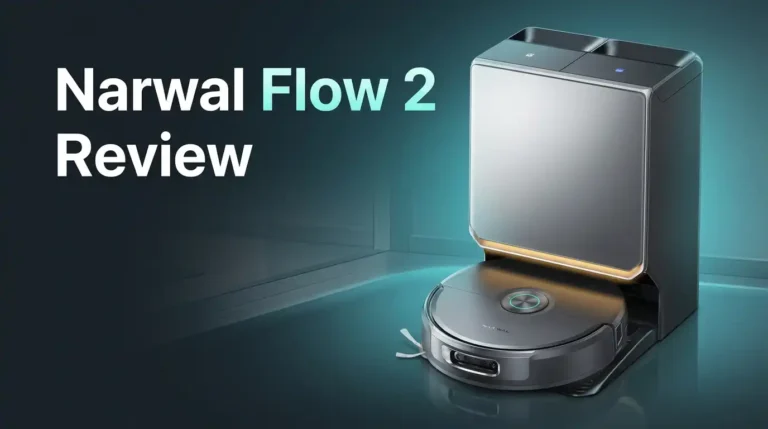
Narwal announced the Flow 2 at CES in January 2026, which complicates the buying decision.
The Flow 2 raises suction to 31,000Pa, upgrades to a VLM powered AI brain for smarter object recognition, uses hotter mop water, and offers two dock configurations including one with automatic refill and drain plumbing.
That sounds like a clear upgrade on paper. The original Flow already scores near the top of every mopping chart, so the practical gap may be smaller than the spec sheet suggests.
My honest take: if the original Flow is heavily discounted and the Flow 2 sits at full price, the older model remains excellent value. If both cost similar amounts, take the newer one. Check current pricing on both before you commit, because these models move around a lot during sale periods.
Who Should Buy The Narwal Flow
Buy it if you have significant hard flooring and you actually care about mopping quality. This is the strongest mopping robot most people can buy, and nothing about that statement is marketing fluff.
Buy it if you live with shedding pets. The zero tangle brush system alone saves you a monthly maintenance ritual.
Buy it if your furniture sits low. The 3.7 inch height reaches places taller robots cannot.
Skip it if your home is mostly carpet. You are paying a premium for a mopping system you will barely use, and a dedicated vacuum focused robot costs far less.
Skip it if you want deep control over every setting. Skip it at full retail price. Wait for a sale and the value equation changes completely.
Frequently Asked Questions
Does the Narwal Flow use clean water the whole time?
Yes. The onboard clean water tank feeds the roller while a scraper pulls dirty water into a separate tank. The roller rinses itself roughly 110 times per minute, so dirty water does not return to your floor.
Can the Narwal Flow clean up wet spills?
Small wet spills, yes. The track roller extracts liquid into the dirty water tank. Large spills still need a towel first, and you should never send it at anything greasy or sticky in volume.
Do I have to add detergent manually?
Yes. The dock does not dispense detergent automatically. You pour solution into the clean water tank yourself during refills. Plain water works fine for routine cleaning if you prefer skipping detergent.
Will it avoid my carpets automatically?
It lifts the mop roller almost 11 millimeters over carpet and can vacuum all carpets before mopping hard floors. Check your app settings on day one, because some units ship with carpet cleaning switched off entirely.
How often do I empty the dock?
The 2.5L dust bag lasts up to about 120 days in average homes. The dirty water tank needs emptying far more often, typically every few cleaning runs depending on floor size.
Is the Narwal Flow loud?
On standard mode it stays conversational. Maximum suction and carpet boost get noticeably loud, and the dock drying cycle produces a steady hum for several minutes. Scheduling runs while you are out solves this.
Does it work without wifi?
Basic cleaning runs from the physical buttons on the robot. Mapping, scheduling, zone cleaning, live video, and firmware updates all require the app and a wifi connection.

Hi, I’m Grace Bell, the founder of CleanFloorVault.com, where I personally test and review vacuum cleaners to help you find the perfect tool for a spotless home.