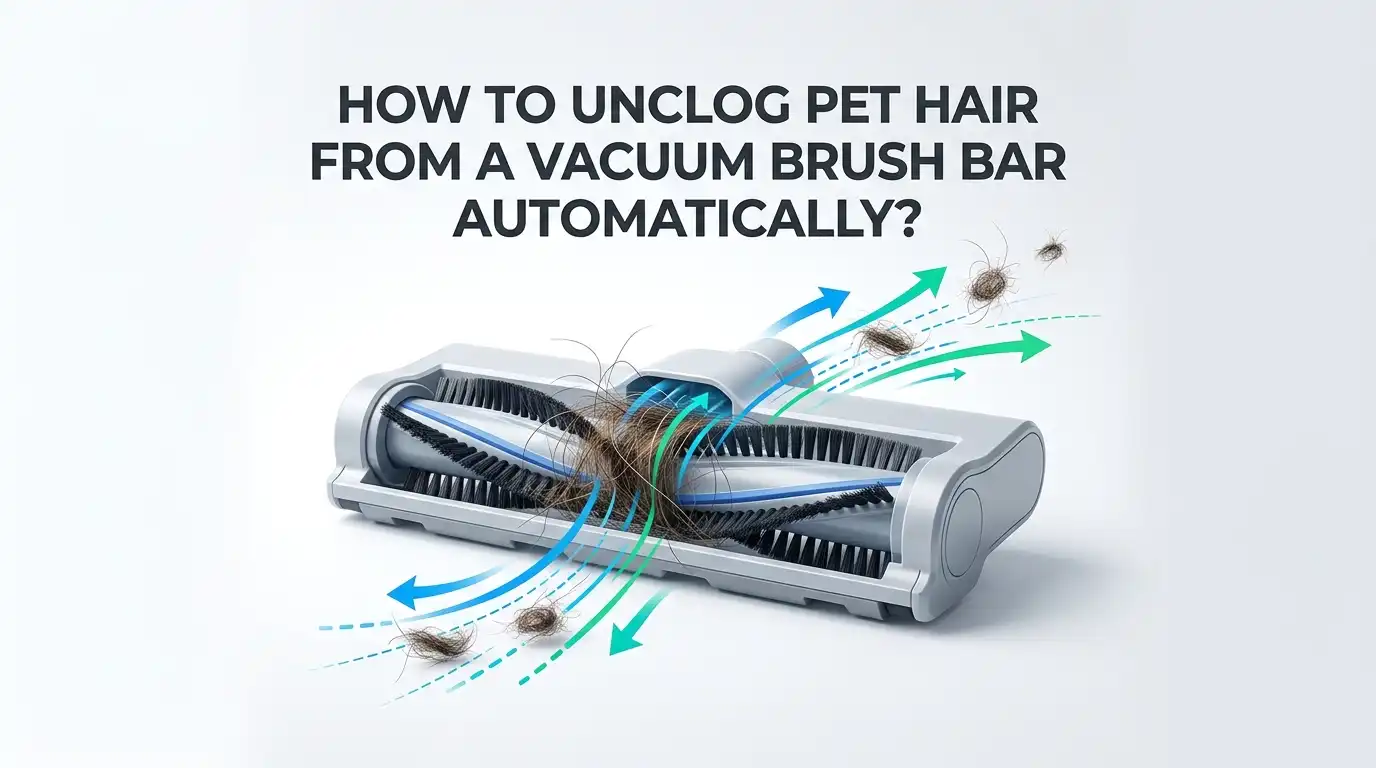
How To Unclog Pet Hair From A Vacuum Brush Bar Automatically?
Pet hair loves to wrap around your vacuum brush bar. It twists, knots, and builds into thick rings that choke your roller. Over time, your vacuum loses suction and starts pushing dirt around instead of picking it up.
You probably know the frustration of flipping your vacuum over and digging out clumps of fur with scissors. The good news is that you can stop doing that. Modern tools and smart habits let you unclog pet hair from a brush bar almost automatically.
This guide walks you through every method that works. You will learn which features remove hair on their own, which simple tricks speed up the job, and how to keep your roller clean with very little effort.
In a Nutshell:
- Self cleaning brush rolls do the work for you. Many newer vacuums use built in combs, blades, or dual rollers that slice and lift hair off the bar while you clean, so you rarely need to stop and untangle anything by hand.
- Anti hair wrap technology prevents the clog before it starts. Features like V shaped bristles, rubber rollers, and comb teeth guide fur straight into the dustbin instead of letting it coil around the brush.
- Cleaning tools make manual jobs nearly automatic. A seam ripper, brush cleaning rake, or built in cutter lets you free a packed roller in seconds rather than minutes.
- Routine habits beat deep cleaning every time. A quick check every few uses keeps hair from building into the stubborn rings that take real effort to remove.
- No system is perfect for very long fur. Even the best automatic features may need an occasional manual pass, so smart maintenance still matters.
- Suction loss is your warning sign. When your vacuum stops gripping the floor, a clogged brush bar is usually the cause, and quick action keeps the motor healthy.
Why Pet Hair Wraps Around Your Brush Bar So Easily
Pet hair is thin, light, and often very long. As your brush bar spins, the bristles grab loose strands and pull them inward. The hair then wraps tightly around the roller core, layer after layer. Each pass adds more fur to the pile. Soon you have a dense ring that the bristles cannot push out.
This buildup causes real problems. The roller slows down, the suction drops, and the belt strains under pressure. In some cases, the extra friction overheats the motor.
Cat and dog fur wraps faster than human hair because pets shed in large amounts every single day. Understanding this process helps you see why prevention and automatic removal matter so much for any home with pets.
How Self Cleaning Brush Bars Work To Remove Hair Automatically
A self cleaning brush bar uses a clever design to clear hair as you vacuum. Most models include a small comb or blade set close to the roller.
As the brush spins, the comb teeth catch the wrapping hair and cut or lift it free. The loose strands then move straight into the suction path and land in the dustbin.
Some vacuums use a dual roller system instead. One roller agitates the carpet while the other helps shed and conform around debris, so fur never gets a chance to coil.
The result is a roller that stays clean during normal use. You simply vacuum as usual, and the technology handles the tangles. This method removes the most common reason people flip their vacuum over and reach for scissors.
Pros: It saves huge amounts of time. You rarely stop mid clean. Suction stays strong because the brush never clogs.
Cons: These vacuums cost more upfront. Very long human hair can still slip past some combs. The cutting parts may wear over years of heavy use.
Anti Hair Wrap Technology And Its Role In Prevention
Anti hair wrap technology focuses on stopping the clog before it forms. Instead of cleaning hair after it wraps, this design keeps hair from wrapping at all. Engineers use several tricks to make this happen, and many vacuums combine more than one for the best result.
The most common feature is a bristle guard with a comb structure. As the roller turns, the comb separates and channels hair away from the core and toward the suction.
V shaped or angled bristles push fur sideways toward the edges, where it gets sucked up instead of winding around the middle.
Rubber rollers add another layer of defense because their smooth surface does not grip hair the way stiff bristles do. Together, these designs make tangling far less likely, even with thick pet coats.
Using A Seam Ripper For Fast Near Automatic Cleaning
If your vacuum does not have automatic features, a seam ripper is the next best thing. This small sewing tool has a sharp curved blade that slides under hair with almost no effort.
You unplug the vacuum first, then run the ripper along the length of the roller. The blade snaps the strands as it moves, and the whole ring loosens in seconds.
Many cleaning experts call this the fastest manual method available. It beats scissors because you do not need to lift and cut tiny sections. The pointed tip glides between the bristles and the wrapped hair with little force. After you slice through the strands, you simply peel the loosened hair away and toss it.
Pros: It is cheap, fast, and very effective. It rarely damages bristles. It works on any vacuum model.
Cons: It still requires you to flip the vacuum over. You must handle a sharp blade with care. It does not prevent future buildup.
How A Brush Cleaning Rake Speeds Up Hair Removal
A brush cleaning rake is a purpose made tool with stiff teeth. You drag the rake across the roller and the teeth comb out wrapped hair in one or two passes.
Some rakes include a small blade edge that cuts stubborn strands at the same time. This tool turns a five minute chore into a quick swipe.
The rake works well for thick fur rings that resist hand pulling. You can use it on both stick and upright vacuums. Because the teeth reach deep between the bristles, you remove hair that fingers cannot grab. Many pet owners keep a rake near their vacuum for fast cleanups between deeper sessions.
Pros: It clears dense hair quickly. It reaches deep into the bristles. It is gentle on most rollers.
Cons: It does not remove the roller, so packed cores still need extra work. Some rakes feel flimsy. It is one more tool to store.
Step By Step Method To Unclog A Brush Bar Quickly
Here is a simple routine that works on almost any vacuum and gets your roller clean fast.
First, unplug the vacuum or remove the battery for safety. Never work on a powered machine. Second, flip the vacuum over so the brush bar faces up.
Third, run a seam ripper or cleaning rake along the full length of the roller to slice through the wrapped hair. Fourth, peel the loosened hair off in chunks and throw it away.
Fifth, check the end caps and bearings, since hair often hides there. Use tweezers or hemostats to pull strands from the tight gaps.
Sixth, wipe the roller with a dry cloth. Finally, spin the brush bar by hand to confirm it turns freely. This whole process takes about two minutes once you get the hang of it.
Removing The Brush Roll For A Deep Clean
Sometimes hair packs so tightly that surface cleaning is not enough. Most vacuums let you remove the brush roll completely for a deeper job. You usually unscrew a faceplate or release a clip on the base. Always check your manual first, because models differ.
Once the roller is out, the rest gets easy. Pull or cut away the full ring of hair now that you can see both ends. Clean the bearings and end caps where fur hides and causes friction.
Rinse the roller only if your manual allows it, then dry it fully before you put it back. A clean, free spinning roller restores full suction.
Pros: It removes every bit of trapped hair. It clears the bearings for smooth spinning. It extends the life of your vacuum.
Cons: It takes more time. You may need a screwdriver. Putting parts back can confuse first time users.
Choosing A Vacuum With Built In Automatic Hair Removal
If you want the closest thing to a hands free experience, buy a vacuum built for pet hair. Look for clear labels like self cleaning brush roll, anti hair wrap, or tangle free. These vacuums use the combs, blades, and rubber rollers we covered earlier to clear fur as you clean.
Pay attention to the brush design when you shop. Rubber rollers and comb tooth systems tend to perform best with long pet coats. Robot vacuums often include cone shaped or spiral brushes that funnel hair straight to the bin.
Some models even feature a moving blade that slices tangles during operation. A vacuum built for pets saves you from most manual cleaning for the life of the machine.
Pros: Almost no manual untangling. Strong, steady suction. Great for multi pet homes.
Cons: Higher price than basic models. Some report durability concerns over years. No design stops every single strand.
Smart Habits That Keep Hair From Building Up
Automatic features work even better when you pair them with good habits. The single best habit is checking your brush bar often. Cleaning experts suggest a quick look every three or four uses. This stops hair from forming the thick rings that take real effort to remove.
Brush your pet regularly to reduce loose fur. Less shedding means less hair on the floor and less work for your vacuum. Vacuum in slower passes so the suction has time to pull hair into the bin instead of letting it wrap.
Keep the dustbin and filters clean too, because strong airflow helps the brush bar shed hair on its own. These small routines keep your roller clean with very little effort.
Common Mistakes That Make Hair Clogs Worse
Many people accidentally make the problem harder. The biggest mistake is waiting too long between cleanings. A small amount of hair lifts off easily, but a packed ring fights back. Letting buildup grow also strains the belt and motor.
Another mistake is cutting bristles by accident. When you use scissors carelessly, you can slice the brush itself and weaken its grip on dirt. Always cut along the roller, not across the bristles.
People also forget the end caps, where hair hides and jams the bearings. Ignoring suction loss is risky too, because a struggling motor can overheat. Avoiding these errors keeps both the cleaning easy and the vacuum healthy for years.
When Automatic Methods Are Not Enough
Even the best technology has limits. Very long human hair and heavy pet fur can still slip past some combs and blades. Reddit users and reviewers often note that anti tangle systems reduce hair wrap a lot but rarely stop it completely. This is normal and not a sign that your vacuum is broken.
Plan for an occasional manual pass. Keep a seam ripper or rake nearby for the rare times a strand sneaks through. If your self cleaning roller starts to slow, flip the vacuum over and do a quick check.
Think of automatic features as your main defense and manual cleaning as a backup. This balanced approach gives you the cleanest roller with the least work, no matter how much your pets shed.
Maintaining Your Vacuum For Long Term Performance
A clean brush bar is only part of a healthy vacuum. Empty the dustbin before it gets full so airflow stays strong and the brush sheds hair easily. Wash or replace filters on the schedule your manual lists, since clogged filters cut suction.
Check the belt now and then. A worn belt makes the brush spin slowly, which lets hair wrap faster. Listen for changes in sound, because a straining motor often signals a hidden clog.
Wipe down the roller and end caps during each cleaning to clear trapped strands. With these simple steps, your vacuum keeps its power and your automatic hair removal features keep working the way they should for many years.
Frequently Asked Questions
How often should I clean pet hair from my vacuum brush bar?
Check your brush bar every three or four uses if you have pets. This quick habit stops hair from forming thick rings that take real effort to remove. Homes with multiple pets or long haired breeds may need a check after every use. Self cleaning vacuums need far less attention, but a glance now and then still helps keep suction strong.
Can a regular vacuum become self cleaning?
No, you cannot add true self cleaning technology to a basic vacuum. Those features come built into the roller and housing. However, you can get close to a hands free experience by keeping a seam ripper or cleaning rake nearby. These tools remove hair so fast that the manual job takes only seconds, which feels almost automatic in daily use.
Does anti hair wrap technology really work on pet fur?
Yes, anti hair wrap features reduce tangling a lot, even with pet fur. Comb teeth, V shaped bristles, and rubber rollers guide hair into the bin instead of around the brush. Still, no system is fully foolproof. Very long fur can sometimes slip through, so plan for an occasional quick manual check to keep the roller perfectly clear.
Why does my vacuum lose suction even after cleaning the brush?
Suction loss can come from more than just the brush bar. Check the dustbin, filters, and hose for clogs. A full bin or dirty filter blocks airflow and weakens pickup. A worn belt also slows the roller. Clean each part in turn, and your suction should return. If problems continue, the motor may need professional service.
Is it safe to cut hair off the brush roll with scissors?
Yes, but you must cut carefully. Always slice along the length of the roller, not across the bristles. Cutting across can damage the brush and weaken its grip on dirt. A seam ripper is safer because its curved blade slides under hair without touching the bristles. Whatever tool you use, unplug the vacuum first for full safety.

Hi, I’m Grace Bell, the founder of CleanFloorVault.com, where I personally test and review vacuum cleaners to help you find the perfect tool for a spotless home.