How to Stop a Top-Heavy Stick Vacuum From Falling Over Constantly?
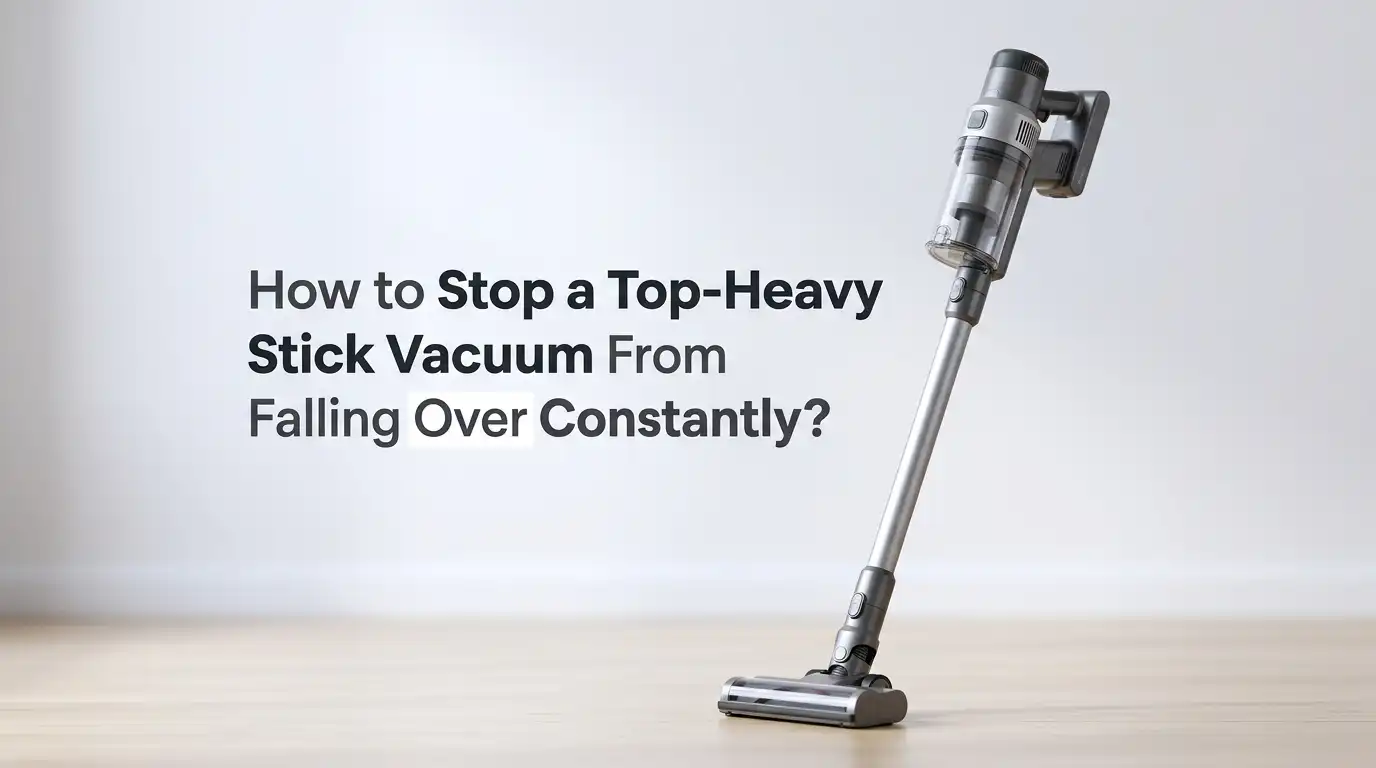
Your stick vacuum keeps tipping over. You set it down for two seconds, and crash, it hits the floor again. The dust bin pops loose, the wand bends, and your patience wears thin.
This problem hits almost every cordless vacuum owner. The motor sits at the top, the head sits at the bottom, and the balance feels all wrong. One small bump sends the whole thing sliding down the wall.
The good news? You can fix this with a few simple changes. Some solutions cost nothing. Others take ten minutes and a screwdriver. This guide shows you every method that works, step by step.
Key Takeaways
- Top-heavy stick vacuums fall over because the motor and dust bin sit high on the handle, while the cleaning head stays light. This shifts the center of gravity upward and makes the unit unstable on flat ground.
- Wall mounting is the most reliable fix. A proper bracket holds the vacuum upright, charges the battery, and keeps the floor clear. Most brands sell an official mount, and many third party options work too.
- Quick fixes include leaning the vacuum into a corner, using a freestanding dock, adding a weighted base, or hanging it from a sturdy hook behind a door.
- Check your dust bin and attachments first. A loose bin or wobbly wand often causes balance problems. Empty the bin after every use to lower the top weight.
- Some vacuums have a built in freestanding mode. Models like Miele Triflex let you swap the motor to the bottom. Always read your manual before you assume the vacuum is just badly designed.
- DIY solutions work great when you rent or can’t drill. Tension rods, broom holders, and over the door hooks all keep your vacuum upright without damaging the wall.
Why Stick Vacuums Tip Over So Easily
Stick vacuums are built tall and slim. The motor, battery, and dust cup all sit near the handle. The cleaning head at the bottom is light and often swivels. This design makes the vacuum easy to push but hard to balance.
When you let go, gravity pulls the heavy top down. The swivel head spins, and the unit drops. Brands like Dyson, Shark, Tineco, and Ryobi all share this flaw.
The shape also makes it hard to lean the vacuum against a wall. The smooth plastic slides, the rubber wheels roll, and the handle slips out of place. Knowing the cause helps you pick the right fix.
Check the Dust Bin and Attachments First
A loose part shifts the balance even more. Before you blame the design, check every clip and lock.
Press the dust bin firmly into place. Listen for the click. Twist the wand to make sure it locks straight. Wiggle the cleaning head to test the joint.
Loose attachments cause two problems. They make the vacuum heavier on one side, and they can pop off when the unit falls. A loose bin on a Dyson often falls open mid air and spills dirt everywhere.
Pros: Costs nothing, takes one minute, prevents bigger damage.
Cons: Only fixes part of the problem. If the design is top heavy, tightening parts won’t stop every fall.
Empty the Dust Bin After Every Use
A full dust cup adds weight right where you don’t want it. The dirt sits high on the handle and makes the top even heavier.
Empty the bin after each cleaning session, not once a week. This small habit lowers the center of gravity and helps the vacuum stand more steady.
A clean bin also helps suction. Dust packed against the filter blocks airflow and makes the motor work harder. You get better cleaning and better balance at the same time.
Pros: Free, fast, improves vacuum performance.
Cons: Easy to forget. Doesn’t fix the core balance issue on very top heavy models like older Dyson V6 or V7 units.
Install the Official Wall Mount
Most stick vacuums come with a wall bracket in the box. Many people never open the bag. That bracket is the single best fix for tipping problems.
The mount holds the vacuum upright, plugs in for charging, and stores all the small tools. Find a stud in your wall, mark the holes, drill, and screw the bracket in place. Most brackets take about ten minutes to install.
Pick a spot near an outlet. The charging cable plugs straight into the dock, so the battery stays full. Closets, garages, and laundry rooms all work well.
Pros: Permanent fix, keeps floors clear, charges the battery, holds tools.
Cons: Requires drilling, not allowed in rentals, may need a different spot if the wall is hollow drywall without studs.
Use a Freestanding Vacuum Dock
If you can’t drill, a freestanding dock is the next best thing. These are stands that sit on the floor and hold the vacuum upright in a slot or clamp.
The dock has a weighted base and a tall pole. You slide the vacuum into the holder, and it stays put. Some docks even include hooks for attachments and a slot for the charging cable.
This option works well for renters and people with concrete or tile walls. You can move the dock to any room without tools.
Pros: No drilling, portable, often includes storage for tools.
Cons: Takes up floor space, can tip itself if the base is too small, costs more than a wall bracket.
Lean It Into a Corner the Right Way
Sometimes you just need to park the vacuum for five minutes. A corner is your best friend.
Place the head flat on the floor and lean the handle into the corner where two walls meet. The two walls trap the vacuum on two sides, so it can’t slide left or right. The head stops it from sliding forward.
This works much better than leaning against a flat wall. A flat wall gives the vacuum only one point of contact, and the swivel head spins away.
Pros: Free, works anywhere, no setup needed.
Cons: Only a short term fix. The vacuum can still fall if bumped. Not great for full time storage.
Try a Tension Rod or Broom Gripper
Tension rods and broom grippers are cheap, clever fixes. A broom gripper is a small rubber clip you screw or stick to the wall. It grabs the handle and holds the vacuum upright.
Most grippers cost a few dollars at any hardware store. They use peel and stick adhesive or two small screws. You can fit three or four on one strip and store a vacuum, broom, and mop together.
A tension rod placed across a closet corner also makes a quick rest. The handle hooks over the rod, and the head touches the floor.
Pros: Cheap, easy to install, works for renters with adhesive versions.
Cons: Adhesive can fail in hot or damp rooms. May not hold very heavy vacuums like a Tineco Pure One.
Hang It From an Over the Door Hook
An over the door hook gives you a no drill storage spot. Strong hooks made for coats can hold most stick vacuums.
Hook the vacuum by its handle or by the loop at the top of the wand. Pick a door you don’t open often, like a closet or pantry. The vacuum hangs free, off the floor, with no risk of tipping.
Check the door’s weight limit first. Some thin hollow doors can’t handle a five pound vacuum swinging around.
Pros: No drilling, works in rentals, keeps the vacuum off the ground.
Cons: The vacuum may swing when the door opens. Hollow doors can crack. Doesn’t allow charging while hung in most cases.
Add Weight to the Cleaning Head
This trick changes the balance of the vacuum itself. Adding weight low down shifts the center of gravity downward.
Stick a small steel plate or a bag of coins to the top of the cleaning head with strong double sided tape. Even a few extra ounces help. You don’t need much.
Test the vacuum after each addition. Too much weight slows you down and strains the motor. Start with two ounces and add more if needed.
Pros: Fixes the root cause of the problem. Cheap. Works on any model.
Cons: Voids the warranty on most vacuums. Can damage the head if the weight comes loose. Adds drag while cleaning.
Use a Pegboard or Slatwall System
Pegboards turn any wall into flexible storage. You hang hooks anywhere on the grid and rearrange them as needed.
A 24 by 48 inch pegboard fits a stick vacuum, all its tools, and a few other cleaning items. Mount the board on studs, add two large hooks, and rest the vacuum handle between them. The head sits on the floor or on a small shelf.
Slatwall systems work the same way but look cleaner. Both options are popular in garages and laundry rooms.
Pros: Holds many items, flexible, looks neat.
Cons: Needs drilling and a flat wall section. Costs more than a single hook. Takes longer to install.
Check if Your Vacuum Has a Freestanding Mode
Some newer stick vacuums are built to stand on their own. Miele’s Triflex HX1 lets you move the motor unit from the top to the bottom of the wand.
When the heavy part sits low, the vacuum stands up by itself with no support. Read your owner’s manual to see if your model has this feature. Many people miss it because the manual gets tossed out with the box.
Other brands like Tineco and Shark have built in stands or kickstands on certain models too. Look for a small foot or lever near the head.
Pros: No extra cost, no installation, designed by the maker.
Cons: Only works on certain models. Switching modes takes a few seconds each time. Not all freestanding modes are stable on thick carpet.
Fix the Swivel Head Lock
Many stick vacuum heads swivel side to side for easy steering. That same swivel makes the vacuum fall over.
Check if your vacuum has a swivel lock. Some Dyson and Shark models let you press a button or twist a collar to lock the head straight. A locked head is much more stable when parked.
If your model has no lock, you can wrap a thick rubber band around the joint to add friction. The band holds the head straight but still lets you steer with a firm push.
Pros: Quick fix, uses parts you already have, easy to reverse.
Cons: Rubber bands wear out fast. A locked head reduces maneuverability while cleaning. Not all vacuums have this feature.
Store It Laid Flat on a Shelf
If nothing else works, take the standing problem off the table completely. Lay the vacuum flat.
A low shelf in a closet, a spot under a bench, or even the floor of a utility room all work. The vacuum can’t fall if it’s already down.
Detach the wand from the motor and the head from the wand for compact storage. Most stick vacuums come apart in three pieces. Stack them on the shelf and grab them when needed.
Pros: No risk of falling, no tools needed, works in any home.
Cons: Slower to grab and use. Takes up shelf space. May not charge well if the dock is on a wall.
Replace Worn Wheels and Joints
Old vacuums fall over more often. The wheels wear down, the joints loosen, and the head wobbles.
Check the wheels for cracks or flat spots. Most brands sell replacement wheels for a few dollars. Snap the old ones off and click the new ones in place.
Also tighten the screws on the wand joint. A loose joint lets the handle lean even when the head sits flat. A quick turn with a small screwdriver often fixes wobble for good.
Pros: Restores the vacuum’s original balance. Cheap. Extends the life of the unit.
Cons: Parts may be hard to find for older or off brand models. Some joints are sealed and can’t be tightened.
Frequently Asked Questions
Why does my Dyson stick vacuum fall over so much?
Dyson stick vacuums put the motor, battery, and bin near the handle. The head is light, and the swivel makes it unstable. Dyson designs these vacuums to be wall mounted, not to stand on their own. Use the included bracket for the best fix.
Can I make my stick vacuum stand up on its own?
Most models won’t stand up without help. A few, like the Miele Triflex, have a freestanding mode. For the rest, you need a wall mount, dock, or hook to keep it upright.
Will adding weight to my vacuum damage it?
A small amount of weight, around two to four ounces, should not harm the motor. More than that can strain the joints and slow down cleaning. Adding weight may also void your warranty, so check the terms first.
What’s the cheapest way to stop my vacuum from falling?
A broom gripper or strong adhesive hook costs only a few dollars. You can also lean the vacuum into a corner for free. Both work well for short term parking.
Is it bad to leave a stick vacuum lying on its side?
Laying the vacuum flat is fine for storage. Just empty the dust bin first so dirt doesn’t spill out. Don’t store it on its side with a full bin, and don’t leave it in direct sunlight for long periods.
How do I store a stick vacuum in a small apartment?
Try an over the door hook, a tension rod in a closet, or a slim freestanding dock. A wall mount inside a closet hides the vacuum and saves floor space. Pick the spot closest to an outlet for easy charging.
Why does my vacuum fall even with a wall mount?
The mount may be loose or installed in drywall without a stud. Remove it, find a stud, and reinstall. Use heavy duty drywall anchors if no stud is in the right spot.

Hi, I’m Grace Bell, the founder of CleanFloorVault.com, where I personally test and review vacuum cleaners to help you find the perfect tool for a spotless home.